Replacing an industrial boiler is a capital project, not a purchase. Most budgets go wrong on the gap between those two numbers. Plan around the boiler package alone, and a second, larger figure appears. That gap shows up once removal, rigging, controls, and code work are added. This guide covers realistic cost ranges, the variables behind them, and how to weigh repair against replacement. The detailed piping and mechanical design of the install is a separate job, and it sits outside these figures.

What an industrial boiler replacement actually costs
Industrial boiler replacement usually runs from about $50,000 to more than $500,000 for the boiler package alone. The figure depends on capacity, pressure rating, fuel, and whether the unit is fire-tube or water-tube. Add removal, site work, controls, and commissioning, and the picture changes. A full project commonly runs from roughly $100,000 to more than $1 million. Smaller commercial-scale units start closer to $10,000 to $100,000 installed.
The table frames those ranges by project type. Figures are 2026 USD in a U.S.-style industrial or commercial setting. They reflect installed cost unless noted, and exclude major civil works, land, or utility relocation.
Project type | Typical scope | Installed budget note |
Small commercial or light-industrial | Packaged boiler, limited piping tie-ins, standard gas or oil burner | Tens of thousands to low six figures, site-dependent |
Mid-size fire-tube steam boiler | Boiler, burner, feedwater tie-ins, burner management, commissioning | Commonly low-to-mid six figures installed |
Large water-tube or high-pressure system | Boiler island plus balance of plant, emissions, and controls | Can exceed $1 million installed |
The number that surprises most buyers is not the boiler price. It is the total installed cost. That figure lands well above the equipment quote once removal, site prep, rigging, piping, controls, and commissioning are counted. Treating the equipment sticker as the budget is the most common planning error here. Projects then stall mid-installation, once the balance-of-plant scope arrives unfunded.
Across replacement projects, the biggest gaps between competing quotes usually come from scope, not the boiler itself. The deciding items are controls, feedwater equipment, stack work, and commissioning. Scope a replacement around the boiler quote alone, and the existing boiler room becomes a guess. The result is often a mid-project change order, for feedwater, blowdown, or stack work assumed to carry over.

The variables that move a boiler replacement budget
Five variables drive most of the spread in replacement cost: capacity, pressure rating, fuel type, boiler construction, and site access. Each one shifts the equipment price, the installation scope, or both. None of them scales in a straight line with size.
Capacity is the largest single driver. It is quoted in boiler horsepower, pounds or tons of steam per hour, or MMBTU per hour. One boiler horsepower equals about 33,500 BTU/hr. Doubling rated output does not double the price. Material and labor efficiencies partly offset the increase, though foundation, fuel-train, and stack requirements still rise. A nameplate rating and a plant's real steam demand are not always the same. Quotes should normalize the units and reference measured peak, minimum, and average load before comparison.
Cost driver | How it moves the budget | What to verify before quoting |
Capacity (BHP / TPH / MMBTU) | Sets vessel size, foundation, fuel train, and stack; larger units cost more, but not linearly | Measured peak, minimum, and average load, not the old boiler's nameplate |
Pressure rating | Higher pressure requires thicker vessels and higher-grade construction, raising material and inspection cost | Actual process pressure demand versus inherited over-specification |
Fuel type | Gas, oil, dual-fuel, biomass, and electric carry different burner, storage, and emissions costs | Available site fuel supply and any need for future fuel flexibility |
Construction (fire-tube vs. water-tube) | Water-tube units handle higher pressure and output at higher capital cost; fire-tube suits lower-pressure loads | Whether the load needs water-tube capability |
Site access | A boiler set deep inside a plant raises rigging, demolition, and downtime cost | Removal path, crane access, and door or wall openings |
Oversizing is the most common way to overpay here. Spec a boiler to the retired unit's nameplate instead of current measured demand, and the cost climbs three ways. It carries higher capital cost, cycles inefficiently at part load, and burns more fuel for the boiler's whole service life. Confirming the real load profile before you pick capacity is the cheapest saving in the project.

The project costs that sit beyond the boiler itself
Three phases carry the costs most budgets underestimate: removal and site prep, installation and commissioning, and controls and auxiliaries. Each depends on the condition of the existing boiler room. And each can rival a real share of the equipment price on its own.
Removal, disposal, and site preparation
Removing an old industrial boiler is rarely a simple disconnect. Its cost tracks the boiler's size, age, and location inside the plant. Older units may carry asbestos insulation that needs licensed abatement. A boiler set deep in a plant can force temporary equipment moves or structural openings just to clear a removal path. Site prep is easy to underestimate too, including foundation work and pad changes for a differently sized unit. Confirm the removal path and abatement status during the survey, not on demolition day.
Installation, rigging, and commissioning
Installation and commissioning cover the labor that turns a delivered boiler into a running system. That line is far larger than a straight equipment swap. It includes rigging a multi-ton pressure vessel into position, reconnecting feedwater and steam piping, and wiring the burner and controls. Commissioning through inspection and burner tuning sits here too, and it is not optional overhead. A boiler that skips proper start-up tuning runs inefficiently and can fail inspection. The schedule should allow time for jurisdictional or authorized inspection, combustion setup, and documentation under the applicable code.
Controls, auxiliaries, and integration
Controls and auxiliaries are the balance-of-plant, and they can approach the boiler's own cost. Yet they are often left out of an apples-to-apples comparison. A modern replacement usually needs a burner management system built to the applicable combustion-safety standard. It also needs a PLC or plant control interface, plus auxiliaries such as a deaerator, economizer, feedwater pumps, and blowdown handling. Larger boilers may fall under NFPA 85. Smaller packaged units are often governed instead by ASME CSD-1, local fuel-gas codes, or the manufacturer's controls. When one quote includes full controls and trim and another does not, the cheaper number is usually the incomplete one. So the scope of controls and auxiliaries should be normalized before any price comparison.
Boiler code, inspection, and emissions costs
Code, inspection, and emissions rules are a cost driver in their own right. How much they add depends on pressure, fuel, heat input, and project location. They are also the requirements most likely to differ between a domestic install and an export project. So confirm them before a replacement is priced, rather than carrying them over from the old unit.
Construction code follows the boiler's service. Higher-pressure steam service may require ASME Section I power-boiler construction, or an equivalent jurisdictional code. Low-pressure heating boilers and auxiliary vessels can fall under different ASME sections, or local standards such as PED in Europe or GB in China. Efficiency rules are just as location-specific. U.S. projects may fall under U.S. Department of Energy efficiency requirements for commercial packaged boilers, depending on type, size, output, and fuel. Export projects should verify the destination market's efficiency and permitting rules separately.
Emissions cost is not only a burner issue. Depending on fuel, heat input, and location, a replacement may trigger several requirements. These include NOx limits, low-NOx burner selection, Boiler MACT or NESHAP obligations, stack testing, or a permitting review. Each one can add hardware or documentation. Confirm which apply early. An emissions rule is then far less likely to surface as a late change to the burner or stack.

Repair, upgrade, or full boiler replacement
The repair-versus-replace decision turns on three things: the pressure vessel's condition, parts availability, and the size of the efficiency gap. Age alone does not decide it. An industrial boiler can run 20 to 30 years or more, so a unit near that window is a replacement candidate. But a younger boiler with a sound vessel and an obsolete burner is often a better upgrade than a full teardown.
The condition found on inspection usually points to the economic decision:
Condition found | Likely direction |
Sound pressure vessel, obsolete burner or controls | Burner or control upgrade, often under an R-stamp, may be enough |
Repeated tube failures or waterside corrosion | Retubing versus replacement comparison required |
Shell damage or a code-level repair needed | Weigh R-stamp repair economics against replacement |
Poor turndown and frequent cycling | Right-sizing or a modular replacement usually wins |
Pressure-vessel condition is the deciding factor. Leaks that need extensive retubing or shell welding push the economics toward replacement. A sound vessel with a failing burner usually favors a targeted upgrade under a National Board R-stamp. Parts obsolescence changes the timeline. Once a burner or control platform is out of production, sourcing spares extends downtime. That hidden availability cost often justifies acting before end of service life.
In hard-water or high-cycling service, the waterside surfaces and controls tend to go first. They are usually where an aging boiler shows whether a repair will hold or just defer the replacement. So a vessel inspection should come before any repair-or-replace commitment, not after.
Downtime cost belongs in this calculation. A plant that cannot lose steam during a shoulder season or a long lead time can bridge the gap with a temporary rental boiler. Weigh its cost against the production lost to an unplanned outage. Whether rental makes sense depends on downtime tolerance and the replacement's lead time.
Controlling replacement cost without under-sizing the boiler
Real savings on a boiler replacement come from scope and sizing discipline, not from a cheaper vessel that under-serves the load. The largest lever is matching capacity to measured demand. From there, reuse compliant infrastructure and time the project around plant schedules.
· Right-size to the real load profile: peak, minimum, and average demand, not the retired nameplate.
· Reuse code-compliant auxiliaries such as sound feedwater systems, stacks, or piping, where inspection confirms they still meet code.
· Specify a modular or skid-mounted package where site access is tight, to cut rigging and field-labor cost.
· Schedule the work during a planned shutdown or the off-season, when downtime impact and contractor availability both help.
· Normalize every quote to the same controls, trim, and auxiliary scope, so the lowest bid is not just the one missing the most.
Lifecycle cost is the final check on all of this. A boiler's purchase price is a fraction of what it costs to own over a 20-to-30-year life. Fuel, maintenance, downtime, and eventual decommissioning make up the rest. A modest efficiency gain also compounds into large fuel savings over that span. A cheap, inefficient boiler can cost more to run than an efficient one costs to buy. So compare options on total cost of ownership, not sticker price. The exact payback depends on the plant's fuel cost, run hours, and load.
Planning an industrial boiler replacement project
An industrial boiler replacement budget comes down to a few decisions. Match capacity to real load. Scope the full project, not just the equipment. And make an honest repair-versus-replace call on the pressure vessel. Get those three right, and the headline range becomes a budget you can plan around.
For replacement quotes, we break out the boiler package, burner and controls, auxiliaries, site work, commissioning, and any emissions items. That lets buyers compare scopes line by line, not one lump sum against another. As an industrial boiler manufacturer, we scope capacity against measured peak, minimum, and average load. We also confirm which existing auxiliaries and stack work can be reused. The rest, from local emissions limits and construction codes to fuel supply and downtime tolerance, we confirm at the project level rather than assume.
Before committing capital, prepare the details a scoped quote depends on:
· Existing boiler nameplate, steam or operating pressure, and fuel type
· Measured peak, minimum, and average load, plus any redundancy requirement
· Feedwater system, stack, and boiler-room access conditions
· Emissions permit status and any known code constraints
· Acceptable downtime window and whether a temporary rental boiler is needed
With those in hand, ask for a scoped replacement assessment. The quote will then reflect your plant, not a generic range. Contact our engineering team for a review and a like-for-like cost breakdown for your site.
FAQ
How much does it cost to replace a 100, 300, or 500 HP industrial boiler?
Cost scales with capacity, but not in a straight line. A 100 HP boiler sits well below a 500 HP system, and both usually reach six figures once installed. A firm number still depends on pressure, fuel, construction, and site access. So capacity alone cannot produce a quote.
How long does an industrial boiler replacement take?
A straightforward like-for-like swap can take days to a few weeks. A larger project with removal, foundation work, new controls, and commissioning often runs several weeks to a few months. Lead time on the boiler itself, plus inspection scheduling, usually drives the timeline more than the physical install.
When is retubing cheaper than replacing the boiler?
Retubing usually wins when the pressure vessel and shell are sound and only the tubes have failed. That preserves the structural investment. Replacement takes over once corrosion, shell damage, or an obsolete control platform means a repair would only defer the inevitable.
Does an industrial boiler replacement need a permit?
Usually yes, though it depends on location, capacity, and fuel. Many jurisdictions require mechanical, fuel-gas, or emissions permits, plus an inspection before start-up. Confirm these early, because permitting can hold up commissioning.
Which existing auxiliaries can be reused, and which usually can't?
Feedwater tanks, deaerators, stacks, and pumps can often be reused. Reuse works when inspection confirms they meet current code and match the new boiler's capacity and pressure. Controls and burner-management systems are more likely to need replacing, as safety standards and platforms change. Verify each item rather than assume it, because one undersized or non-compliant auxiliary can undo the saving.
Is a used industrial boiler cheaper than a new one?
A used boiler has a lower purchase price, but the lifecycle math often favors new. Older units carry unknown vessel history, lower efficiency, obsolete controls, and shorter remaining life. For a boiler expected to run 20 years or more, a new unit's efficiency and warranty usually outweigh the upfront saving.
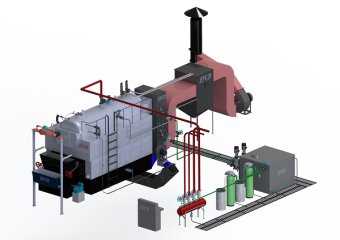
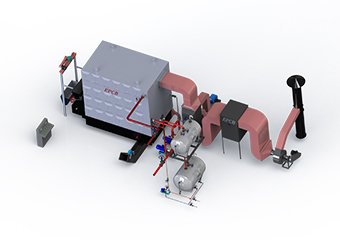
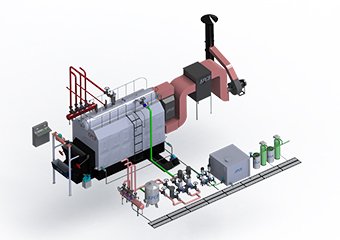
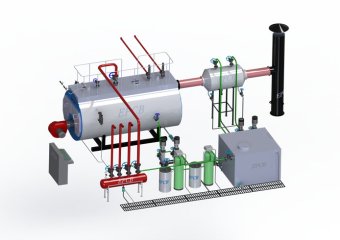
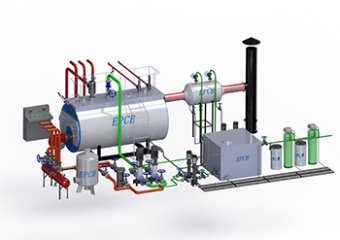
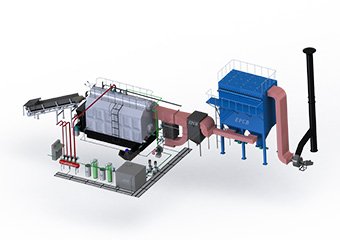
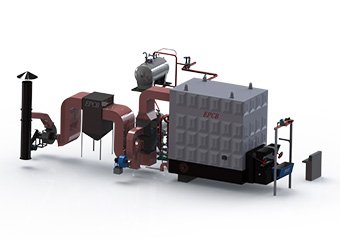





 Steam Boiler
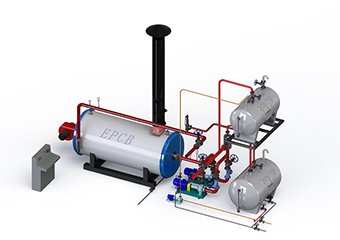
 Thermal Oil Boiler
 Hot Water Boiler
 Steam Boiler
 Thermal Oil Boiler
 Hot Water Boiler
 Steam Boiler
 Thermal Oil Boiler
 Hot Water Boiler
 Steam Boiler
 Hot Water Boiler