The retort process in food industry plants heats sealed cans, pouches, trays and jars in a pressurized vessel until the slowest-heating point of the food has accumulated a validated lethality (F0), not just until the chamber reaches a set temperature. The target is commercial sterility: food free of microorganisms able to grow under normal non-refrigerated storage, including spores of Clostridium botulinum. Whether a product needs a retort at all, which retort type suits it and how long the cycle runs depend on product pH and water activity, container format, heating medium and how quickly heat reaches that cold spot.

Retort reference point | Value and source |
F0 reference condition | 1 minute at 121.1 °C (250 °F), z = 10 °C (18 °F), as defined in the FSIS training module Principles of Thermal Processing |
Classical 12D botulinum reference | About 2.5–3 minutes F0, depending on the D-value assumed (FSIS module; Clemson University review of retort processing); a teaching reference, not a regulatory value, because each scheduled process is set by a processing authority |
Low-acid food (US) | Finished equilibrium pH above 4.6 and water activity above 0.85, with listed exclusions (21 CFR Part 113, §113.3) |
Typical process temperature | Around 240–250 °F (about 115–121 °C), depending on the scheduled process (Clemson review) |
Saturated steam pressure at 121.1 °C | About 2.06 bar absolute, or about 15 psig at sea level, from IAPWS-IF97 steam tables; water and steam–air retorts run higher total pressure because air overpressure is added independently |
US rule set | 21 CFR 113 for low-acid foods, 21 CFR 114 for acidified foods, 9 CFR 431 for thermally processed meat and poultry under FSIS |
Retort Process in Food Industry Plants: What Commercial Sterility Covers

Commercial sterility, as 21 CFR 113.3 defines it, means heat has left a sealed food free of microorganisms that can grow in normal non-refrigerated storage and of viable spores that matter to public health. The definition tolerates spores that cannot grow at ordinary storage temperatures, so products stored in hot climates can need a schedule that also addresses heat-loving spoilage organisms.
Clostridium botulinum sets the minimum for low-acid foods because its spores survive boiling-water temperatures and can germinate and produce toxin inside a sealed, low-oxygen container. Above pH 4.6 and aw 0.85, a food counts as low-acid, subject to the exclusions listed in 21 CFR 113.3, and needs a scheduled thermal process under Part 113.
An acidified food under 21 CFR 114 is a low-acid food brought to pH 4.6 or below by added acid or acid food, with aw still above 0.85. Naturally acid foods do not become acidified foods simply because their pH is low. FSIS sets separate rules for canned meat and poultry under 9 CFR 431.
A retort is one of several thermal routes, and the choice between them turns on pH, package and how the product flows. Pasteurization and hot-fill lean on acidity or refrigeration to keep spores from growing, so they fit high-acid products. Aseptic processing sterilizes product and package separately and suits pumpable liquids that a heat exchanger can heat quickly. The retort heats food only after sealing, so it handles particulates, thick sauces and irregular packs, and after the process, contamination can enter only through a failed seam or seal.
Retort Temperature Versus Cold-Spot Lethality

A retort chamber held at 121 °C proves only that the heating medium is at 121 °C; lethality accumulates at the product's slowest-heating point, which lags the chamber by an amount set by container size, fill, headspace and product consistency. Solid packs heated mainly by conduction lag far more than thin liquids moved by convection currents.
F0 turns that lagging temperature history into equivalent minutes at 121.1 °C. Under the log-linear death model used in process calculations, each minute at temperature T counts as a lethal rate L = 10^((T − 121.1) / z), with z = 10 °C for the botulinum reference. F0 is the sum of those contributions across heating and cooling. The model is an approximation that assumes first-order spore death, so the decision on whether a schedule delivers enough rests on cold-spot heat penetration data evaluated by a process authority.
Lag alone changes the arithmetic sharply. One minute at 115 °C counts as 10^((115 − 121.1) / 10) ≈ 0.25 minute of F0, and one minute at 118 °C as about 0.49 minute. A cold spot running about 3 °C below the 121.1 °C reference therefore accumulates lethality at roughly half the rate the display suggests.
To read your own record, apply the equation to each logged interval of the cold-spot thermocouple trace and sum the results. A single minimum reading gives the rate at one moment, not the delivered F0.
Trapped air opens a second, less visible gap in saturated steam retorts. The pressure gauge reads total pressure, but only the steam's partial pressure sets the condensing temperature (Dalton's law of partial pressures).
Saturated steam at 121.1 °C sits at about 2.06 bar absolute. If air made up 10% of that pressure in a poorly vented pocket, the steam partial pressure would be about 1.85 bar, and the local temperature can be approximated as 117.8 °C, assuming a uniform steam–air mixture there. That is a lethal rate of about 0.47, so each minute in that pocket would count as less than half a minute of F0 while the gauge still reads normal. These lethal rates and the 10% air case are illustrative calculations under the log-linear model, not measurements from any retort.
21 CFR 113.40 is written around this gap. It makes the temperature-indicating device, not the recorder, the reference instrument for process temperature. For steam retorts, it also requires air removal before process timing starts, using vent procedures established from heat distribution data.
In a saturated steam retort, a practical cross-check is to compare that thermometer with the steam-table temperature for the indicated pressure. A thermometer persistently below that value can indicate trapped air or other non-condensable gases, so check the thermometer's calibration and the gauge's pressure reference at the same time. The check does not apply to steam–air retorts, where air is part of the heating medium and temperature is controlled independently of pressure.
Heat distribution tests validate a vent schedule on one steam supply, and that supply can change through a longer header, a new branch load or a lower boiler setpoint. On the changed supply, the retort can still hit the schedule's vent time and temperature while less steam sweeps the vessel. The first evidence then tends to be a cold position in the next temperature distribution test, while production charts looked normal throughout.
The opposite error is adding minutes everywhere to cover uncertainty. The container wall then receives far more lethality than the cold spot needs, and that surplus costs texture, color and heat-sensitive vitamins.
Retort Cycle Phases From Venting to Overpressure Cooling
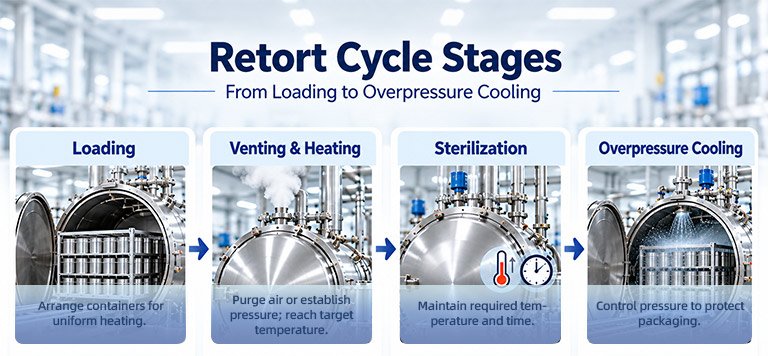
A batch retort cycle passes through loading, come-up, the scheduled hold and cooling, and each phase stresses the sealed container differently: temperature lag dominates heating, while the pressure difference across the container wall dominates cooling. Start conditions differ by system. Saturated steam retorts need validated air removal before timing. Water and steam–air retorts keep or add air for circulation and overpressure, so they must meet their own validated temperature, pressure and circulation conditions.
1. Loading. Containers go into baskets, racks or trays in the load pattern the schedule was validated with, because spacing and separators decide how the heating medium reaches each pack.
2. Venting and come-up. Steam or heated water brings the vessel to process temperature, with air purged in saturated steam retorts and air overpressure built in water and steam–air retorts, until the reference thermometer reads the scheduled temperature.
3. Hold. Timing starts once the system's validated start conditions are met, and the retort holds the scheduled temperature at the reference instrument for the scheduled time.
4. Cooling and unloading. Cooling water replaces the heating medium while overpressure, where the process uses it, keeps external pressure above the internal pressure of still-hot containers until the product is cool enough to handle.
Come-up is the phase most exposed to the plant's utilities. The Clemson review notes that venting consumes the most energy in the first minutes of a cycle. It also notes that plants running several batch retorts stagger their start times to limit peak energy demand.
In cooling, the threat to the package shifts from temperature to pressure. When steam shuts off and cooling water enters, retort pressure can fall faster than the pressure inside hot containers, so can ends can peak or buckle and pouches can balloon or open at the seal. Compressed-air overpressure closes that gap, and saturated steam retorts, which heat without it, can add it for cooling where container size or the scheduled process calls for it. Cooling water also touches seams and seals while containers are still contracting, so 21 CFR 113.60 requires it to be chlorinated or otherwise sanitized as necessary.
Retort Types by Heating Medium and Agitation

Retort types in food plants divide first by heating medium (saturated steam, water immersion, water spray or cascade, steam–air) and then by whether containers stay still, rotate or shake; package format decides most of the first choice. Retort, autoclave and sterilizer name the same vessel in different markets, and spray, cascade, "falling water" and "shower" describe one recirculated-water principle. Specifications are clearer when written by heating medium and overpressure capability.
Retort type | How heat reaches the load | Overpressure while heating | Usual package fit | Utility draw |
Saturated steam (still) | Saturated steam condenses directly on containers once air has been vented | No; pressure follows steam temperature, and air overpressure can be added for cooling | Rigid metal cans | Highest steam flow during venting and come-up; little compressed air while heating |
Water immersion | Containers submerged in hot water, often preheated in a separate tank and recirculated | Yes, air or steam above the water | Pouches, trays, glass jars, shapes that need buoyancy support | Heats a full vessel of water; compressed air; circulation pump |
Water spray or cascade | A small volume of process water recirculated and sprayed or cascaded over the load, heated by direct steam or through a heat exchanger | Yes, compressed air controlled independently of temperature | Pouches, trays, plastic bottles, glass | Steam to heat recirculated water; compressed air; circulation pump |
Steam–air | Fan-mixed steam and air circulated through the load | Yes, set through the air fraction | Pouches and semi-rigid trays | Steam and compressed air supplied continuously, with continual venting; fan power |
The utility column carries one consequence worth checking before installation. A spray retort that heats its process water through a heat exchanger needs steam hotter than that water by the exchanger's approach temperature. At the same 121 °C product temperature, its steam supply pressure must therefore be higher than a direct-steam retort's. How much higher depends on exchanger sizing.
Agitation is a second axis that sits on top of any heating medium. End-over-end or axial rotation moves the headspace bubble through a can or bottle and speeds heat transfer in liquid and semi-liquid products.
Reciprocating (shaking) retorts move containers back and forth and mostly serve pouches and liquid products.
Studies summarized in the Clemson review report shorter processes for the same lethality. In one reciprocating trial on shrimp, total retort time for an F0 of 6 fell from about 30 minutes static to about 17 minutes at 180 shakes per minute. The gain depends on headspace, viscosity and particle size.
Continuous retorts move containers through heating and cooling zones without stopping, and hydrostatic designs balance steam pressure with tall water legs. The Clemson review notes that small and medium facilities may struggle to justify their cost. Batch retorts remain the norm where products and pack sizes change often.
Variables That Set a Retort Scheduled Process
A retort scheduled process is valid only for the product, container and retort system it was established on, because 21 CFR 113.3 treats any parameter whose variation may affect commercial sterility as a critical factor. In practice those factors fall into five groups:
• Product: pH, water activity, viscosity, particle size and starch that thickens as it heats.
• Container: material, dimensions, fill weight, headspace and residual air.
• Initial temperature: the coldest product temperature at the start of the cycle.
• Retort conditions: heating medium, load pattern, venting procedure, agitation speed and orientation.
• Schedule: the process time and temperature themselves.
Product class and package format are the two to confirm first, because they are the least reversible. pH and water activity decide whether the product needs a retort process at all. Package format decides whether the retort must hold overpressure while heating, which depends on the vessel, air supply and controls and cannot be added cheaply after installation.
Initial temperature, fill weight, headspace and agitation speed matter as much to lethality, but they are set points the plant controls batch by batch. The plant can fix them later, provided the schedule specifies their limits before production starts. None of these variables determines the others; the first two are simply the ones a plant cannot change without buying different equipment.
Residual air in flexible packs deserves separate attention because it acts twice. It insulates the product from the heating medium, slowing heat penetration, and it expands with temperature, raising the internal pressure the overpressure profile has to balance. A change in sealing vacuum or fill level can therefore shift both lethality and package integrity at once, even when the recipe is unchanged.
Who Establishes and Records a Retort Scheduled Process
Under 21 CFR 113.83, qualified persons with expert knowledge of thermal processing and adequate facilities establish scheduled processes, working from heat penetration data, thermal death time data and, where needed, inoculated packs. The variables in this article describe what that authority works from; they do not replace its studies and calculations for a specific product and container. Retort operators work under a supervisor who has completed an FDA-approved school (21 CFR 113.10). Each load's records carry the reference thermometer readings alongside the recorder chart, and 21 CFR 113.89 governs any deviation.
Processors of low-acid foods for the US market, including foreign processors offering such foods for import, register the establishment and file each scheduled process with FDA under 21 CFR 108.35. Each filing states the processing method, retort type, minimum initial temperature, time, temperature and F0 for each product in each container size. Plants selling only into other markets work to their national rules, and the critical factors above apply in any jurisdiction.
Retort Deviations Traced to Steam, Air and Water Supply
Retort deviations that surface as process failures can begin in the utility supply: steam that arrives too slowly during venting, compressed air that cannot follow the cooling pressure profile, or cooling water that is not sanitized. The retort chart records the symptom and the utility logs hold the cause, so both belong in the same investigation.
Batch retorts do not draw steam evenly. Venting and come-up pack demand into the first minutes of each cycle. So the boiler load follows how many retorts are in that phase at once, not average hourly consumption.
The CFIA guidance on the temperature distribution test for steam-still retorts asks for steam pressure and volume at the retorts to be measured under maximum operational demand on the steam supply. FDA's inspection guide on steam distribution for retort venting names low retort header pressure and an undersized retort header among the points inspectors look for. Together they make the plant's busiest moment the condition a vent schedule has to survive.
If more retorts, blanchers or CIP heaters now share the header than during the tests, header pressure can sag during overlapping come-ups. Less steam then sweeps each vessel than when the vent schedule was established, and a shortfall that started in the boiler house becomes a lethality question under 21 CFR 113.89. When retorts share a header with blanchers or CIP heating, a come-up that overlaps another vessel's venting is usually where the chart shows a longer ramp first.
Added boiler capacity is not the default fix. If the existing boiler holds header pressure through an overlapping come-up while its other loads run, staggering retort starts costs nothing and removes the coincident peak. More capacity pays off when staggering would stretch the production schedule, or when other steam users cannot move off the retorts' peak minutes.
Symptom on the retort record | Likely utility-side cause | Verification action |
Come-up slower than the validated profile, mainly when another retort is venting | Header pressure sags under coincident venting and come-up demand; boiler output or supply line too small for the peak | Overlay the header pressure trend on retort start times; repeat with staggered starts; compare coincident peak demand with boiler output |
Cold position in a temperature distribution test of a saturated steam retort | Incomplete venting from restricted vents or bleeders, or a vent schedule run on a weaker supply than it was validated with | Repeat the test at the plant's highest simultaneous steam demand; inspect vents and bleeders; compare the thermometer with the steam-table temperature for the gauge pressure |
Pouches or trays swollen, deformed or leaking at the seal after cooling | Overpressure lagged internal pack pressure when steam was cut; air receiver or regulator could not keep up | Trend retort pressure against the scheduled pressure profile; check air receiver capacity and regulator response during cooling |
Can ends peaked or buckled, or can bodies panelled, after cooling | Too large an internal-to-external pressure difference early in cooling (peaking, buckling); excessive external pressure (panelling) | Review the pressure step at steam-off and the overpressure level through cooling against the scheduled profile |
Spoilage in containers whose thermal records were in order | Post-process leakage, with unsanitized cooling water drawn in through seams or seals as containers contracted | Check sanitizer residual in cooling water at the retort; review seam or seal inspection records |
Supply pressure is the other half of the check. Saturated steam at 121.1 °C corresponds to about 1.04 bar gauge at sea level, and a plant at altitude reads a higher gauge pressure for the same temperature because atmospheric pressure is lower. The header has to stay above that value at each retort inlet after piping, pressure-reducing station and control-valve losses, and further above it for exchanger-heated spray retorts. The number to check is each retort's rated inlet steam pressure, measured at the retort during a coincident come-up.
Retort Process FAQs
Is the retort the cooking step for ready meals?
Often it finishes the cooking, but the schedule is written for lethality at the cold spot. Pre-cooking and formulation carry the texture targets within that constraint.
Do retorted foods ever need refrigeration?
Only when the processor designed the in-pack treatment as pasteurization. Some products receive a milder retort treatment and carry a chilled-storage label. A low-acid product processed to commercial sterility and kept in an intact container is shelf-stable at room temperature.
How long does a retort cycle take?
Cycle length depends on container size and shape, product consistency, retort type and agitation. As one reference point, Tetra Pak states that a normal retort process for its carton packages takes 60–180 minutes in total. Thin pouches and agitated retorts reach the same lethality in shorter cycles.
Can a plant keep its scheduled process after changing container supplier?
Not automatically. Container dimensions, wall thickness, material and headspace are critical factors. A new supplier's container, even at the same nominal size, goes to the process authority, who decides whether new heat penetration data are needed before the schedule applies.
What happens if the steam supply fails partway through a hold?
The load becomes a process deviation. Under 21 CFR 113.89 it is fully reprocessed, or held for a processing authority's evaluation and destroyed if a public-health risk cannot be excluded. Any recovery step, such as restarting the hold, has to follow a procedure the authority has evaluated for that situation.
Retort Process Control From Cold Spot to Steam Header
Two things decide whether the retort process in food industry lines is working: the lethality accumulated at the product's cold spot, and the steam, air and water conditions under which that lethality was validated. Heat distribution and heat penetration data prove the first; utility trends checked against the validation conditions prove the second. A retort room that passes its distribution tests on a quiet shift can fail them when every vessel starts at once. The validation condition worth defending is the plant's busiest hour.
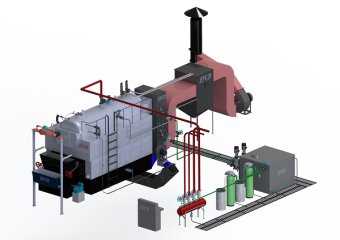
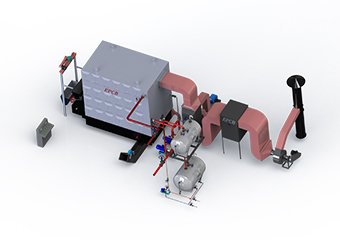
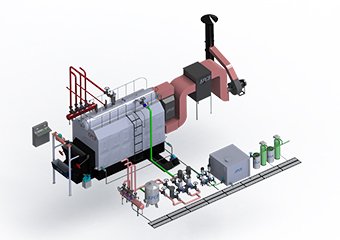
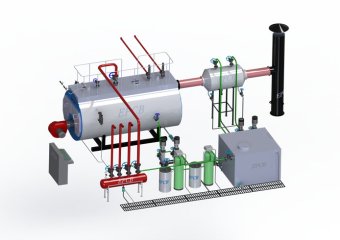
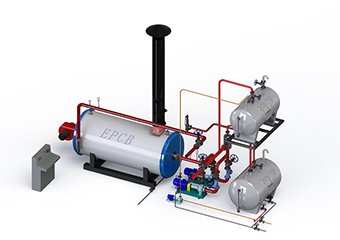
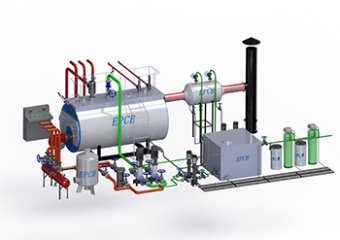
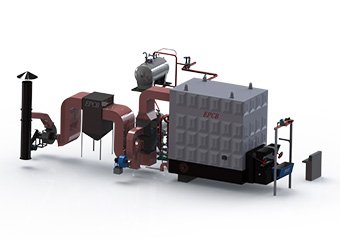
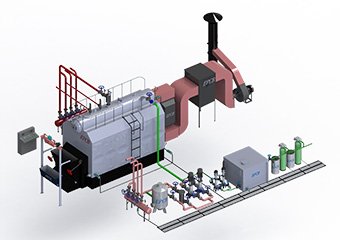
We size steam supply for a retort room from the coincident come-up profile of the retorts on the header. Then we check it against the rated steam pressure each retort needs at its inlet. If your retorts vent in overlapping cycles and header pressure drops during those minutes, log that pressure against retort start times first. If staggered starts cannot absorb the peak, size a Gas Fired Boiler to that coincident come-up demand instead of the plant's average steam use.





 Steam Boiler
 Thermal Oil Boiler
 Hot Water Boiler
 Steam Boiler
 Thermal Oil Boiler
 Hot Water Boiler
 Steam Boiler
 Thermal Oil Boiler
 Hot Water Boiler
 Steam Boiler
 Hot Water Boiler