Pure steam in the pharmaceutical industry is defined by its source water and by what its condensate must meet: the USP-NF Pure Steam monograph describes steam prepared from drinking-quality water, containing no added substance, and vaporised in a way that prevents source water entrainment. Whether a duty needs that grade starts with one screening question, namely whether the steam or its condensate can reach product or a product-contact surface. The answer is then settled against the intended use and the requirements that apply to it. Saturation, dryness and non-condensable gas limits follow from the application, which is also where the boiler upstream acquires its pressure and flow duty.

Parameter | Limit and source |
Source water | Drinking-quality water under EPA, EU or Japanese regulations or WHO guidelines, with no added substance (USP-NF Pure Steam monograph) |
Entrainment | Vaporisation must prevent carry-over of source water (USP-NF Pure Steam monograph) |
Condensate chemistry | Commonly measured against the WFI specification for conductivity, TOC and endotoxin; ISPE's summary excludes the microbiological requirement and retains endotoxin. Dropping that test does not drop the duty to control contamination in feedwater and system |
Endotoxin | Below 0.25 EU/mL where the WFI limit is carried across to condensate; confirm the limit, chapter and test method against the pharmacopoeia your site adopts |
Dryness value, non-condensable gases, superheat | Set by the application (USP-NF monograph). Sites sterilising with steam commonly adopt the EN 285 figures summarised by ISPE: dryness 0.95 or higher, gas no more than 3.5 mL per 100 mL of condensate, superheat under 25 °C on expansion to atmospheric pressure. EN 285's own scope is large steam sterilizers in health care; current designation EN 285:2015+A1:2021 |
The Grade Called Pure Steam in the Pharmaceutical Industry

Pure steam is the grade a pharmaceutical site uses where steam or its condensate can reach product or a product-contact surface, and the pharmacopoeial definition rests on the source water and the vaporisation method. Three steam grades circulate on a typical plant. Plant steam comes from a conventional boiler and carries corrosion inhibitors. Chemical-free steam comes from softened water without volatile additives. Pure steam, as ISPE's technical article on steam quality and testing describes it, comes from treated water free of amines and hydrazines and serves sterilization and thermal disinfection duties.
The distinction matters because the three grades come from different equipment and are validated to different depths, so assigning a duty to the wrong one is expensive in both directions. Put a duty on plant steam that touches product, and the contamination pathway is direct. Put a non-contact duty on pure steam, and the site inherits sampling, trending and requalification obligations that no risk assessment asked for.
Terminology is where this goes wrong first. The European Compliance Academy, in its note on pure and clean steam, treats the two terms as equivalent from a pharmaceutical standpoint and records that the United States Pharmacopeia defined pure steam in 2006. ASME BPE, the bioprocessing equipment standard, has historically drawn the two terms apart. Check the definitions against the edition your project adopts before either word carries weight in a document.
Terminology cannot substitute for a specification. Pharmacopoeial requirements, the standards a contract names and a site's approved user requirements all bind; the adjective on a supplier datasheet does not. A purchase specification naming conductivity, TOC and an endotoxin limit with their test methods is verifiable. One naming a grade invites an argument after commissioning.
What Feedwater a Pure Steam Generator Actually Needs
A pure steam generator does not need water for injection as feedwater; the pharmacopoeial requirement is drinking-quality source water with no added substance, and the purity beyond that depends on the operating envelope the unit was qualified against. Several widely read pages state that pure steam is made from WFI. The monograph does not say so, and neither do the engineering sources. A continuing-education course on clean steam systems written by Tim Latham records that most generators in pharmaceutical facilities run on purified water as a matter of convenience. The same course notes that plants with large steam usage sometimes justify a separate lower-purity feed, often reverse osmosis permeate. ISPE sets the same boundary from the other end: potable water standards at the feed, WFI at the condensate.
Select feedwater treatment against that qualified envelope, covering chemical quality, microbial control and endotoxin loading as three separate questions. A low viable count does not establish a low endotoxin concentration. The units differ, and neither converts into the other. Generators do reduce endotoxin between feed and steam. Treat the reduction a given unit is qualified to achieve as a performance figure to obtain in writing, tied to the feedwater conditions it was demonstrated under.
The chemical side is where a generator manufacturer's own datasheet governs. A typical sheet asks for freedom from amines, chlorine and chlorides, silica below 1 ppm, total hardness below 1 ppm and conductivity below 5 µS/cm. The sheet excludes amines because they are volatile and would carry over, and chlorine because it attacks stainless steel. Those figures belong to the vendor and the model, so take them from the current document for the unit you are buying.
The specifying action is short. Write the generator's qualified operating envelope into the purchase specification, including the endotoxin reduction claimed and the feedwater conditions it is claimed under. Then size the feed treatment against the gap between that envelope and your own water.
Where Pure Steam Is Required and Where Plant Steam Still Wins

The split between pure steam and plant steam starts with contact and ends with intended use: where steam or its condensate can reach product or a product-contact surface, pure steam is the starting assumption, and where it cannot, plant steam usually remains the simpler option. The duties below cover direct sterilization of materials and product-contact surfaces. Assess other pharmaceutical uses against their own intended purpose and the requirements that apply to it.
Duty | Steam grade | Deciding condition |
Autoclave sterilization of components, containers and porous loads | Pure steam | Load contacts the steam directly; the sterilizer standard the site adopts sets limits at the inlet |
Sterilization in place of vessels, reactors and process piping | Pure steam | Header pressure provides the supply conditions; achieved sterilization conditions must be demonstrated at validated locations within the SIP system |
Cleanroom and isolator humidification | Pure steam where drug product may be exposed, chemical-free steam where exposure is not a concern | ISPE's Baseline Guide reports both practices in use, split by exposure risk |
Heating high-purity water ahead of a CIP cycle | Pure steam if injected directly, plant steam if transferred through an exchanger | Direct injection versus indirect heat transfer |
HVAC frost coils and non-critical heat exchangers | Plant steam | No contact path exists, so boiler additives are acceptable |
WFI production by heat exchange, and kill-tank waste destruction | Plant steam | Contact is with the exchanger surface, not with product |
Two rows repay a second reading. Sterilization in place draws its temperature from the supply header, which makes a loosely specified header a validation problem before it becomes a utility problem. CIP water heating flips grade on a single piping decision, which is why it is worth settling before the P&ID goes out.
Condensate Purity and Physical Steam Quality at the Point of Use
Pure steam has to pass two separate sets of criteria, chemical and physical, and the physical set is measured downstream where pipework design and demand both influence the result. Conductivity, TOC and endotoxin describe what the condensate contains. Dryness value, non-condensable gases and superheat describe how the steam behaves when it meets a load.
Dryness comes first because wet steam carries less usable enthalpy and leaves loads wet, with the sterility risk that follows from storing a wet load. ISPE describes dryness value as primarily a function of distribution system design and of demand during the test. The same article then lists the causes of a low reading: damaged insulation, inadequate fall, sagging pipe, dead legs, steam velocity, malfunctioning or badly located traps, clogged filters, and poor generator maintenance or operation.
A failed dryness test therefore does not identify the fault location by itself. Both ends need checking. Investigate the generator and the distribution system together, and compare conditions at the generator outlet against conditions at the point of use before assigning a cause. The design rules give the checklist for the pipework half: a fall of at least 100 mm per 10 metres in the direction of flow, traps in pockets at roughly 30 to 50 metre intervals, and no unswept branch where condensate can stand.
Non-condensable gases behave differently, because they originate at the generator and then accumulate in the pipe. Gases entrained during generation act as an insulator at the load interface, and a porous load is where the effect shows, since gas lodged in the fabric keeps the inner layers below temperature. Levels run higher after a shutdown, and leaking valve glands can admit actuator air into the steam. Qualification tests each sterilizer connection, after which the worst-case point carries the routine monitoring.
Pressure reduction generates superheat, the process is close to isenthalpic, and the effect is usually smaller than it looks. ISPE works the example. Dry steam at 7.0 barg reduced to 1.037 barg arrives at about 149.76 °C against a saturation temperature of 120.8 °C, roughly 29 °C of superheat. That margin represents under 3 % of the energy available from condensing the low-pressure steam, and residual wetness or heat loss in the pipe usually absorbs it. Treat reduction ratios such as 2:1 per stage as design guidance and not as acceptance criteria. Under the same isenthalpic model, splitting one reduction into two stages does not by itself change the final enthalpy. Evaluate the final condition from the inlet state, the downstream pressure in absolute terms, and the actual heat transfer between stages.
Endotoxin does not behave like the physical three. Steam at sterilizing temperature kills organisms, but endotoxins are breakdown products that survive clean steam temperatures, so condensate that pools and cools can host growth whose residue outlives the next cycle. Parts of a system continuously exposed to flowing steam stay sterile while the same system is never self-depyrogenating, which makes trap discipline part of endotoxin control as well as thermal control. Where a system passes chemistry but drifts on endotoxin, standing condensate is the first place to look.
What a Pure Steam Generator Demands From the Boiler Upstream
A pure steam generator heated by plant steam needs the boiler behind it to deliver the coincident peak mass flow while holding the generator's minimum inlet pressure, and those two conditions have to be checked together. Most generators take plant steam as the heating medium through a double tubesheet exchanger, while low-capacity units may use electric heating instead.
Amine or hydrazine in the plant's boiler water treatment is not disqualifying by itself, and the exclusion is narrower than it is usually stated. The additive rule covers at least two cases: steam injected directly into product, water or a clean space, and steam used for humidification where drug product may be exposed. A double tubesheet arrangement helps detect and segregate leakage at tube-to-tubesheet joints, but it does not by itself eliminate contamination from a tube-wall failure. Assess that failure mode separately, particularly where utility steam pressure exceeds clean-side pressure.
You can budget pressure before contacting any vendor, provided four quantities stay apart instead of merging into one number:
· Generation pressure: what the pure steam header runs at, commonly 40 to 50 psig for autoclaves with a reduced sub-header near 25 psig for SIP.
· Minimum generator inlet pressure: the heating-steam pressure the unit is qualified to work at, which sits above generation pressure to create the temperature difference. Latham's course puts the usual margin at 30 psi or more.
· Pipe and control valve pressure drop: everything lost between boiler outlet and generator inlet at peak flow.
· Design pressure or MAWP: the vessel rating, fixed at manufacture and distinct from the three figures above.
Worked as an illustration only: 45 psig generation with a 30 psi differential puts about 75 psig at the generator inlet, before drop and before any reduction stages. The point of the arithmetic is the gap it exposes. A plant designed against the 15 psig that saturated steam at 121 °C implies has budgeted for the sterilizer and not for the generator. Put your own numbers through the same line: take the highest inlet pressure any sterilizer on site specifies, set generation above it, add the differential your generator vendor qualifies, then add the distribution loss your layout implies.
Capacity is where the reasoning usually stops and should not. Sterilization and SIP cycles are batch loads, so the generator draws plant steam in steps. Whether header pressure holds through those steps depends on steaming capacity, control response and the energy stored in the boiler together. Size a header from average consumption without checking the coincident peak, and the resulting shortfall reads on the floor like a generator fault while the corrective action sits on the boiler side. Verify that boiler and header can deliver the coincident peak mass flow at the generator's minimum required inlet pressure, and decide redundancy on the same basis.
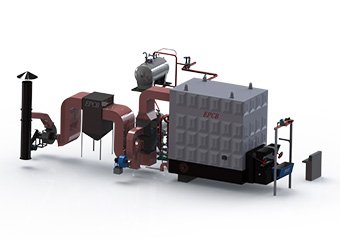
Two smaller points close the loop. The generator discharges roughly 10 to 15 % of its feedwater as blowdown, and pure steam condensate is not returned untreated. Both losses raise makeup-water demand on the purified water system and also affect the thermal duty and the heat-recovery balance, while the boiler's own heating condensate stays clean and returns normally. Fuel is a separate choice for the plant boiler, whether it burns gas, oil or coal, runs on electric resistance, or is a biomass fired boiler. What the generator sees at its inlet is pressure, flow and dryness. If the only pure steam duty on site is one small autoclave, put a directly heated generator into the comparison before assuming the plant boiler has to be uprated. That route can take the boiler out of the project altogether.
Clean-side pipework sits outside all of this. Slope, orbital welding, passivation and surface finish form a separate specification and a separate qualification exercise from the utility that feeds them.
Terminology That Changes What You Get Quoted

Pure steam projects carry at least six word pairs that each hold more than one meaning, and any of them can move a supplier's price unless the specification replaces the word with a measurable. The table pairs each term with the action that removes the ambiguity.
Term or phrase | Meaning in context | Specifying action |
Pure steam / clean steam | Treated as equivalent in USP and ISPE usage; drawn apart in ASME BPE; used by some sites for two different grades | Replace the adjective with the pharmacopoeial specification the condensate must meet |
Dryness fraction / dryness value | Fraction implies an exact mass ratio; value is what the standard method returns from a centre-of-pipe sample | State the sampling method beside the number, since a static-mixer sample and a centre-of-pipe sample measure different things |
Steam quality / steam purity | Quality usually means the physical set of dryness, gases and superheat; purity means the chemical and endotoxin set | Split acceptance into two tables so neither set is assumed to cover the other |
Pyrogen-free | An adjective with no test method attached | Ask for the endotoxin limit in EU/mL and the test method instead |
Boiler / steam generator | Covers plant boilers, pure steam generators and electric generators, which sit on opposite sides of the contact boundary | Classify equipment by whether its output can contact product, then name the duty |
SIP / CIP | Sterilization and cleaning are different duties drawing different grades and pressures | Confirm which duty a line serves before assigning a steam grade to it |
Specifying Pure Steam Quality and Plant Steam Capacity in One Pass
Steam-quality requirements, peak demand and the pressure envelope are defined together before procurement, because each one limits the equipment that can satisfy the other two. Equipment is then selected to meet the approved requirements, and those requirements are not relaxed to accommodate an unsuitable selection.
Among the physical decisions, lock the pressure rating early, because a vessel's rating is fixed at manufacture while pipework and control settings can still be revised. Later GMP-relevant changes to specifications, facilities, utilities or equipment call for documented review and an assessment of any additional qualification.
Where pure steam in the pharmaceutical industry is concerned, the number that most often needs a site-specific answer is the coincident peak. It depends on how many sterilization and SIP cycles your production plan allows to overlap. We check boiler and header capacity for this duty against that coincident peak at the generator's minimum inlet pressure, so that one check proves flow and pressure together.
Where you start depends on whether the condensate acceptance criteria or the header pressure is the one still open.
If you are designing a new facility with the pure steam duties already identified, fix the plant steam header pressure and flow now and carry both into the pharmaceutical boiler enquiry. Both drive a pressure-vessel rating that cannot be dialled in later. If you are adding a first autoclave to an existing plant, price a directly heated generator alongside any boiler modification before assuming the boiler has to change. If pure steam output already sags during cycles, log header pressure and flow at the generator inlet through two overlapping cycles before investigating the generator. And if the user requirement specification is still being drafted, replace every adjective in the steam section with a limit and a test method. Then check that every duty on the plant carries a grade chosen by intended use and contact path, not by habit.
FAQ
How often should pure steam quality be tested once the system is qualified?
Set monitoring frequency through a documented, risk-based programme supported by qualification data and operating history. Published schedules are examples, not universal requirements. ISPE's article proposes chemistry and endotoxin quarterly, non-condensable gases quarterly until data support a reduction, and dryness annually at the worst-case point, with commissioning temperature maps covering SIP systems in place of routine superheat checks. EU GMP Annex 1 also addresses steam used as a direct sterilising agent and expects the physical parameters to be confirmed. Any omission or reduction in testing needs a justification written for that system and that use.
Does a pure steam distribution system need a separator at the generator outlet?
Sources differ, so decide it on the equipment. Latham's course treats a distribution separator as a remedy for a design defect, since a correctly functioning generator delivers dry saturated steam. ISPE notes that many generators include or recommend one immediately downstream. Let generator construction, the outlet condition the vendor guarantees and the requirement at the point of use settle it.
Can pure steam condensate be returned to the generator?
Not untreated. Clean steam condensate normally goes to drain, because an unqualified return path is a contamination route. Heat recovery is the usual exception.
Is EN 285 mandatory for a pharmaceutical facility?
Enforcement varies by country: application is uneven across Europe, and UK inspectors are noted as insisting on it. Other documents cover the same parameters differently; ISPE lists ANSI/AAMI ST79 as setting a higher dryness requirement than EN 285.
What causes rouging, and does it always have to be removed?
Rouging disrupts the passive layer on stainless steel and leaves a red, brown or black film. Latham's course reports that the film is often stable, but colour and visible shedding are not the test. Assess the effect on product quality, then decide whether derouging and repassivation are warranted.
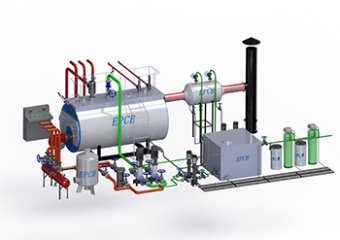





 Steam Boiler
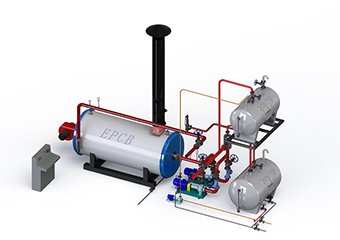
 Thermal Oil Boiler
 Hot Water Boiler
 Steam Boiler
 Thermal Oil Boiler
 Hot Water Boiler
 Steam Boiler
 Thermal Oil Boiler
 Hot Water Boiler
 Steam Boiler
 Hot Water Boiler