The types of industrial boilers in common use divide on two independent axes. Structure, meaning fire-tube or water-tube, sets the pressure and capacity a unit can reach. Fuel or heat source, meaning coal, oil and gas, biomass, electricity, or recovered waste heat, sets operating cost and emissions exposure. Every boiler carries one value from each axis at the same time, which is why a coal-fired boiler is not an alternative to a water-tube boiler; most large coal-fired industrial boilers are water-tube. What the unit delivers, whether steam, hot water, or thermal oil, forms a third axis. Structure is fixed permanently at fabrication, while fuel and output medium can often be reconsidered later in a project.
What an Industrial Boiler Is and Where It Is Used

An industrial boiler is a device that generates steam or heats water and is widely used in the production process of various industries. As industries diversify their operations, so do their energy needs. Boilers are used as a means of production, and as technology advances, newer
and more efficient models are constantly being developed.
The working principle of an industrial boiler is based on the principle of energy conversion. It provides thermal energy through the use of fuels such as coal, oil, natural gas, or biomass to heat the medium to a high temperature and pressure state, producing steam or hot water. The steam or hot water is transported through pipes to the equipment that needs heat energy, achieving the transfer and use of energy.
· Industrial boilers are widely used in electric power, petrochemical, food processing, pharmaceutical, textile, printing and dyeing industries.
· In power plants, industrial boilers generate high-temperature, high-pressure steam to drive turbines to generate electricity.
· In petrochemical and chemical plants, industrial boilers provide heating and thermal energy to drive various reactions and processing operations.
· In food processing plants, industrial boilers are used for baking, sterilising, boiling and other processes.
· In pharmaceutical plants, they provide clean steam to meet the requirements of pharmaceutical processes.
· In textile and dyeing industries, industrial boilers provide hot water or steam for dyeing, printing, drying and other processes.
How Industrial Boilers Are Classified

Three axes describe an industrial boiler, and mixing them into one list is the most common source of confusion when comparing quotations.
Structure describes where the pressurised water sits relative to the combustion gases. This is the fire-tube versus water-tube split, and it governs how much pressure and capacity the design can reach.
Fuel or heat source describes what puts the energy in: coal, oil, natural gas, biomass, electricity, or the exhaust of an upstream process. This governs fuel cost, emissions permitting, and how much fuel handling equipment sits around the boiler.
Output medium describes what leaves the boiler: steam, hot water, or thermal oil. Thermal-oil units are widely sold as thermal-oil boilers, but because they heat a transfer fluid rather than generate steam, they are commonly built to a pressure-vessel code rather than a boiler code, and may sit outside the boiler inspection regime that covers your steam plant. Confirm the classification with your local authority rather than the sales literature.
A complete specification names a value on each axis. "A 6 t/h three-pass fire-tube steam boiler firing natural gas" is complete. "A gas boiler" fixes one axis out of three.
Which code applies where
Construction codes draw their boundaries on pressure and output medium, not on fuel. In North America, steam boilers generating above 15 psig generally fall within the ASME BPVC Section I power-boiler scope, while low-pressure heating and hot water supply boilers may fall under Section IV. In the EU, pressure equipment falls under the Pressure Equipment Directive 2014/68/EU, with EN 12952 covering water-tube boilers and EN 12953 covering shell boilers. Other markets operate their own registration and inspection regimes.
Two practical points follow. First, the same code section covers coal-fired, gas-fired, electric, and waste-heat units, which is further evidence that fuel is not a peer of "fire-tube" in any classification that matters for procurement. Second, which code edition applies is not a single answer: the manufacturer's certification, the purchase specification, and the jurisdiction where the boiler will be installed can each require a different one. Some jurisdictions adopt an edition by reference and freeze it. Arizona, for example, adopts the 2019 ASME edition and states that the incorporation does not include later editions. Ask the supplier which edition their certification is held to, and confirm separately what your local authority has adopted.
Types of Industrial Boilers

Based on different fuels and working principles, industrial boilers can be classified into various types, each with specific advantages and scope of application. EPCB, as a professional boiler manufacturer and supplier, offers a wide range of industrial boilers to meet the needs of customers in different fields. EPCB's boiler types include hot water boilers, coal-fired boilers, oil and gas boilers, biomass-fired boilers, and electric boilers.
Fire-Tube and Water-Tube: The Structural Split

Structural type is the decision fixed permanently in steel at the moment the pressure part is fabricated, and it is the one axis that cannot be revisited later.
Structural design | Where the water sits | What sets the pressure ceiling | Water held at pressure | Practical consequence |
Fire-tube (shell) | In a large shell, surrounding tubes carrying hot gas | Shell diameter, via the wall thickness needed to carry hoop stress | Large | Slower to respond to load steps, more tolerant of feedwater upsets, lower cost per unit of capacity at moderate pressure |
Water-tube | Inside small-diameter tubes, with gas passing outside | Tube diameter, an order of magnitude smaller than a shell | Small | Reaches higher pressure and larger output, responds faster to load changes, requires tighter feedwater control |
Once-through (compact coil) | Inside a continuous tube circuit, with no storage drum | Tube diameter, but with no reservoir to buffer | Very small | Fastest from cold, suits intermittent demand, makes deaeration and softening part of the specification rather than an option |
The reason structure outranks fuel in this hierarchy is geometric. For a thin-walled cylinder under internal pressure, hoop stress is approximately p·r/t, so the wall thickness required rises in proportion to the radius of whatever holds the water. A fire-tube boiler pressurises a large shell; a water-tube boiler pressurises small tubes. That relationship, not the burner, is why one reaches higher pressure than the other, and the fuel does not appear in the expression at all. The proportionality explains one structural advantage only: actual allowable pressure is established by the full code design, including material allowable stress at temperature, joint efficiency, tube-sheet and opening reinforcement, and fabrication limits.
This is also why the two axes combine freely. A coal-fired or biomass-fired boiler can be fire-tube at smaller capacity and water-tube above it. An electric boiler can be built either way. For a fuller comparison of the two structures, see Differences Between Fire Tube Boilers and Water Tube Boilers.
Hot Water Boiler
A hot water boiler delivers sensible heat in circulating water rather than latent heat in steam, which suits space heating, service hot water, and low-temperature process loads, and usually places it in a lower pressure class than a steam boiler of the same output. EPCB hot water boilers use the combustion of fuel or other energy sources to produce high temperature flue gases, and through heat exchange between the flue gases and water, the water is heated to the required temperature. The process is realised through key components such as the combustion system, flue system, and water circulation system.
EPCB hot water boilers are widely used in hotels, schools, hospitals, and factories, where they provide a reliable solution for heating, bathing, washing, and other hot water needs. Their efficiency and energy-saving features make them a practical choice for reducing energy consumption and lowering operating costs.
Coal-Fired Boilers
The EPCB coal-fired boiler is a traditional type of industrial boiler that burns coal to meet the demand for hot water or steam in industrial production. It has the advantages of extensive fuel resources and relatively low cost. However, because its exhaust gas contains a large quantity of pollutants, the environmental performance of coal-fired boilers depends on advanced combustion control and pollutant purification equipment.
Coal remains attractive where reserves are local and delivered price is low, which is why coal-fired units are still common in power generation, petrochemicals, textiles, and pulp and paper. EPCB coal-fired boilers adopt advanced combustion control technology and flue gas purification equipment, which improves combustion efficiency and reduces emission levels. Note that many jurisdictions are tightening or phasing out coal firing, so confirm the emissions limits and permitting position at your site before specifying coal, not after.
Oil and Gas Fired Boiler
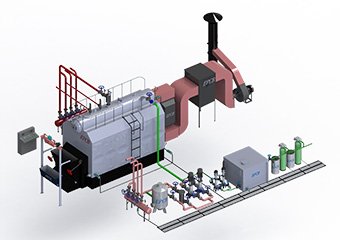
The EPCB gas fired boiler uses liquid fuel such as heavy oil or light oil, or natural gas, to produce heat energy. It is widely used in industrial production, particularly in processes requiring high temperatures and pressures. The EPCB oil and gas fired boiler adopts a fourth-generation wet-back three-pass structure, giving stable operation and fast steam generation for industrial process, heating, and hot water supply.
Oil and gas firing gives the widest turndown and the simplest fuel handling of any fired option, with no ash, no fuel storage yard, and no feed system to maintain. These units suit a wide range of sizes and applications, from small industrial plants to large commercial buildings, hospitals, and schools where hot water and steam are required. They also carry useful load adaptability, adjusting operation automatically as the actual heat load changes.
To raise efficiency, the EPCB oil and gas fired boiler uses a large-diameter corrugated furnace and internal and external double-threaded flue tubes to increase heat exchange area. Aluminosilicate fibre and aluminium foil insulation reduce shell losses, and finned-tube economizers recover heat from the flue gas, bringing flue gas exit temperature down to around 110°C.
How to read an efficiency figure above 100%. With a condensing recovery device, latent heat in the flue gas water vapour is recovered, and system efficiency can be quoted above 100%. That is a convention rather than a claim to break physics. Efficiency stated on a lower heating value basis, also called net calorific value, excludes the latent heat of vaporisation from the reference, so a unit that then recovers that latent heat can exceed 100% on that basis while remaining below 100% on a higher heating value basis. EPCB rates its gas-fired boiler systems at over 98% without condensing recovery and over 102% with it. Before comparing any two suppliers on efficiency, confirm which basis each figure uses, because an LHV number and an HHV number for the same machine differ by roughly ten percentage points on natural gas.
Biomass-Fired Boiler
The EPCB biomass boiler burns biomass fuels such as wood chips, straw, and crop residue. Designs are usually divided into fixed grate, chain grate, and reciprocating grate types according to the grate arrangement. Biomass boilers are widely used in agriculture and forestry, and their application in industrial production is increasing, particularly in wood processing, sugar, palm oil, food processing, and pulp and paper, where the feedstock is a by-product of the plant's own operation.
On emissions, biomass combustion releases carbon dioxide at the stack like any other fuel. Whether it lowers lifecycle greenhouse-gas emissions relative to fossil firing depends on feedstock type, the regrowth or residue counterfactual, processing, transport distance, land-use effects, and boiler efficiency. Treating biomass as automatically carbon neutral is the most common error in this area.
The stronger and more defensible argument is usually fuel cost. Where feedstock is a local by-product, delivered cost can sit well below natural gas or electricity, and that advantage narrows once fuel has to be transported any distance. Biomass firing also brings requirements a gas-fired unit does not have, including fuel storage, moisture management, ash handling, and a larger furnace volume for the same output.
Electric Boiler
The EPCB electric boiler converts electricity into heat energy. Unlike gas- or oil-fired boilers, electric boilers do not require fuel storage or venting systems. They are reliable and give precise temperature control, and they are simple to operate and quiet in service, though the relatively high cost of electrical energy limits their use in large-scale industrial production.
Industrial units use either resistance elements or high-voltage electrodes, and the two differ in capacity range, control behaviour, and feedwater conductivity requirements. Because there is no combustion, there is no flue gas, no stack, no combustion air requirement, and no burner or fuel train to maintain, which is why electric units appear in cleanrooms, pharmaceutical and food production, laboratories, and urban sites where routing a flue is difficult or prohibited.
Whether an electric boiler is cheaper to run depends on the industrial electricity tariff, demand charges, load factor, the price of the fuel it displaces, and any grid connection upgrade the installation requires. It still needs pressure-part inspection, safety valve testing, water treatment, and element or electrode maintenance.
Waste-Heat Boilers and HRSG
A waste-heat boiler, including the heat recovery steam generator (HRSG), takes the exhaust of a gas turbine, engine, kiln, or process furnace as its heat source and produces steam with no separate fuel burn. It sits on the heat-source axis alongside coal, oil, gas, and electricity, and it is the only option on that axis with no fuel cost at all.
Its constraint is availability rather than capacity: steam output follows whatever the upstream process is doing, so a waste-heat unit is normally paired with a fired or electric boiler that covers the gap when the upstream source is down or turned down. Plants in cement, glass, metals, and cogeneration are where this pairing pays back fastest, because the exhaust stream is both hot and continuous.
Which Boiler Type Fits Which Duty

Two variables settle the boiler type before any others: the pressure required at the point of use, and the load profile the unit will actually see across a shift.
Pressure determines the code scope and, through the geometric relationship described earlier, constrains the structural choice. Load profile determines whether a large stored water volume is an asset or a liability. Once those two are fixed, fuel becomes a largely separate question answered by local fuel prices, emissions limits, and what handling equipment the site can accommodate.
When a unit is chosen on rated efficiency without first checking the load profile, the usual outcome is short-cycling: the boiler spends its day starting and stopping instead of running near its rated point, and delivered efficiency lands well below nameplate. In plants that swing between near-zero and full demand several times a shift, burner turndown and feedwater control are typically the first things worth re-examining, ahead of the boiler itself.
There is also a case for not buying a process steam boiler at all. If the duty is space heating or service hot water only and pressure stays low, a heating boiler is cheaper to buy, faster to certify, and cheaper to insure than a power-boiler-scope unit. Capacity sizing and fuel cost modelling sit outside the scope of this article; for the full selection sequence see our guide on how to choose an industrial boiler.
EPCB as an Industrial Boiler Manufacturer
EPCB supports boiler customisation and provides design input for complete production lines. Customers work with the engineering team on duty, fuel selection, and process requirements, and receive a design covering boiler type, capacity, combustion system, and heat recovery device.
Production line experience concentrates in three areas. In textile printing and dyeing, the work centres on stable heat supply to sizing, where heat source instability shows up as brittle yarn breakage and inconsistent moisture regain. In pulp and paper, boiler selection is settled alongside the layout of pulp preparation and paper processing so that steam pressure and drying capacity are matched from the start. In chemical production, boiler specification follows the reactor configuration and separation process rather than preceding it.
Matching the Axes to Your Own Duty

Of the three axes described here, structure is the one to settle first, because it is the only one fixed permanently at the moment the pressure part is built. Fuel and output medium can usually be revisited further into a project, though a change of fuel family will change furnace sizing along with it.
In our own quotation process we ask for pressure at the point of use and the shift load profile before asking about fuel, because a unit sized on peak demand alone spends most of its service life cycling rather than running at its rated point, and the margin recoverable there usually exceeds anything gained by comparing nameplate efficiency figures.
If your duty involves process steam and a variable load, bring the pressure requirement and the shift profile to the Industrial Boiler Manufacturers on your shortlist and ask them to state the structure and the code section on the quotation, not just the capacity and the fuel. If your duty is heating or service hot water at low pressure, a hot water boiler answers most of the question already, and the remaining decision is fuel.
FAQ
Is a water-tube boiler always more efficient than a fire-tube boiler?
No. Efficiency follows the burner, the economizer, and how close the unit runs to its rated point, not the tube arrangement.
Can a coal-fired boiler be a water-tube boiler?
Yes, and most large ones are. Fuel and structure are separate choices. Smaller coal- and biomass-fired units are often fire-tube; above the capacity and pressure a shell can economically carry, the same fuel is burned in a water-tube design. Naming the fuel tells you nothing about the structure, and the reverse is equally true.
Why do some boiler efficiencies exceed 100%?
Because the figure is quoted on a lower heating value basis, which excludes the latent heat of vaporisation from the reference. A condensing unit recovers that latent heat and so exceeds 100% against that reference, while remaining below 100% on a higher heating value basis. Always confirm the basis before comparing suppliers.
Is a thermal-oil heater technically a boiler?
Commercially it is sold as one. From a code standpoint it does not generate steam, so it is commonly built to a pressure-vessel code rather than a boiler code and may fall outside your boiler inspection regime. Confirm with the authority having jurisdiction rather than the sales literature.
Which should I decide first, fuel or boiler type?
Structure first. It is fixed at fabrication and cannot be changed afterwards; fuel can still be reconsidered while the design is open.
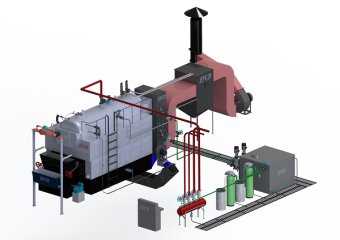
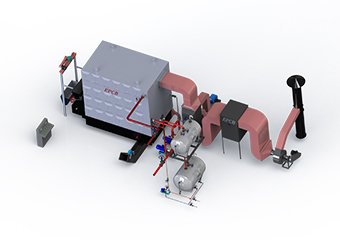
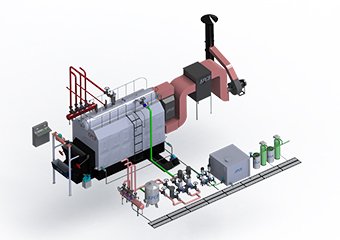
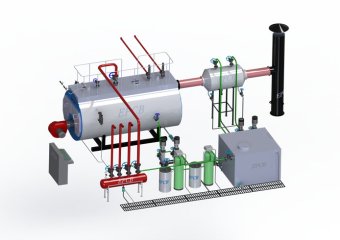
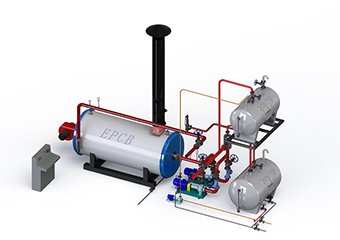
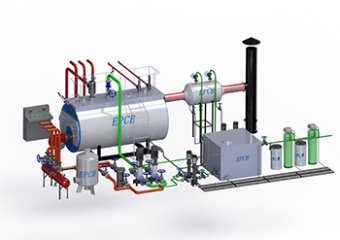
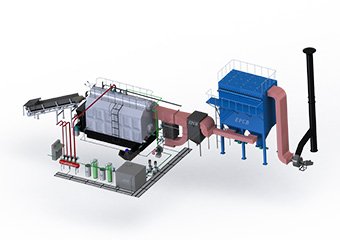
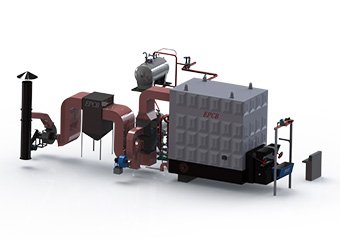





 Steam Boiler
 Thermal Oil Boiler
 Hot Water Boiler
 Steam Boiler
 Thermal Oil Boiler
 Hot Water Boiler
 Steam Boiler
 Thermal Oil Boiler
 Hot Water Boiler
 Steam Boiler
 Hot Water Boiler