

For paint, coating and basic chemical production companies, although steam systems are not usually directly present in the final product, they are an important energy guarantee for maintaining the stable operation of production processes.
From raw material heating and reactor temperature rise to partial material insulation, equipment cleaning, and other auxiliary production processes, a stable heat supply directly affects production rhythm, process temperature, and equipment operating efficiency. Therefore, the selection of industrial boilers cannot only consider the rated evaporation capacity, but also requires comprehensive consideration of multiple factors such as actual steam load, operating pressure, fuel conditions, automatic control, feedwater quality, and subsequent maintenance.
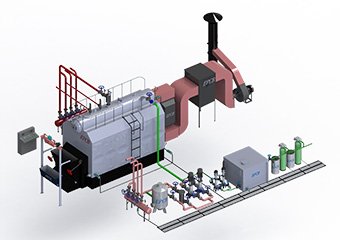
One of EPCB's paint industry customers required a continuous and stable steam supply during its production process. Based on the factory's actual production needs, the customer selected an EPCB 4 T/h gas-fired steam boiler as its production heating equipment.
After the equipment was put into operation, EPCB did not stop at the equipment delivery stage. Recently, EPCB sales engineers visited the customer's factory again to gain a further understanding of the boiler's actual operation, steam demand, and long-term equipment usage.
For EPCB, completing an industrial boiler project is not just about handing over the equipment to the customer, but more importantly, about ensuring that the boiler system serves the customer's production in a long-term, stable, and safe manner in a real production environment.
EPCB 4 T/h Gas-Fired Steam Boiler Supports Paint Factory Production
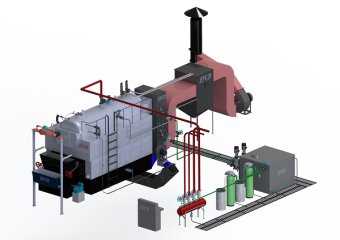
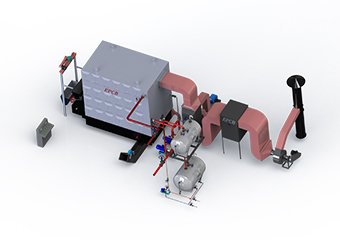
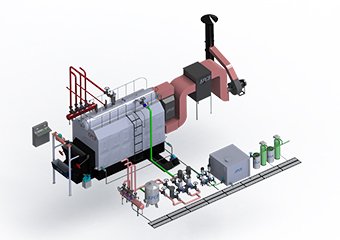
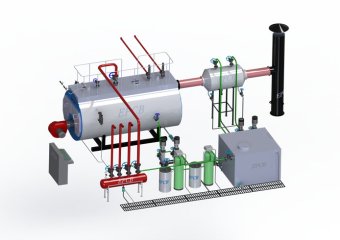
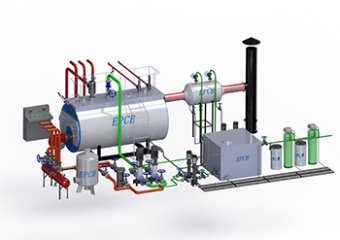
Based on the paint factory's production situation, the customer selected a 4-t/h gas-fired steam boiler system .
Natural gas boilers are characterized by a high degree of automation, convenient combustion regulation, and relatively simple on-site operation and management. For chemical and industrial production enterprises with stable gas supply conditions, they are one of the common steam solutions.
However, whether a gas-fired steam boiler can maintain good operating conditions for a long time cannot be judged solely by the boiler itself.
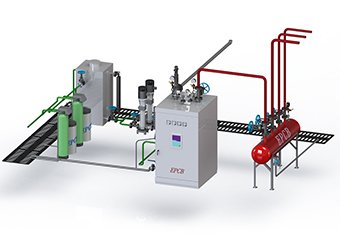
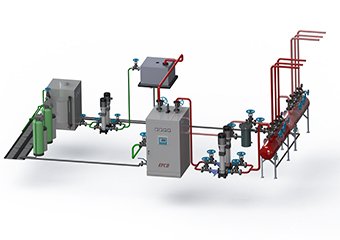
The burner, control system, water supply system, water treatment equipment, valves and instruments, flue gas emissions, and boiler room operation and management all affect the actual performance of the entire system.
complete boiler system solutions during the project design process.
From the boiler itself to related auxiliary equipment, everything needs to be configured around the same goal:
Make the entire steam system match the customer's actual production needs.
For a 4-t/h gas-fired steam boiler, a reasonable system configuration helps the boiler adjust its load according to changes in steam demand during production, while reducing operational problems caused by an unreasonable system configuration.
Stable Combustion Is Important for Long-Term Boiler Operation
The combustion system is a key part of the operation of a gas-fired boiler.
The burner needs to adjust the gas and air supply reasonably according to the boiler load changes to keep the fuel burning stably in the furnace.
In actual industrial production, the steam load is usually not always maintained at the rated state.
When some equipment starts production, steam consumption may increase rapidly; when a batch of production ends, steam demand will decrease. This requires boilers and combustion systems to have good load adaptability.
If the selected boiler is significantly larger than the actual demand, it may cause the equipment to start and stop frequently under low load; while if the capacity is insufficient, it may easily lead to a shortage of steam supply during peak production periods.
steam load profile in industrial boiler projects .
Understanding the production process, the number of equipment operating simultaneously, the peak steam demand, and the normal operating load can help customers determine the boiler capacity and system configuration more rationally.
This is also a key difference between professional selection of industrial boilers and the sale of simple equipment.
Boiler Feedwater Quality Affects Efficiency and Service Life
For any steam boiler, water quality management is an issue that cannot be ignored during long-term operation.
Even if the boiler body is designed reasonably, if the hardness of the feed water, dissolved oxygen, or dissolved solids in the boiler water are not effectively controlled over a long period of time, problems such as scaling and corrosion may gradually form.
Scale buildup on heated surfaces increases thermal resistance.
This means that the heat released by the fuel needs to pass through a thicker deposit layer to be transferred to the boiler water, which may not only reduce heat transfer efficiency but also increase the heat load on the heated surfaces.
Therefore, EPCB also places great emphasis on water treatment and boiler operation management when providing steam boiler systems.
Depending on the project's water source conditions, appropriate softening water, water treatment, water supply, and other auxiliary systems can be configured to help reduce the risk of scaling and establish a more stable foundation for the long-term operation of the boiler.
For customers, this systematic thinking is more important than simply focusing on the price of boiler purchases.
Because industrial boilers typically need to operate for many years, what truly affects the customer's operating costs is not just the initial purchase price of the equipment, but also the long-term costs of fuel, water, electricity, maintenance, and downtime.
EPCB Sales Engineer Returned to the Paint Factory for a Customer Follow-Up Visit
The delivery of equipment is a crucial milestone in a project.
However, for EPCB, this does not mean the end of customer service.
Recently, EPCB sales engineers visited this paint manufacturer again for a customer follow-up.
Compared to the equipment installation and commissioning phase, a follow-up visit after a period of operation helps EPCB understand the equipment usage in a more realistic production environment.
Only after the equipment has entered long-term production can we more intuitively see the customer's actual steam usage habits, changes in production load, and the coordination between the boiler system and the production line.
The focus of this follow-up visit was not just "whether the boiler can operate normally".
Sales engineers pay more attention to the customer's user experience in actual production and whether current production needs have changed.
For example:
Has the current production load changed compared to the initial project design phase?
Whether the boiler operating time and actual steam consumption are consistent with the original plan;
Can the steam pressure be matched with the main production equipment?
Daily operation and management of water supply and water treatment systems;
Does the customer have added new production equipment or new steam consumption points?
Whether there will be a need for capacity expansion or energy system adjustments in the future.
This information is crucial for the long-term service of industrial boilers, as customer plants are constantly evolving. Boiler configurations that were suitable for production needs a few years ago may change their steam load as companies add production lines, replace equipment, or adjust production processes.
Therefore, EPCB hopes to understand these changes earlier through continuous customer communication.
Customer Follow-Up Is Also Part of EPCB Boiler Service
When purchasing industrial equipment, many customers pay more attention to the price, specifications, and delivery time.
However, industrial boilers are different from ordinary mechanical equipment.
Boilers typically serve the production line for extended periods. If a problem occurs in the steam system, it often affects not just one piece of equipment, but multiple production stages.
Therefore, the ability of suppliers to provide continuous service is becoming an increasingly important factor for industrial customers when evaluating boiler manufacturers.
EPCB's service philosophy is not to contact customers only after equipment malfunctions.
Through installation guidance, commissioning support, operation training, and follow-up customer visits, EPCB aims to gain a more comprehensive understanding of the actual operating status of the equipment in the customer's factory.
This is also the significance of the sales engineer's follow-up visit to the paint factory customer.
For customers, long-term cooperation means that when production conditions change or new boiler needs arise, they can continue to communicate with suppliers who are familiar with the original system.
For EPCB, following up with customers is also an important way to continuously optimize products and project solutions.
Real-world industrial environments can help engineers and sales teams gain a deeper understanding:
What do customers really care about?
What problems are most easily overlooked in actual production?
Which configurations are more important for long-term operation?
These experiences gained from real-world projects will ultimately continue to be applied to EPCB's subsequent boiler system design and customer service.
EPCB Provides Industrial Boiler Solutions for Different Industries
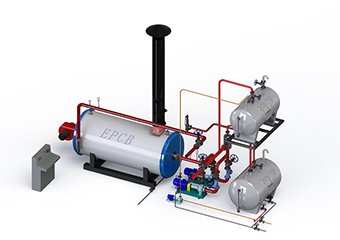
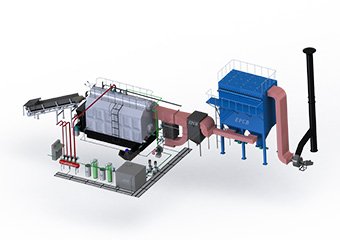
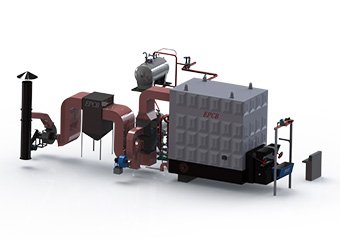
For many years, EPCB has been providing industrial steam boilers, hot water boilers, thermal oil boilers, and complete boiler system solutions to customers in different countries and industries.
For different projects, EPCB will configure solutions based on the customer's fuel conditions, steam demand, operating pressure, production process, local water quality and site conditions.
For businesses that need gas-fired steam boilers, proper selection usually requires comprehensive consideration:
Boiler capacity, actual operating pressure, peak and normal load, daily operating time, natural gas conditions, feedwater temperature, condensate recovery status, and future production expansion plans.
Only after fully understanding these conditions can a boiler system that better meets actual production needs be selected.
This customer follow-up visit to the paint factory's 4-ton gas-fired steam boiler is also a microcosm of EPCB's long-term service philosophy.
From equipment selection and system configuration to manufacturing, installation, commissioning, and ongoing follow-up visits after equipment operation, EPCB aims to build reliable industrial thermal energy systems for its customers through professional boiler technology and more comprehensive services.
EPCB Boiler — More Than a Boiler Manufacturer, Your Long-Term Boiler System Partner.
If your paint factory, coatings factory, chemical plant or other industrial production project is looking for a 4 T/h gas-fired steam boiler, industrial steam boiler or complete boiler system solution , EPCB can provide a customized boiler system solution for the project based on actual steam demand, fuel conditions and production processes.