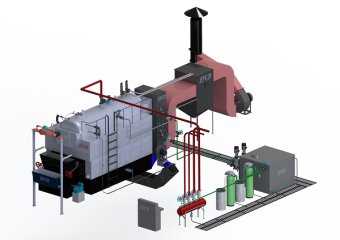
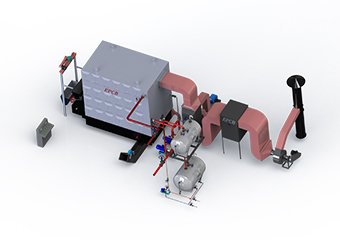
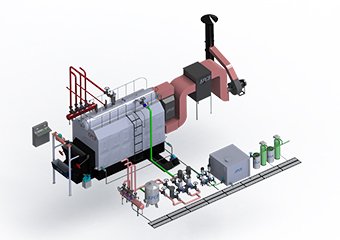
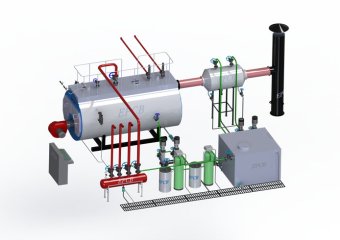
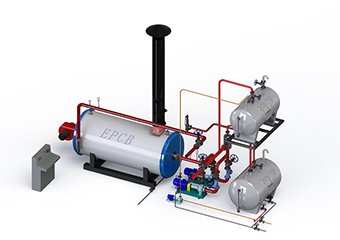
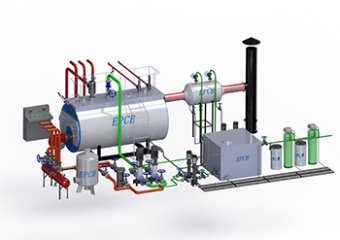
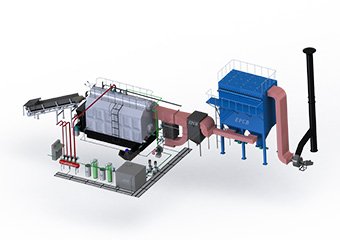
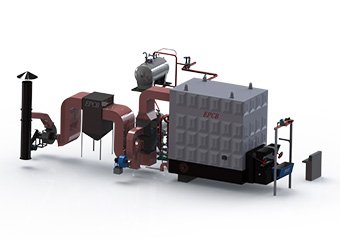
EPCB Boiler is a professional boiler manufacturer in China. Focus on industrial boiler production and sales for 68 years. Our main products are coal-fired boilers, oil gas boilers, biomass boilers, electric boilers, and power plant boilers.

The 25th Textech Bangladesh 2026 International Expo will be held in Purbachal, Dhaka, Bangladesh from September 2nd to 5th, 2026. EPCB Boiler will showcase its professional industrial boilers and steam system solutions at the expo, located in Hall 4, Booth T9.
As a professional industrial boiler manufacturer and steam system solution provider, EPCB Boiler will take advantage of this exhibition to engage in face-to-face exchanges with textile, dyeing, garment and related manufacturing companies from Bangladesh and South Asia. The discussions will focus on core issues such as stable steam supply, boiler energy saving, fuel cost control, automated operation, boiler system upgrades and long-term operation services , providing textile companies with more professional industrial thermal energy solutions.
![]()
Textech Bangladesh is one of the most influential textile and apparel technology exhibition platforms in Bangladesh and South Asia.
In 2026, Textech Bangladesh will host its significant 25th edition . Suppliers of textile machinery, automation equipment, industrial technologies, and related solutions from China, Europe, Turkey, South Korea, India, Taiwan, and other countries and regions will gather in Bangladesh to showcase new technologies, equipment, and industrial solutions for the textile and garment manufacturing sector.
After years of development, Bangladesh has become a major global production and export base for textiles and garments. With the industry continuing to expand and global markets increasingly demanding higher standards for product quality, production efficiency, delivery times, environmental compliance, and sustainable development, local textile companies are accelerating the modernization and automation of their production equipment and the upgrading of their energy systems.
From new dyeing production lines and setting equipment to automated production systems, more and more factories are reassessing their entire production systems.
Behind these devices lies a system that is often overlooked but directly impacts production efficiency: the industrial steam system.
Steam is widely used in many production processes in the textile industry, including dyeing, printing, rinsing, drying, setting, washing, finishing and other heat processing.
Unlike some industrial production processes with relatively stable steam demand, the steam load of textile factories usually varies significantly with the start and stop of production equipment, changes in orders, shift schedules, and different stages of the process.
For example, when multiple dyeing machines, setting machines, and drying equipment are put into production at the same time, the factory may experience a large demand for steam in a short period of time; while when some production lines stop production, the steam load will drop rapidly.
These constantly changing operating conditions place higher demands on industrial boilers.
If the boiler capacity does not match the actual steam consumption, or if the combustion system has insufficient adjustment capabilities, problems such as steam pressure fluctuations, frequent boiler start-ups and shutdowns, increased fuel consumption, and decreased equipment operating efficiency may occur.
For textile companies, a boiler is not an independently operating energy device.
It is actually closely related to production line operating efficiency, product quality, energy costs, and the production continuity of the entire factory.
Therefore, when designing industrial boiler systems for textile companies, EPCB not only focuses on the rated evaporation capacity, but also emphasizes the matching between the boiler system and the actual production load of the factory.
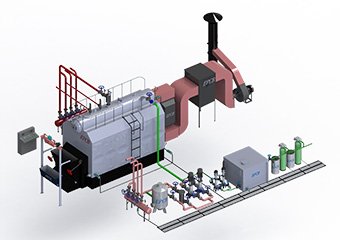
EPCB offers a variety of industrial boiler products and system solutions to suit different plant fuel conditions, steam demands, production scales, and operating modes, including:
Gas-fired steam boilers, oil-fired steam boilers, coal-fired steam boilers, biomass steam boilers, water-tube steam boilers, and complete boiler auxiliary equipment and steam systems.
For textile factories with a stable natural gas supply, EPCB can provide highly automated gas-fired steam boiler solutions.
By properly matching the boiler body, burner, water supply system, control system, and energy-saving equipment, factories can achieve a more stable and flexible steam supply.
For regions where fuel resources such as coal and biomass have a cost advantage, EPCB can also design targeted combustion systems based on fuel calorific value, moisture content, ash content, volatile matter, and actual supply conditions.
Compared to simply selecting a boiler based on "how many tons of steam are needed", EPCB focuses more on the actual operating conditions of its customers.
During the solution design phase, the EPCB technical team typically focuses on understanding:
How much steam does the factory need?
What are the maximum steam demand and normal operating load?
What is the working pressure of the steam?
How many hours does the boiler run per day?
Does the production line experience significant load fluctuations?
Which fuel is more stable and economical in the local area?
What are the current water quality conditions?
Does the factory have any plans to expand production in the future?
Only after these parameters are clearly defined can the boiler capacity, structural form, combustion system, water supply method, and auxiliary equipment configuration be determined more rationally.
Industrial boilers are not necessarily better the larger their capacity.
If an excessively large boiler is selected based solely on the factory's maximum instantaneous steam demand, while the actual production process is mostly under low load, it may result in frequent boiler start-ups and shutdowns or prolonged low-load operation.
This could not only reduce actual combustion efficiency, but also increase the operating frequency of the ignition system and related components.
Therefore, when selecting boilers for the textile industry, EPCB pays more attention to the actual load curve of the factory .
By properly matching the boiler capacity, burner adjustment range, and actual steam demand of the plant, the boiler can be kept operating within a relatively stable load range as much as possible.
For customers, this means more stable steam pressure, which also helps control fuel consumption and long-term operating costs.
Bangladesh is one of the overseas markets that EPCB has been focusing on and continuously developing.
Over the years, EPCB has accumulated boiler project experience in various industrial sectors such as textiles, pharmaceuticals, and food, and provides a variety of boiler solutions, including gas-fired, coal-fired, and biomass boilers, to meet the different production conditions of various enterprises.
In the Bangladesh textile industry project, EPCB not only provides the boiler body, but also configures the combustion system, water supply system, automatic control system, dust removal and environmental protection system and related auxiliary equipment according to customer needs.
After the equipment was delivered for some projects, EPCB technical service personnel also participated in on-site installation, commissioning, and operation training.
These project experiences have given EPCB a better understanding of the concerns that Bangladeshi companies have when selecting industrial boilers.
Besides the boiler purchase price, customers are increasingly focusing on:
Whether the boiler saves fuel, whether the steam is stable, whether the parts are easy to maintain, whether the degree of automation is appropriate, whether the equipment can adapt to production changes, and whether the supplier can provide long-term technical support.
Therefore, EPCB hopes to establish not just a one-time equipment procurement relationship with its customers, but a longer-term cooperative relationship for steam systems.
From September 2nd to 5th, 2026, EPCB Boiler will participate in the 25th Textech Bangladesh 2026 International Expo in Purbachal, Dhaka.
For textile companies planning to build new production lines, expand production, or upgrade existing steam systems, this exhibition will provide an opportunity to communicate face-to-face with the EPCB technology and sales team.
If your factory is considering:
To construct new textile, dyeing, printing, or finishing production lines;
Purchase a new industrial steam boiler;
Replace the old boiler that has been in operation for many years;
Solve the problem of unstable steam pressure;
Reduce the cost of coal, biomass, natural gas, or other fuels;
Improve the level of boiler automation;
Improve water treatment and water supply systems;
Add energy-saving devices or waste heat recovery equipment;
Optimize existing boiler systems;
Or plan steam capacity in advance for future expansion.
We welcome you to bring your steam requirements, fuel information, and plant production status to the EPCB team for on-site discussions.
Our team can conduct a preliminary analysis of your boiler capacity, fuel selection, and overall steam system configuration based on your actual production conditions.
Purbachal, Dhaka, September 2-5, 2026 – EPCB Boiler looks forward to meeting you at the 25th Textech Bangladesh 2026 International Expo.
Date: September 2–5, 2026
Venue: Purbachal, Dhaka, Bangladesh
Hall: Hall 4
Booth No.: T9
Visit EPCB Boiler at Hall 4, Booth T9 and explore efficient, reliable and steam customized boiler solutions for the textile industry.
EPCB Boiler – not only provides industrial boilers, but also is committed to providing safe, stable, and efficient complete steam system solutions for industrial enterprises worldwide.
Send You Inquiry
Give You Boiler Solution
Place The Order
Get Your Boiler