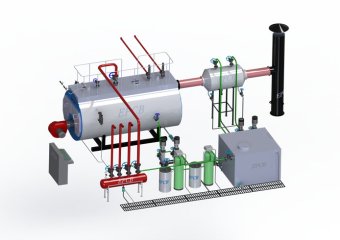
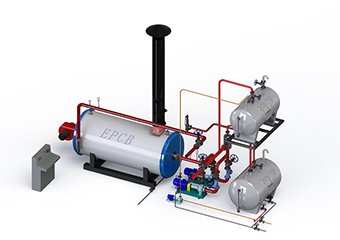
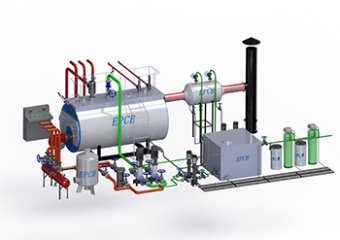
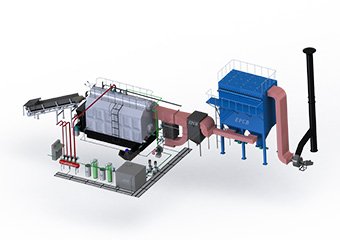
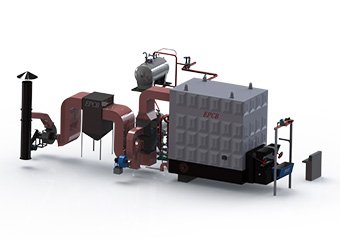
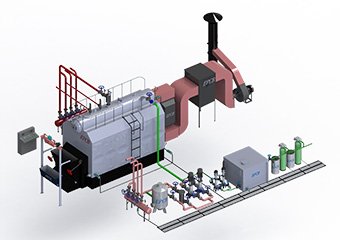
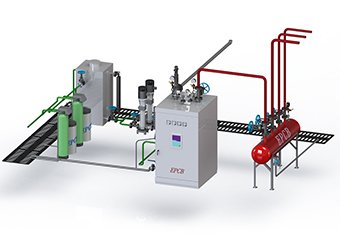
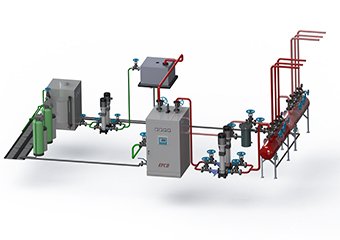
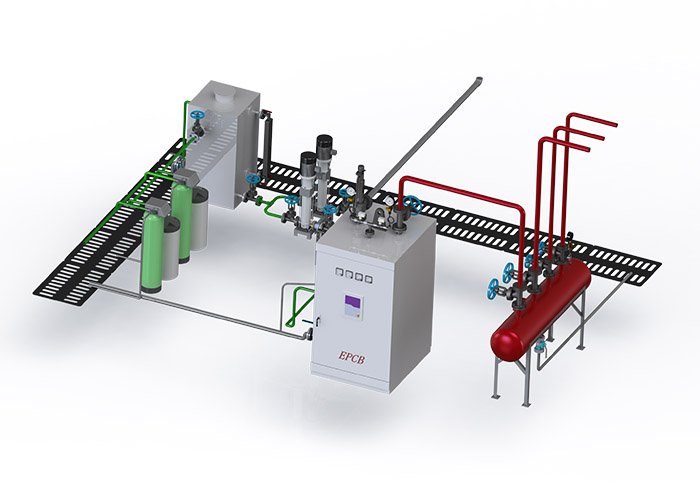
EPCB Boiler is a professional boiler manufacturer in China. Focus on industrial boiler production and sales for 68 years. Our main products are coal-fired boilers, oil gas boilers, biomass boilers, electric boilers, and power plant boilers.

From September 24 to 27, 2026, EGYPT STITCH & TEX EXPO 2026 – The 24th International Exhibition for Textile & Carpet Machineries, Printing Technologies and Accessories – will be held at the Cairo International Conference Center (CICC) in Egypt.
As a boiler manufacturer specializing in industrial boilers and thermal energy system solutions, EPCB Boiler will participate in this exhibition and meet with textile industry customers, equipment suppliers and partners from Egypt, the Middle East, Africa and other international markets at booth H1-A09.
![]()
Exhibition Dates: September 24-27, 2026
Exhibition Venue: Cairo International Conference Center (CICC), Nasr City, Cairo, Egypt
EPCB Booth: H1-A09
By participating in this exhibition, EPCB not only hopes to introduce its industrial steam boiler products to customers in the textile industry, but also hopes to conduct more in-depth technical exchanges with customers on practical issues such as steam stability, fuel costs, boiler efficiency, automatic control, energy-saving retrofitting, and long-term operation and maintenance in textile production.
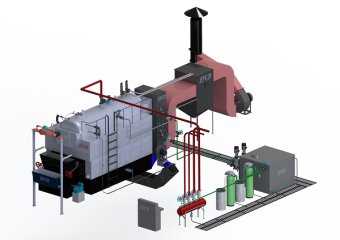
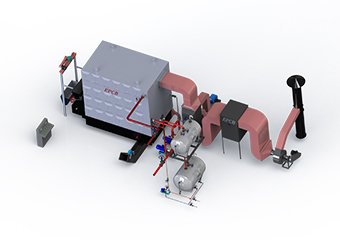
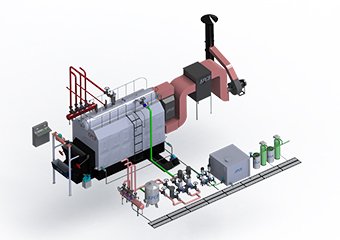
For textile companies, a boiler is only one of the core pieces of equipment in a steam system. What truly affects factory production efficiency and long-term energy costs is the system coordination between multiple components, including the boiler body, combustion system, feedwater system, water treatment, flue gas waste heat recovery, automatic control, steam delivery, and condensate recovery.
Therefore, EPCB hopes that through EGYPT STITCH & TEX EXPO 2026, more textile companies will understand that when choosing an industrial boiler, they should not only compare boiler prices and rated evaporation capacity, but also consider steam quality, operational stability, fuel consumption, and subsequent technical services throughout the entire production cycle.
Steam is widely used in textile, printing and dyeing, finishing, drying and washing processes. Due to equipment start-up and shutdown, shift changes and different process stages, the steam load of textile factories usually fluctuates greatly.
If the boiler capacity and burner adjustment range do not match the actual steam demand, problems such as frequent start-stop, steam pressure fluctuations, decreased combustion efficiency, and increased fuel consumption are likely to occur.
Therefore, EPCB will rationally match boiler capacity, combustion system and auxiliary equipment according to the customer's actual steam demand, peak and normal load, steam parameters, operating time, fuel conditions and future expansion plans, so that the boiler operates in a more stable and efficient load range, providing a continuous and reliable steam supply for textile production, while helping to reduce long-term energy costs.
An efficient and stable textile steam system depends not only on the boiler itself, but also on the proper matching of equipment such as burners, feedwater, water treatment, energy savers, control systems, and condensate recovery systems.
When designing boiler systems, EPCB considers the customer's water quality, steam requirements, and operating conditions to configure appropriate equipment. For example, proper water treatment can reduce scaling and corrosion on heating surfaces and improve heat transfer efficiency; condensate recovery can reduce makeup water consumption and utilize waste heat to reduce energy consumption.
From boiler efficiency and flue gas waste heat recovery to condensate utilization, EPCB focuses on the overall efficiency and long-term operating costs of the entire steam system, providing textile companies with more complete energy-saving steam solutions.
EPCB believes that the purchase cost of industrial boilers is only a part of the total life cycle cost.
For textile factories that operate for a long time, fuel costs, water treatment costs, electricity consumption, maintenance, spare parts, and equipment downtime losses can all accumulate into greater costs over many years of operation.
Therefore, when discussing projects with clients, EPCB will not only ask "how many tons of boiler are needed", but also further understand how many hours the boiler operates per day, what the average steam load of the plant is, what the peak load is, what fuel is used, and whether there are plans to add new production equipment in the future.
For example, if the boiler capacity is significantly greater than the factory's long-term actual needs, the equipment may operate at low load for a long time and experience frequent start-ups and shutdowns.
Conversely, if the boiler capacity is too small, it may operate at high or even overload for a long time, making it difficult to meet the steam demand during peak production periods.
Therefore, the selection of a reasonable boiler is essentially a match between the boiler's output capacity and the actual production load of the factory.
EPCB aims to help clients reduce selection errors from the early stages of project construction through professional pre-project analysis, thus laying a better foundation for long-term stable operation.
The stable operation of industrial boilers depends not only on the equipment itself, but also on professional project execution and technical services.
For overseas projects, EPCB can provide a one-stop service, from initial requirements analysis, boiler selection and system configuration to equipment manufacturing, delivery, installation guidance, commissioning support and operation training.
At the beginning of the project, EPCB engineers will match the boiler body, combustion system, feedwater, water treatment, energy saving and control system according to the customer's steam demand, pressure parameters, fuel conditions and site conditions.
After equipment delivery, EPCB can also assist customers in completing system checks, combustion commissioning, operating parameter confirmation, and operation training through on-site or remote technical support, helping the boiler system to be put into safe, stable, and efficient operation.
For industrial equipment, long-term service capability is just as important as the product itself.
After years of operation, the boiler's burner, valves, instruments, water pumps, sensors, and other components require regular inspection and maintenance.
At the same time, as companies increase their production capacity, fuel conditions change, or local emission standards are adjusted, existing boiler systems may also need to be optimized.
EPCB aims to build long-term steam system partnerships with its customers, rather than just one-time equipment purchase relationships.
For projects already in operation, EPCB can provide operational suggestions, fault analysis, spare parts support, and technical consultation based on customer feedback.
When customers have new production needs, they can also further evaluate expansion, addition of boilers, or system optimization solutions based on the operation of the existing boiler system.
This service system, encompassing initial solution design, equipment manufacturing, installation and commissioning, operation training, and subsequent technical support, is one of the key capabilities that EPCB hopes to showcase at the EGYPT STITCH & TEX EXPO.
As an important platform connecting textile machinery, printing technology, auxiliary equipment, and industry professionals, EGYPT STITCH & TEX EXPO provides opportunities for direct communication between upstream and downstream enterprises in the industry chain.
For EPCB, participating in this exhibition is not only about showcasing industrial boiler products, but also an important opportunity to gain a deeper understanding of the actual energy needs of textile companies in Egypt and the surrounding markets.
Different countries and regions have significant differences in the prices of natural gas, biomass, coal, electricity, and emission requirements, so there is no single boiler solution that is applicable to all plants.
A truly rational industrial boiler system must be designed in conjunction with local energy conditions, factory production processes, and the customer's long-term operational goals.
At booth H1-A09 , the EPCB team will have the opportunity to meet with clients face-to-face to discuss their actual project needs.
Whether you are planning a new textile factory, adding dyeing or finishing production lines, replacing existing old boilers, or looking to reduce fuel consumption of your existing steam system, you can bring your actual project parameters to the EPCB booth.
Preparing the following information in advance will help EPCB engineers understand project requirements more quickly:
Required steam volume or existing boiler capacity, steam pressure, daily operating time, main production processes, current or planned fuels, plant location, existing boiler operating status, and future expansion plans.
With this information, EPCB can further analyze suitable boiler capacity, structural form, combustion method, and auxiliary equipment configuration, providing a foundation for subsequent technical solutions.
Send You Inquiry
Give You Boiler Solution
Place The Order
Get Your Boiler