For industrial boiler projects, the delivery of equipment at one time does not mean the end of the cooperation.
What truly reflects a boiler manufacturer's professional capabilities is not just whether the equipment can operate smoothly when it is put into production, but also whether the supplier continues to pay attention to the customer's production changes, boiler operating status, and future new energy demands several years after the equipment has been in operation.
Recently, EPCB sales engineers visited a long-term partner oil pressing company for a customer follow-up.
The customer had previously purchased and was using an EPCB 8-ton gas-fired steam boiler . Due to changes in the company's production scale, energy costs, and subsequent project plans, the customer is currently considering adding a coal-fired steam boiler system .
For EPCB, this follow-up visit was not a simple sales visit.
Engineers are more concerned with:
How is the existing 8-ton gas-fired boiler operating?
Has the current steam load changed?
How much steam capacity will the company need for future production expansion?
Why are customers planning to add coal-fired boilers?
How should existing gas-fired boilers and future coal-fired boilers be properly coordinated?
Behind these issues lies the stability of the customer's entire steam system, energy costs, and production continuity over the next few years.
This is also the service philosophy that EPCB has always adhered to:
The boiler project is not a one-time equipment transaction, but a long-term industrial energy system engineering project.
Oil extraction production places continuous demands on a stable steam supply.
Steam is one of the important industrial energy sources in the processing of edible oils and oilseeds.
From raw material pretreatment, steaming, frying, and conditioning, to some oil refining, heating, and auxiliary production processes, a stable steam supply directly affects the operation of the production line.
For continuous production oil pressing enterprises, large fluctuations in steam pressure or frequent boiler start-ups and shutdowns can not only affect production efficiency but also increase fuel consumption and the difficulty of equipment operation and management.
Therefore, in the initial boiler project, the client wanted to establish a steam system that could meet the continuous production needs of the plant.
After technical communication and solution confirmation, the customer finally selected the EPCB 8-ton gas-fired steam boiler .
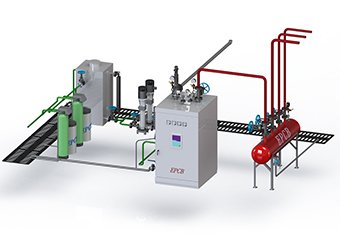
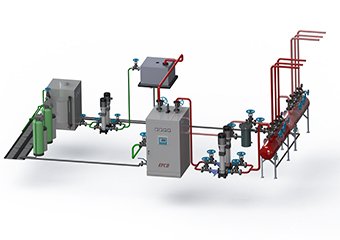
Compared to simply providing a boiler unit, EPCB places greater emphasis on the overall matching between the boiler body, combustion system, water supply system, control system, and related auxiliary equipment.
Only when all systems operate in a coordinated manner can the boiler truly and stably supply steam to the production line.
An 8-ton gas-fired steam boiler provides a stable steam base for customer production.
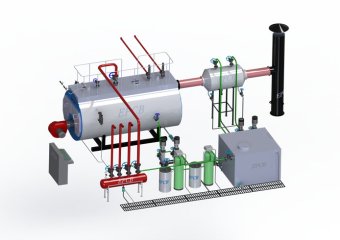
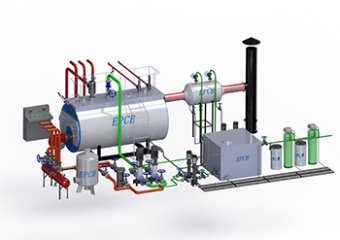
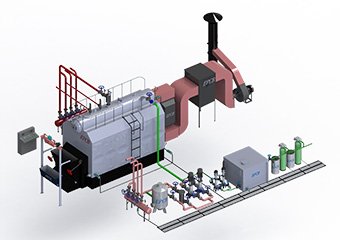
This 8-ton gas-fired steam boiler was put into operation, it provided a stable steam supply for the customer's oil pressing production. The gas-fired boiler features flexible combustion control, fast load response, and convenient operation and management, and can well meet the continuous steam demand of oil processing enterprises.
EPCB believes that boiler selection should not only consider the rated evaporation capacity, but also take into account the actual steam load, pressure, fuel conditions, operating time and future expansion plans, and make reasonable configurations from the perspective of the complete steam system.
It is precisely because of the trust built up during the early operation of the equipment and long-term service that customers choose to communicate with EPCB again when they have new coal-fired boiler needs.
The customer's new production plans have created demand for coal-fired boilers.
As the company's production and operations continue to develop, the customer is now starting to plan new boiler projects.
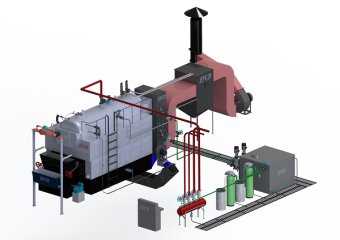
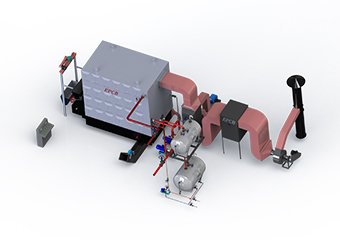
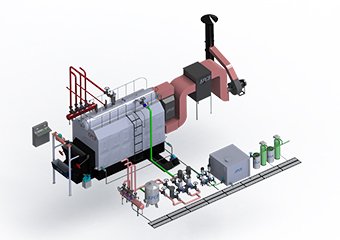
Unlike the previous gas-fired boilers, this time the customer is focusing on coal-fired steam boilers .
For industrial enterprises, there is usually no single, universally accepted answer when it comes to boiler fuel selection.
Natural gas, coal, biomass, and other industrial fuels each have different fuel costs, supply methods, operation and management characteristics, and environmental protection requirements.
Therefore, when existing customers raise new coal-fired boiler requirements, EPCB does not simply recommend equipment based on the boiler's tonnage.
The sales engineer first visited the customer's factory to follow up and gain a better understanding of the company's current production situation.
On-site follow-up visits ensure that new boiler solutions are based on real operating conditions.
The most important basis for selecting an industrial boiler is not the salesperson's experience and judgment, but the customer's actual production data.
Therefore, during this follow-up visit, EPCB sales engineers not only discussed the new coal-fired boiler procurement plan with the customer, but also gained a better understanding of the operation of the existing 8-ton gas-fired boiler and the factory's current steam demand.
On-site communication allows for a more intuitive understanding of the actual operating conditions of the customer's production line.
For example:
The operating load of the existing boiler;
Daily production time;
Steam pressure stability;
Changes in steam demand at different stages of production;
The projected steam consumption of the new production lines in the future;
The planned production load to be undertaken by coal-fired boilers.
These data are very important for boiler selection.
If the boiler capacity is too small, there may be insufficient steam during peak production periods.
If the capacity is too large, it may operate at a low load for a long time, resulting in a decrease in equipment utilization and unnecessary investment.
matching boiler capacity with actual production load in new coal-fired boiler projects .
This is also a key difference between a professional industrial boiler supplier and a simple equipment seller.
From gas-fired boilers to coal-fired boilers, EPCB focuses on the overall energy structure of its customers.
For this long-time client, the new project is not simply about replacing a gas-fired boiler with a coal-fired boiler.
The existing 8-ton gas-fired boiler still has good operational value.
If coal-fired boilers are added in the future, the two types of boilers using different fuels can even form a more flexible steam supply method according to the actual production situation.
For example, under different energy prices, production loads, or fuel supply conditions, companies can arrange the operation of different boilers according to the actual situation.
Of course, the final operating method still needs to be systematically analyzed in combination with the customer's site conditions, local environmental protection requirements, fuel quality, and production plan.
Therefore, the EPCB engineering team focuses more on the customer's overall energy structure, rather than just on "which type of boiler to sell".
From equipment selection and fuel analysis to steam load matching, EPCB aims to help customers build an industrial steam system that is more suitable for long-term operation.
Coal-fired boiler solutions need to balance combustion, environmental protection, and long-term operation.
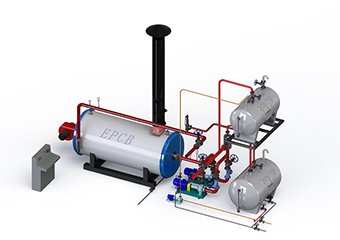
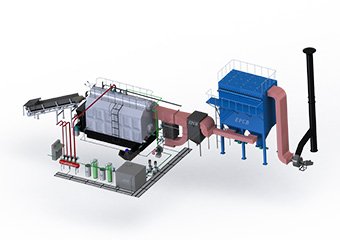
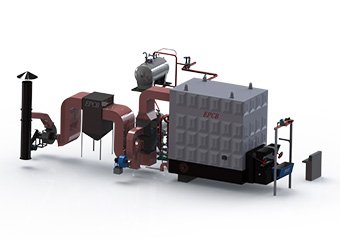
Compared to gas-fired boilers, coal-fired boilers typically require more comprehensive combustion, feedwater, slag removal, and flue gas treatment systems. Therefore, EPCB's design not only focuses on the boiler itself but also rationally configures auxiliary equipment such as grates, fans, economizers, water treatment systems, dust removal equipment, electrical controls, and safety accessories based on the customer's operating conditions.
These devices work together to influence combustion stability, waste heat utilization, water supply quality, and flue gas emissions.
Therefore, EPCB always emphasizes that the actual performance of an industrial boiler depends on the proper matching of the entire system, not just the parameters of a single device.
Professional service doesn't begin only after equipment malfunctions.
When many people mention boiler after-sales service, the first thing that comes to mind is the repair of equipment after it malfunctions.
However, EPCB believes that truly effective services should be more proactive.
During the long-term operation of the boiler, the customer's production scale may change, fuel prices may change, and energy supply conditions may also change.
These factors may allow for new optimization opportunities in what was originally a reasonable boiler configuration a few years later.
Therefore, it is very important to regularly follow up with existing customers.
Through on-site communication, engineers can promptly understand the current operational status of customers and identify new production needs.
This follow-up visit to long-term customers of the oil mill is a typical example.
The client's existing 8-ton gas boiler has already laid the foundation for cooperation between the two parties.
Now, when businesses plan to add coal-fired boilers, EPCB is once again involved in their clients' new project planning.
The shift from gas-fired boilers to planned coal-fired boilers reflects changes in customers' production needs and energy choices.
What remains unchanged is that EPCB continues to provide technical communication and project support.
Long-term customers choosing EPCB again is a testament to the trust built over time.
Industrial boilers often need to operate continuously for long periods of time. Therefore, customers choose not only the equipment, but also a partner who can provide long-term technical support.
with the initial 8-ton gas-fired steam boiler project , EPCB's cooperation with the client did not end with the delivery of the equipment. Through continuous communication, after-sales support, and on-site visits, both parties gradually built long-term trust.
Today, the client is once again communicating with EPCB when planning new coal-fired boiler projects, which further demonstrates their recognition of EPCB's product quality, professional capabilities, and long-term service.
EPCB not only provides boilers, but also focuses on customers' production needs for the next few years.
For EPCB, every follow-up visit with a long-term customer has two layers of meaning.
On the one hand, it is necessary to understand whether the boilers already in operation can continuously and stably meet production needs.
On the other hand, it is also necessary to understand the client's future development plans.
Because the steam demand of industrial enterprises is not constant.
As production capacity expands, new production lines come online, and energy structures change, companies often need to redesign their steam systems.
At this point, boiler suppliers with experience in the original project are able to understand customer needs more accurately.
For this oil pressing company, from the original 8-ton gas-fired steam boiler to the planned coal-fired steam boiler project , EPCB is no longer just a simple equipment supplier.
Both parties have established a long-term cooperative foundation based on actual project operations.
From a single boiler purchase to a long-term partnership, EPCB continues to serve industrial customers.
The true value of an industrial boiler is realized through years of stable operation.
The true value of a boiler manufacturer also needs to be verified through long-term service.
EPCB has always believed that:
Equipment delivery is only one phase of the project, not the end of the service.
From initial boiler selection, system design, and equipment manufacturing to subsequent installation guidance, commissioning, operation training, technical support, and customer follow-up, EPCB aims to help customers establish more stable, efficient, and reliable steam systems through comprehensive project services.
For this long-time customer of the oil mill, the first 8-ton gas-fired boiler marked the beginning of their cooperation.
The new coal-fired boiler project marks a new phase in the cooperation between the two parties.
From understanding customers' current operations to analyzing new fuel requirements and discussing future steam system configurations, the EPCB sales and engineering team will continue to provide professional support based on customers' actual production needs.
This is also the relationship that EPCB hopes to build with every industrial customer:
We not only provide a boiler, but also become a long-term, reliable steam system partner for our customers.