

In the food processing industry, a stable and reliable steam supply is a crucial foundation for ensuring continuous production, product quality, and energy cost control. Whether it's raw material cooking, sterilization, drying, cleaning, or production line insulation, steam boilers play a critical role in supplying heat. For food processing companies in Thailand, meeting their steam demands while reducing fuel costs, improving energy efficiency, and achieving more environmentally friendly operations has become a key consideration as they expand their production capacity.
In this project, a Thai food processing company selected a 10-ton rice husk biomass steam boiler system manufactured by EPCB Boiler. This boiler uses rice husks as its primary fuel, fully leveraging local agricultural resources to provide the customer with a stable, efficient, environmentally friendly industrial steam boiler solution suitable for the continuous production needs of the food industry.
A More Stable and Cost-Effective Steam Supply for Food Production
Thailand is a major agricultural and food processing country in Southeast Asia, with a well-developed rice processing and related food industries and abundant rice husk resources. For many food processing companies, rice husks are not only a common agricultural byproduct but also a biomass fuel with high economic value. If rice husks can be efficiently utilized in boiler systems, it can not only reduce dependence on traditional fossil fuels but also effectively reduce long-term operating costs for businesses.
This customer primarily engages in food processing and production, which requires a large and stable supply of steam. With increasing production capacity, the existing thermal energy system is gradually becoming unable to meet the production line's requirements for steam volume, steam pressure, and continuous operational stability. The customer wishes to purchase a 10-ton industrial steam boiler to meet the centralized steam supply needs of multiple production stages.
At the beginning of the project, the client put forward several core requirements for the boiler supplier: First, the boiler must be able to adapt to the combustion characteristics of rice husk fuel; second, the steam output must be stable to meet the needs of continuous food processing production; third, the system operation must be energy-efficient to reduce daily fuel costs; fourth, the boiler equipment and auxiliary equipment configuration must be complete to facilitate installation, operation and maintenance; fifth, the supplier needs to have professional technical service capabilities to provide continuous support from scheme design and manufacturing to installation guidance.
In response to these needs, EPCB did not simply recommend standard equipment. Instead, it conducted a systematic analysis of the customer's fuel conditions, process steam requirements, site layout, and subsequent operation and management methods, and customized a 10-ton rice husk biomass steam boiler solution suitable for the Thai food industry.
Lower Fuel Costs with Higher Rice Husk Resource Utilization
For food companies, boiler operating costs largely depend on fuel expenses. Compared to traditional fuels such as natural gas and diesel, rice husks are more widely available and cost-effective in Thailand and Southeast Asia. Especially for companies located near rice processing or agricultural areas, rice husk fuel is easier to obtain, helping them establish a more stable fuel supply system.
Rice husks, as a biomass fuel, have characteristics such as high ash content after combustion, low bulk density, and different transportation and combustion properties compared to ordinary wood chips or coal. Therefore, rice husk boilers cannot simply be put into the furnace for stable operation; rather, they require comprehensive optimization in terms of furnace structure, combustion organization, grate design, air distribution system, dust removal system, and automatic control system.
The EPCB engineering team fully considered the characteristics of rice husk fuel and rationally configured the boiler body and auxiliary systems to ensure that the fuel enters the furnace more evenly and achieves complete combustion under appropriate air distribution conditions. By optimizing the combustion process, the boiler can stably produce the steam required by the customer, while reducing fuel waste and operational problems caused by incomplete combustion.
10-Ton Rice Husk Steam Boiler System Designed by EPCB
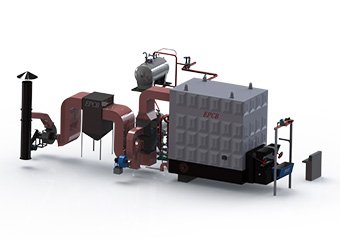
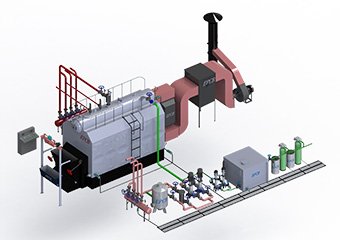
This project utilizes an EPCB 10-ton biomass steam boiler. This boiler features a double-drum water-tube structure, suitable for medium to large-scale industrial production scenarios, and is particularly well-suited for industries requiring a stable steam supply, such as food processing, textile printing and dyeing, feed processing, agricultural product processing, rubber, and chemicals.
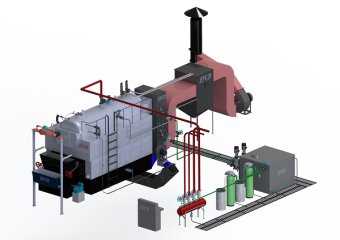
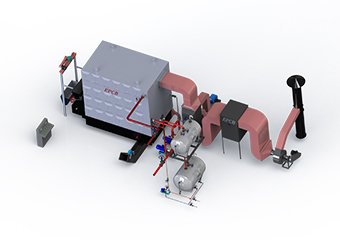
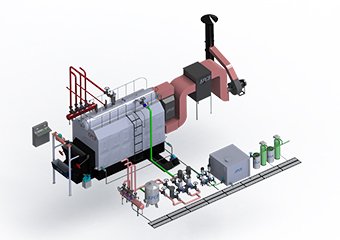
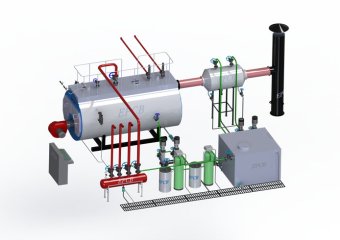
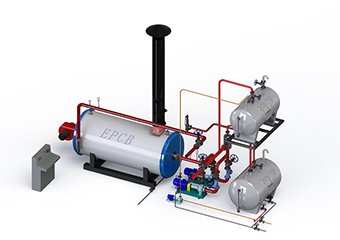
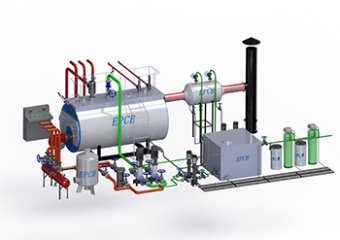
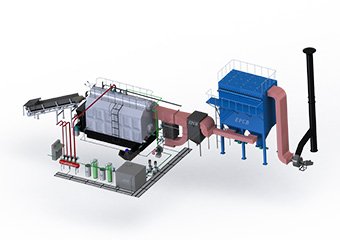
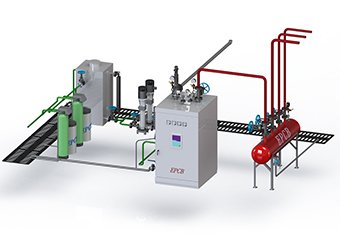
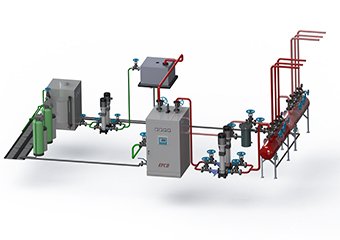
To meet the specific needs of our clients in the Thai food industry, EPCB configured a complete boiler system for this project, including the boiler body, fuel delivery system, blower, induced draft fan, dust removal system, feedwater pump, water treatment equipment, steam distribution cylinder, instrument valves, PLC electrical control system, chimney, and related auxiliary equipment. The entire system not only focuses on the performance of the boiler itself but also emphasizes the stability, safety, and ease of operation of the boiler room as a whole.
The boiler body adopts a mature and reliable water tube structure design with a reasonable arrangement of heating surfaces and stable water circulation, making it suitable for long-term continuous operation. The large furnace space facilitates the complete combustion of rice husk fuel, reducing problems such as fuel accumulation or incomplete combustion within the furnace. The optimized flue gas flow improves heat absorption efficiency, allowing for more efficient utilization of fuel thermal energy, thereby helping customers reduce unit steam production costs.
Regarding the combustion system, EPCB designed the feeding, air distribution, and grate combustion methods to match the combustion rate, particle state, and ash characteristics of rice husk fuel. A reasonable configuration of primary and secondary air helps improve combustion completeness, resulting in more stable furnace temperature and more continuous steam output. For food companies, steam fluctuations can affect production rhythm and product quality; therefore, stable combustion and stable steam supply are among the key design considerations for this project.
Key Boiler Requirements for Food Industry Production
The food processing industry places high demands on boiler systems. Boilers must not only meet steam pressure and quantity requirements, but also ensure the safety and continuity of the production process. Frequent shutdowns, insufficient steam, or pressure fluctuations can all impact production efficiency and even lead to inconsistent product quality.
EPCB's solution design prioritizes the operational characteristics of the food industry. First, the boiler system must possess a stable steam output capacity, capable of adapting to load variations during different production periods. Second, the boiler operation must be safe and reliable, equipped with comprehensive water level protection, pressure protection, interlock protection, and automatic control functions. Third, boiler operation should be as simple as possible, minimizing reliance on manual experience and allowing operators to more easily manage daily operations.
In this project, the PLC intelligent control system configured by EPCB can monitor the boiler's operating status in real time, including key parameters such as water level, pressure, combustion status, fan operation, and water supply system. Operators can view boiler operating data through the control cabinet and make corresponding adjustments according to production needs. The application of the automated control system not only improves the safety of boiler operation but also enhances the efficiency of the customer's boiler room management.
Integrated Auxiliary Equipment Ensures Reliable Boiler Operation
A high-performance boiler system depends not only on the boiler itself, but also on the coordinated operation of auxiliary equipment. EPCB provided a complete system solution for this project, preventing unnecessary problems for the client in later stages regarding equipment matching, installation, and commissioning.
Water treatment equipment reduces hardness and impurities in feedwater, minimizing the risk of boiler scaling and extending boiler lifespan. The feedwater pump is responsible for steadily delivering treated water to the boiler, ensuring the boiler water level remains within a safe range. The steam distributor is used for steam distribution, enabling steam to be delivered more smoothly to different production stages. The blower system provides sufficient air for combustion and ensures smooth exhaust of flue gas.
In response to the high levels of dust and particulate matter produced after rice husk combustion, EPCB has configured dust removal systems suitable for biomass boilers for its clients. Through appropriate flue gas treatment equipment, dust emissions during boiler operation can be effectively controlled, helping clients meet environmental protection requirements. For long-term manufacturing enterprises, the reliability of environmental protection systems not only affects their corporate image but also relates to the continuous and stable production of the factory.
Professional Project Support from Solution Design to Manufacturing
Throughout the project, EPCB consistently prioritized the actual needs of its clients. In the early stages of the project, the EPCB sales team and engineers engaged in multiple rounds of communication with the client to gain a detailed understanding of their food processing techniques, steam usage points, planned operating times, fuel supply methods, site space conditions, and future capacity expansion plans.
After fully understanding the client's needs, the EPCB technical team provided tailored boiler selection advice and system configuration solutions. Rather than simply selling equipment, EPCB focuses on whether the boiler system can truly adapt to the client's site and help them achieve long-term stable operation. Therefore, during the solution phase, EPCB not only provides boiler parameters but also conducts a comprehensive analysis for the client, considering factors such as fuel adaptability, system efficiency, ease of installation, maintenance management, and after-sales service.
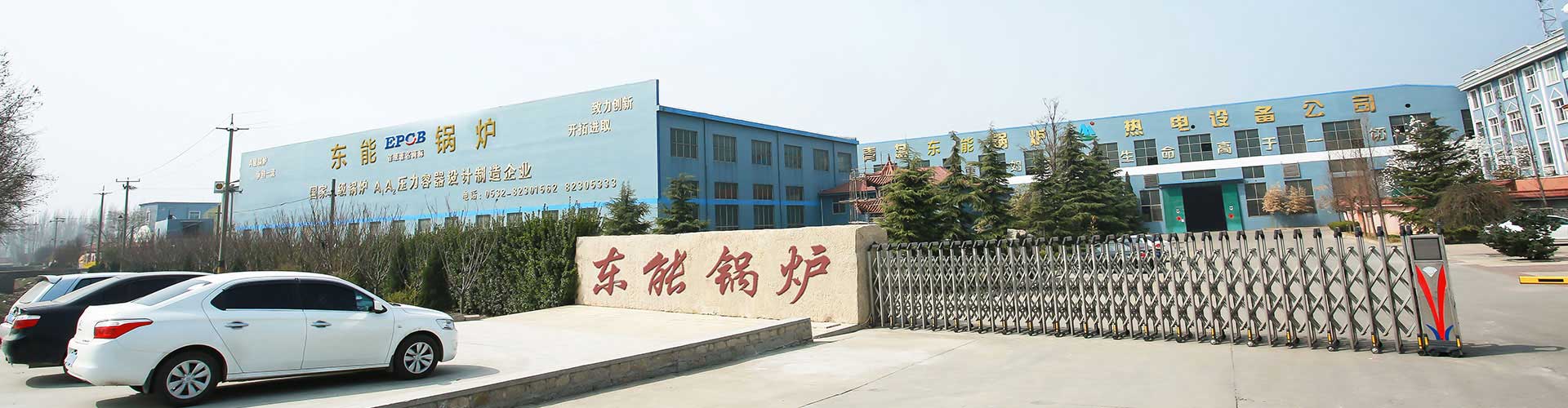
Once in the manufacturing phase, EPCB strictly adheres to industrial boiler manufacturing standards. From raw material inspection, welding quality control, and pressure component manufacturing to hydrostatic testing, visual inspection, and final inspection, every step undergoes rigorous quality management processes. For export projects, EPCB also fully considers long-distance transportation conditions, providing necessary packaging and reinforcement to ensure the boiler and auxiliary equipment arrive safely at the customer's site.
Professional Boiler Project Execution Support
After being put into operation, the 10-ton rice husk biomass steam boiler system has provided stable steam support for the customer's food production line. By using locally sourced rice husks as fuel, the customer can effectively reduce fuel procurement costs and improve the utilization rate of agricultural by-product resources. At the same time, the stable operation of the boiler system also provides a more reliable thermal energy guarantee for the customer's continuous production.
For food processing companies, stable steam means a more stable production rhythm, more reliable product quality, and higher overall operational efficiency. EPCB boiler systems, through their rational furnace design, mature water pipe structure, intelligent control system, and comprehensive auxiliary equipment configuration, help customers establish a more efficient, energy-saving, and safe steam supply system.
Furthermore, the application of biomass boilers aligns with enterprises' commitment to energy conservation, environmental protection, and sustainable development. Rice husks, as a renewable biomass fuel, can help enterprises optimize their energy structure and reduce their dependence on traditional fossil fuels. For food processing companies focused on long-term development, this is not merely an equipment upgrade, but also an optimization of their energy management model.
EPCB Boiler: Reliable Boiler Solutions for Global Industries
EPCB Boiler has long focused on industrial boilers and thermal energy system solutions, with products covering oil/gas-fired steam boilers, biomass steam boilers, coal-fired steam boilers, thermal oil boilers, hot water boilers, and complete boiler auxiliary systems. The company can provide customized boiler solutions based on the production processes, fuel conditions, steam parameters, and environmental requirements of customers in different industries.
In the food industry, EPCB boilers can be widely used in various production processes such as cooking, sterilization, drying, cleaning, concentration, and heat preservation. Regardless of whether customers use natural gas, diesel, biomass pellets, wood chips, rice husks, or coal, EPCB can make appropriate selections based on site conditions to help customers achieve stable steam supply, energy-saving operation, and safe production.
This SZL 10-ton rice husk biomass steam boiler project for the Thai food industry once again demonstrates EPCB's professional capabilities in biomass boiler design, manufacturing, and service. From project communication to solution design, from equipment manufacturing to delivery support, EPCB always adheres to a customer-centric approach, helping customers create long-term value with reliable products and professional services.
Conclusion
For companies looking for 10-ton rice husk steam boilers, biomass steam boilers, or industrial boiler solutions for the food industry, the quality of the equipment itself is important, but the supplier's system design capabilities, project execution capabilities, and after-sales service capabilities are equally crucial.
The successful application of the EPCB SZL 10-ton rice husk biomass steam boiler in Thailand's food industry demonstrates EPCB's ability to provide efficient, stable, and environmentally friendly industrial steam system solutions tailored to customers' specific fuel conditions and production needs. Moving forward, EPCB will continue to provide more professional boiler equipment and more comprehensive project services to customers in the global food processing, textile printing and dyeing, agricultural product processing, chemical, rubber, and pharmaceutical industries.
EPCB Boiler is willing to work with more industrial enterprises to help customers reduce operating costs, improve production efficiency, and achieve more stable , energy-efficient, and sustainable development through high-quality boiler equipment and reliable thermal energy systems.