

In industrial boiler projects, the successful delivery of equipment to the customer's factory does not mean the project is over. For food production companies, what truly determines the value of a boiler system is not only the manufacturing quality of the equipment itself, but also whether the installation is standardized, the commissioning is precise, the operators are familiar with the system, and whether the supplier can provide continuous professional support during subsequent operation.
Especially in the children's food industry, steam is directly involved in critical production processes such as sterilization, cooking, heating, and equipment cleaning. Any fluctuation in steam pressure, temperature, dryness, and cleanliness can affect production rhythm, product taste, and food safety. Therefore, customers need not just a simple industrial boiler, but a complete steam system that can operate stably for a long time and has ongoing technical service support.
In 2026, EPCB Boilers provided a customized steam boiler system solution for a children's food production company in Uzbekistan. From the initial site survey and boiler room design to equipment installation guidance, remote commissioning, personnel training, and continuous online service and regular follow-up visits after the project was put into operation, EPCB was involved in every important stage of the project.
This collaboration not only demonstrates EPCB's expertise in designing steam boiler systems for the food industry, but also showcases EPCB's service philosophy of providing after-sales service throughout the entire equipment lifecycle.
Steam System Requirements for Children’s Food Production
This food factory is a Uzbek company specializing in the production of children's food, mainly producing fruit purees, nutritional supplements, and other foods, with some products targeting the European market.
Children's food has strict requirements for raw materials, production environment and processing. Steam, as an important heat source in the production process, directly affects the stability of production and the quality of the final product.
In the customer's production process, steam is mainly used in the following stages:
Cooking and heating of food raw materials; cleaning of production equipment and process pipelines; food sterilization and hygienic treatment; temperature control of production lines;
Continuous heat supply for some process equipment.
Unlike ordinary industrial production, children's food production pays more attention to the dryness, cleanliness, and stability of steam.
If the steam moisture content is too high, it may cause fluctuations in the process temperature and affect the uniformity of food heating; if the condensate in the steam pipe cannot be discharged in time, water hammer may occur, affecting system safety; if the boiler pressure control is unstable, it may cause fluctuations in the steam supply to the production line and reduce production efficiency.
The client's existing steam system could no longer meet the company's development needs in terms of operational stability, steam quality, and energy efficiency. With the expansion of production scale and the increasing demands for product quality in export markets, the client desired to build a more stable, energy-efficient, and standardized steam boiler system. More importantly, the client was not only concerned about boiler equipment parameters but also highly valued the supplier's ability to provide long-term, timely, and reliable after-sales service.
Professional Project Support Begins Before Manufacturing
EPCB believes that high-quality after-sales service should not begin after a boiler malfunctions, but should be introduced early in the initial needs analysis phase of a project.
After a customer submits an inquiry through the EPCB official website, EPCB quickly organizes sales personnel and technical engineers to communicate with the customer to understand the company's production process, steam consumption, steam load changes, and existing boiler system problems.
In response to customer concerns, EPCB did not simply provide a standard boiler quote, but instead analyzed the entire steam system from a holistic perspective.
To obtain more accurate on-site data, EPCB coordinated with its local technical agent in Uzbekistan to conduct an on-site survey at the customer's factory, systematically checking the boiler room space, piping layout, distribution of steam-using equipment, steam load changes, water treatment conditions, and condensate recovery.
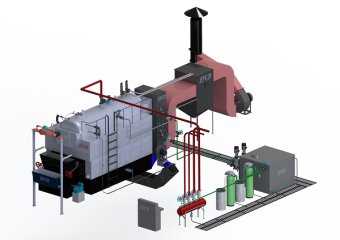
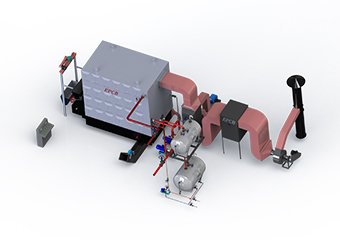
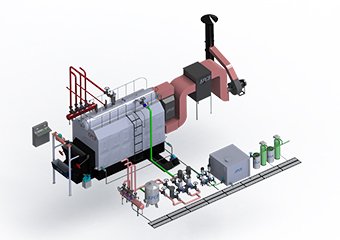
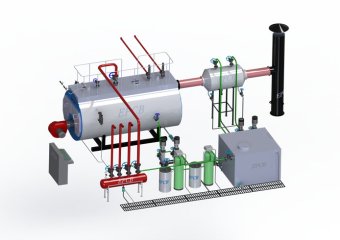
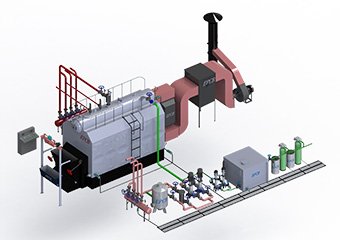
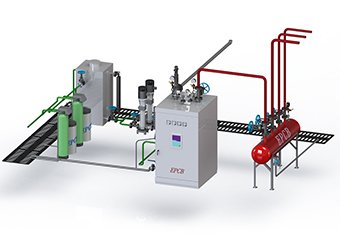
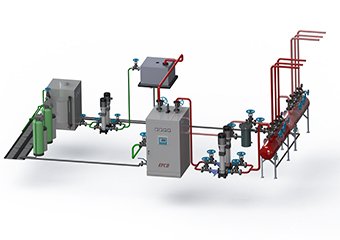
After the on-site survey was completed, the relevant data and photos were promptly fed back to the EPCB technical team. Based on the actual site conditions, the engineers conducted an overall plan for the boiler system, steam pipelines, auxiliary equipment, and condensate recovery system, and created a professional P&ID process flow diagram and boiler room layout plan for the client.
Through in-depth communication and on-site surveys in the early stages, many potential problems during the installation phase were identified and resolved in advance, creating favorable conditions for the smooth implementation of the subsequent project.
Professional Installation Support Ensures Successful Commissioning
An industrial boiler is a system engineering project consisting of the boiler body, combustion system, water supply system, water treatment equipment, steam pipelines, electrical control system, safety accessories, and other auxiliary equipment.
Even if the boiler body is manufactured to reliable quality, if there are equipment positioning deviations, unreasonable pipe connections, electrical wiring errors, or improper installation of safety accessories during the installation process, the system's operating performance may still be affected.
Therefore, before the equipment is shipped, the EPCB technical team begins to prepare the service materials required for the installation phase for the customer . These materials not only help the customer's construction team understand the equipment installation requirements, but also enable all parties involved in the project to carry out their work in accordance with unified technical standards.
After the equipment arrives at the customer's site, EPCB establishes a dedicated project service communication mechanism. The customer's site manager, local technical agent, EPCB sales personnel, and technical engineers maintain continuous contact.
The EPCB technical team will conduct a step-by-step inspection based on on-site feedback, comparing the boiler room layout diagram and system flowchart, and provide clear handling suggestions. This continuous online service avoids repeated construction work due to information asymmetry during the installation process, and also reduces the safety risks and time costs that may result from incorrect installation.
24/7 Remote Technical Support Ensures Continuous Customer Service
This project adopts a service model that combines on-site execution with remote technical support.
Remote service is not simply about sending a few documents via email; it requires suppliers to establish clear communication processes, problem feedback mechanisms, and technical verification standards. Throughout the installation process, EPCB engineers remain online, providing ongoing support based on project progress.
Customers can provide daily feedback to EPCB on on-site construction progress, equipment connection photos, installation videos, and technical issues. Upon receiving the information, engineers will analyze it in conjunction with system design requirements and promptly respond to any adjustments or confirmations needed.
For issues that are difficult to explain in words alone, EPCB will communicate directly with the customer's on-site personnel through video conferencing, with engineers explaining the installation location, pipeline direction, valve function, and operating requirements step by step.
When dealing with issues involving the coordination of multiple systems, the technical team will start from the overall operational logic to avoid solving only a local problem and causing new impacts on other systems.
System-Level Optimization for Improved Steam Quality
The client focus on steam quality is central to the design and service work of this project.
EPCB does not simply attribute steam quality issues to the performance of the boiler itself, but rather optimizes the system from multiple aspects such as boiler steam generation, steam transmission, condensate discharge, and heat recovery.
To improve steam dryness, EPCB incorporates a steam-water separator and a high-efficiency condensate trap in its system. The steam-water separator reduces liquid droplet entrainment in the steam, while the condensate trap promptly removes condensate from the steam pipelines. Combined with proper pipeline routing and insulation measures, secondary condensation during steam transport is minimized, ensuring a more stable delivery of steam to the production equipment.
During installation, EPCB engineers not only focus on whether the equipment is connected, but also check whether the piping layout meets the steam delivery requirements, whether the condensate drain locations are appropriate, and whether the steam-water separator is correctly installed. This continuous service from design to installation to commissioning effectively avoids the problem of a system with a reasonable configuration but improper on-site installation.
Ultimately, customers do not receive an isolated boiler, but a high-quality steam supply system optimized for the needs of food production.
Condensate Recovery Improves Operating Efficiency and Reduces Costs
In addition to improving steam quality, EPCB also designs condensate recovery systems for its customers.
When steam releases heat in production equipment, it forms condensate with a relatively high temperature. If this condensate is discharged directly, it will not only waste water resources but also result in a significant loss of heat energy.
A condensate recovery system can be used to return high-temperature condensate to the boiler feedwater system, reducing the amount of cold water needed to replenish the boiler.
This helps reduce the fuel consumption required for the boiler to heat the feedwater to boiling, while also reducing the load on the water treatment system, shortening the boiler heating time, and improving the overall thermal efficiency of the system.
During system installation and commissioning, EPCB engineers provided continuous guidance on condensate pipe connections, recovery paths, equipment interfaces, and operating logic to ensure that the condensate recovery system could truly function, rather than simply remaining a configuration on design drawings.
EPCB also explained to customers' operators the working principle, operation and inspection methods, and key points of daily maintenance of the condensate recovery system, helping customers understand which aspects contribute to the energy-saving effect and how to maintain system efficiency in long-term operation.
This reflects an important characteristic of EPCB's after-sales service: not only helping customers get their equipment up and running, but also helping them run their systems more economically.
Operator Training Ensures Safe and Efficient Boiler Operation
The long-term stable operation of equipment depends not only on manufacturing quality but also on the standardization of operation and maintenance. Therefore, during project commissioning, EPCB considers operator training a crucial component of its after-sales service. EPCB not only tells customers "how to operate," but also explains the reasons behind each operation, such as why water levels must be checked before boiler startup, why steam pipes need slow warm-up, why substandard water quality causes scaling, and why condensate needs timely discharge and recycling. Only when operators truly understand the equipment's operating principles can they promptly identify abnormalities and reduce the risk of misoperation in daily work. Through systematic training, customers gradually establish more standardized boiler operation and maintenance procedures, laying a solid foundation for the long-term safe and stable operation of the equipment.
Continuous Technical Support After Commissioning
Even after the equipment was officially put into operation, EPCB did not end its communication with customers.
For EPCB, after-sales service is not a one-time installation and commissioning, but continuous support throughout the entire service life of the boiler.
In the early stages of project commissioning, the EPCB team maintained frequent communication with the client to stay informed about the boiler's operating status, steam supply, production load changes, and operator feedback.
When customers encounter problems with parameter settings, alarm judgment, equipment maintenance, or water treatment during daily operation, they can continue to contact EPCB through online channels.
Technicians will analyze the operational data, on-site photos and videos provided by the customer, and propose inspection steps and handling suggestions.
For issues requiring continuous monitoring, EPCB advises customers to record relevant parameters and compare the data before and after to determine the equipment's operating trend.
This continuous online support helps customers address problems in their early stages, preventing minor issues from escalating into equipment failures that impact production.
At the same time, EPCB will also remind customers to pay attention to routine maintenance, inspection of vulnerable parts, water quality testing and calibration of safety accessories based on equipment uptime, helping customers gradually establish a preventive maintenance awareness.
Compared to repairing equipment after it malfunctions, preventative maintenance can more effectively reduce downtime risks and extend the boiler's service life.
Regular Follow-Ups Drive Continuous System Optimization
After the boiler is put into operation, real production data and user experience are important bases for evaluating the system solution.
Therefore, EPCB's services are not limited to online communication, but also include follow-up visits and return visits.
Through on-site follow-up visits by local technical agents and continuous communication with the EPCB team, service personnel can further understand the boiler's operation under actual production load, check whether customer operators are carrying out daily inspections and maintenance as required, and collect feedback on steam quality, pressure stability, fuel consumption, and condensate recovery.
Regular follow-up visits not only help customers identify potential problems, but also allow EPCB to continuously understand the operating performance of equipment under real-world conditions, accumulating experience for subsequent services and product optimization.
This represents a shift from an "equipment delivery relationship" to a "long-term technical cooperation relationship."
More Than a Boiler Manufacturer: Your Long-Term Steam System Partner
This children's food steam boiler project is another important practice of EPCB in the food industry of Uzbekistan.
The value of this project lies not only in the improvement of steam quality and the optimization of energy utilization, but also in the full life cycle service system established by EPCB.
From requirements analysis, site survey, and system design, to installation guidance, remote commissioning, and personnel training, and then to continuous online service and regular visits and follow-ups, EPCB provides services throughout the entire project process.
EPCB helps customers truly transform boiler equipment into a stable, reliable, and efficient production energy system through standardized installation guidance, professional engineer support, local agent collaboration, and a long-term follow-up mechanism.
Conclusion
The value of an industrial boiler can only be truly realized through years of stable operation.
For food production companies, a stable steam supply is crucial for production efficiency, product quality, and food safety. When choosing a boiler supplier, customers are not only selecting a piece of equipment, but also choosing whether they can obtain continuous, professional, and reliable technical support for many years to come.
The successful implementation of the project in Uzbekistan once again demonstrates that EPCB not only possesses the design and manufacturing capabilities for industrial steam boilers, but also has the comprehensive ability to serve international clients, coordinate local resources, guide remote installation, and ensure the long-term operation of equipment.
From site surveys before the project begins to installation guidance after equipment arrives; from full online support during initial commissioning to ongoing support after formal production; from operator training to follow-up visits, EPCB always maintains close contact with its customers.
Equipment delivery is not the end of EPCB services, but the beginning of a long-term partnership.
In the future, EPCB will continue to focus on the food processing, beverage, fruit and vegetable processing, dairy products, children's food and other industrial sectors, providing global customers with more efficient, stable and energy-saving steam boiler system solutions. Through professional, timely and comprehensive after-sales service, EPCB will help customers ensure production safety, reduce operating costs, improve product quality and expand into international markets.