

With the continued development of Uzbekistan's textile industry, more and more textile companies are beginning to enhance their market competitiveness by expanding production scale, updating production equipment, and optimizing energy systems.
A well-known textile company located in Samarkand, Uzbekistan, has also launched a new round of capacity expansion plans driven by growing market demand. With the new production line in operation, the company has placed higher demands on steam supply capacity, steam stability, fuel efficiency, and boiler automation levels.
For textile companies, steam boilers are not simply standalone pieces of equipment, but crucial energy sources connecting multiple production stages such as dyeing, finishing, drying, washing, and heating. The continuous, stable, and efficient operation of the boiler directly impacts textile product quality, production pace, energy consumption, and the company's overall operating costs.
Therefore, in this expansion project, the client did not simply use equipment price as the sole procurement criterion, but instead hoped to find a professional industrial boiler manufacturer that could provide complete boiler system solutions and long-term technical support based on actual production needs.
After a thorough comparison of boiler suppliers from multiple countries, the customer ultimately chose EPCB boilers.
Why Customers Choose EPCB Over Other International Boiler Suppliers
At the beginning of the project, the client compared boiler suppliers from multiple countries and regions, including Türkiye and China.
The client focused on evaluating the supplier's boiler manufacturing experience, product structure, system configuration, energy efficiency, delivery capability, technical services, and overseas project implementation experience.
The procurement of industrial boilers differs from that of ordinary mechanical equipment. Boilers require long-term continuous operation, and their design, manufacturing, installation, commissioning, and maintenance are closely interconnected. Improper handling in any of these stages can affect the later operation of the equipment.
Some suppliers can provide boiler equipment, but lack system analysis tailored to the customer's actual operating conditions; some suppliers offer lower prices, but are deficient in auxiliary equipment configuration, instrument and valve grades, automatic control functions, and on-site technical services.
When communicating with customers, EPCB does not rush to recommend fixed models, but first understands the customer's production process, existing equipment, expansion scale, steam usage characteristics, natural gas supply conditions and future development plans.
Through multiple rounds of technical exchanges, EPCB engineers systematically reviewed the customer's needs and analyzed them from various aspects, including boiler capacity, combustion system, water supply system, control system, instrumentation valves, safety protection, and on-site installation conditions.
This communication approach, based on the actual needs of customers, has shown them that EPCB is not only a boiler equipment manufacturer, but also an industrial steam solutions provider with system design capabilities and experience in overseas project services.
Ultimately, thanks to its extensive experience in the boiler industry, professional technical solutions, comprehensive equipment configuration, and reliable service commitment, EPCB stood out from many competitors and became the partner for the client's capacity expansion project.
4 T/h Gas-Fired Steam Boiler Designed for Textile Production Requirements
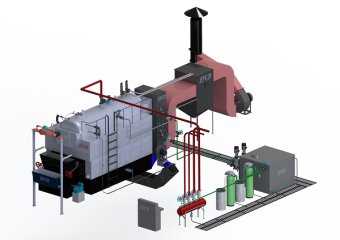
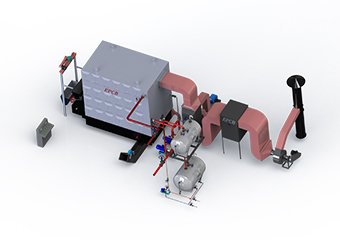
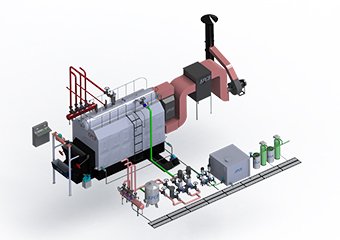
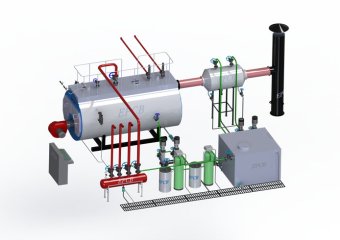
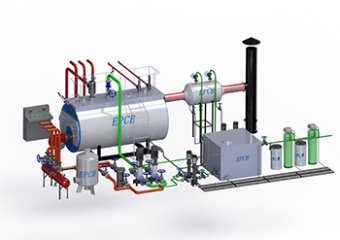
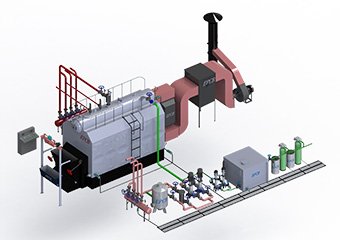
After analyzing the steam demand and operating conditions of the customer's new production line, EPCB configured a 4-ton gas-fired steam boiler for the textile company.
A 4-ton gas-fired steam boiler can provide customers with a continuous and stable supply of steam for their textile production lines, meeting the steam requirements for dyeing, drying, setting, and other processes.
During the boiler selection process, EPCB not only considers current production needs but also takes into full account load changes and the company's subsequent production arrangements. A reasonable capacity configuration can prevent the boiler from operating at overload for extended periods and reduce energy waste caused by excessive capacity.
Compared to simply increasing boiler capacity according to maximum steam consumption, EPCB places greater emphasis on matching the actual operating range of the boiler with the production load.
When the boiler capacity, burner output, and plant steam demand are properly matched, the boiler can operate within a more stable load range, which helps to improve combustion efficiency, reduce start-up and shutdown frequency, and extend equipment life.
For customers, this means that the new boiler can not only solve the steam supply problem after the expansion of production capacity, but also provide a more reliable foundation for future production management and cost control.
Optimized Boiler Structure Improves Fuel Efficiency and Energy Utilization
Fuel costs are a significant component of the long-term operating costs of industrial boilers. For textile companies with high steam demand, even a small increase in boiler efficiency can significantly reduce energy expenditures over the long term. Therefore, EPCB has made improving natural gas utilization efficiency a key objective in the design of this project.
EPCB gas-fired steam boilers optimize the furnace structure, flue gas flow, and heating surface arrangement to ensure that the heat generated by combustion is fully transferred to the boiler water, extending the heat exchange time of high-temperature flue gas and reducing exhaust heat loss.
The combustion system can automatically adjust the gas and air supply according to the actual steam load to maintain a reasonable air-fuel ratio, thereby achieving stable and complete combustion, reducing fuel waste and improving boiler thermal efficiency.
Meanwhile, EPCB engineers design the burner and furnace to match local natural gas conditions, ensuring that the flame shape, combustion space and flue gas flow are coordinated, helping customers to obtain a stable steam supply while reducing the unit steam production cost.
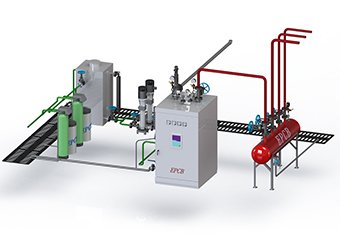
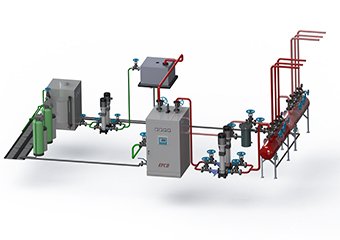
Besides fuel efficiency, the boiler feedwater system also directly affects the operating costs of the steam system. Increasing feedwater temperature, stabilizing feedwater flow, and ensuring water quality can reduce the fuel consumption required for the boiler to heat low-temperature water.
In response to customers' energy-saving needs, EPCB has made reasonable configurations to the water supply system, enabling it to replenish water in a timely manner according to changes in boiler water level, reduce water level fluctuations, and improve boiler operation safety and steam output stability.
Good water treatment and feedwater management can also reduce the risk of scale buildup on heating surfaces. Scale hinders heat transfer, leading to increased flue gas temperature and fuel consumption, and in severe cases, can affect the safe operation of the boiler. Therefore, EPCB places particular emphasis on the importance of softened water treatment, regular blowdown, and water quality testing.
EPCB reduces energy and water waste and improves the overall operating efficiency of the steam system through the coordinated operation of the boiler body, combustion system, feedwater system, water treatment system, and operation management.
Upgraded Instrumentation and Valves Improve Boiler System Reliability and Safety
To meet the customer's requirements for equipment stability and long-term operational reliability, EPCB optimized the configuration of key instruments and valves in the project.
Pressure gauges, water level gauges, pressure controllers, safety valves, and various other valves perform functions such as monitoring, control, isolation, and safety protection. Although small in size, they directly affect the accuracy and safety of boiler operation.
During the selection process, EPCB comprehensively considers working pressure, medium temperature, usage frequency, and on-site maintenance conditions to ensure accurate instrument detection, reliable valve sealing, and proper matching with the boiler system.
By improving the reliability of key instruments and valves, EPCB helps customers improve their boiler monitoring and safety protection systems, ensuring the long-term stable operation of equipment.
Automatic Control System Ensures Stable and Efficient Boiler Operation
As production scales up, frequent manual adjustments to boiler parameters are no longer sufficient to meet the efficiency, safety, and management requirements of modern textile factories. Therefore, EPCB equipped this 4-ton gas-fired steam boiler with an automatic control system.
The system can monitor boiler pressure, water level, combustion status, and equipment operation in real time, and automatically adjust the burner load according to steam demand. When steam consumption increases, the steam output is increased; when steam consumption decreases, the load is reduced, thereby reducing unnecessary fuel consumption.
Automatic water level control, pressure control, combustion control, and safety interlocks work together to ensure stable boiler operation. In case of abnormalities, the system can promptly issue an alarm or activate shutdown protection, reducing the risk of equipment failure and misoperation.
Automation can reduce the amount of manual adjustments required, but it cannot replace daily management. Operators still need to complete inspections, sewage discharge, water quality testing, and equipment maintenance according to procedures. Therefore, EPCB also provides system operation training to customers during the commissioning phase.
Ahead-of-Schedule Boiler Delivery Supports the Customer's Production Expansion Plan
For capacity expansion projects, boiler delivery time directly impacts the installation and commissioning schedule of the new production line. Equipment delays not only affect subsequent commissioning and production arrangements but may also increase project costs for customers.
After the contract was executed, EPCB quickly coordinated its technical, procurement, production and quality control teams to arrange raw material preparation, boiler manufacturing, auxiliary equipment procurement and system inspection according to the project milestones.
During the production process, EPCB strictly controlled key manufacturing procedures and completed system inspections before shipment to ensure that the boiler body and supporting equipment met the project's technical requirements. Through the coordinated efforts of various departments, EPCB completed production and delivery ahead of schedule, saving time for on-site installation.
EPCB understands that customers are not just purchasing a boiler, but a crucial energy project related to their capacity expansion plans. Therefore, EPCB always prioritizes customer project schedules as a key basis for production and delivery management.
On-Site Technical Support Ensures Professional Boiler Installation and Commissioning
The arrival of the boiler on site does not mean the project is over. Proper installation and commissioning are crucial for the long-term safe and stable operation of the equipment. The installation quality of pipelines, gas, electrical, and flue gas systems will all affect the boiler's later operation.
To help clients smoothly advance their projects, EPCB dispatched professional technicians to the site in Uzbekistan to inspect the boiler foundation, equipment location, and installation conditions, and to guide the installation and connection of the boiler body, burner, feedwater system, steam pipeline, instrument valves, and control system.
After installation, the EPCB team conducted a comprehensive inspection and test of the control system, instrument valves, feedwater system, burner and safety interlocks, and adjusted the boiler operating parameters according to different loads.
Engineers also optimized combustion parameters based on local natural gas conditions to ensure a proper match between the burner and boiler load. After on-site commissioning, the boiler reached a stable operating state and was successfully put into the customer's production system.
Professional Boiler Operation Training Ensures Safe and Efficient Equipment Management
High-quality boilers require standardized operation and management to maintain long-term stable operation. Therefore, after installation and commissioning, EPCB technicians conducted on-site training for the customer's operators.
The training covers pre-start inspection, start-up and shutdown procedures, pressure and water level monitoring, control system operation, burner observation, blowdown, water quality management, alarm handling, and daily maintenance.
EPCB engineers not only explain the operating methods, but also the reasons behind operations such as water level checks, slow pipe warm-up, water quality control, and alarm reset, helping operators understand the boiler's operating principles and promptly identify and properly handle abnormalities.
By providing training tailored to the actual operating conditions of the equipment, customers can reduce operational errors, improve equipment utilization, and enhance boiler management. For EPCB, ensuring customers truly master the equipment is a crucial component of the complete delivery of boiler projects.
4 T/h Gas-Fired Steam Boiler Ensures Stable Steam Supply for Textile Production
Since the EPCB 4-ton gas-fired steam boiler was put into operation, the equipment has continuously provided a stable steam supply for customers' new production lines, meeting the process requirements of heating, dyeing, drying and setting in textile production.
A well-designed combustion system and heat exchange structure improve natural gas utilization efficiency, helping to reduce unit steam production costs. Upgraded instrument valves and automatic control systems also make boiler operation monitoring and daily management more convenient.
With on-site guidance and operational training from EPCB technicians, the customer team gradually mastered the methods for boiler start-up and shutdown, operation monitoring, and daily maintenance, laying the foundation for the long-term stable operation of the equipment.
Customer feedback indicates that the boiler's commissioning has improved the factory's steam supply capacity, production efficiency, and energy management, facilitating the smooth progress of expansion plans. The customer also gave positive feedback on EPCB's equipment quality, technical solutions, timely delivery, and on-site service.
From Boiler Equipment Supplier to Long-Term Industrial Steam System Partner
The 4-ton gas-fired steam boiler project for the Samarkand textile company in Uzbekistan is not only a delivery of equipment, but also a comprehensive demonstration of EPCB's manufacturing, system design, and overseas service capabilities.
From demand analysis, boiler selection and energy-saving design, to automatic control configuration, equipment manufacturing, advance delivery, on-site installation and commissioning and operation training, EPCB always promotes projects around the actual needs of customers to expand production and stabilize production.
EPCB believes that professional boiler solutions should not only meet technical parameters but also adapt to customer processes, ensure stable operation, facilitate operation and maintenance, and help companies reduce long-term energy costs. This project provided a reliable steam guarantee for the customer's capacity expansion and further enhanced EPCB's brand influence in the Uzbekistan market.
In the future, EPCB will continue to provide efficient, stable, and safe industrial steam solutions for industries such as textiles, food, chemicals, and building materials in Central Asia, striving to become a long-term, reliable steam system partner for its customers.