

The production process in the ceramics industry involves raw material processing, molding, drying, heating, and other supporting processes. Different production stages have high requirements for the stability and continuity of heat energy supply. For large-scale ceramic enterprises, the steam system is not only an energy device, but also a crucial infrastructure to ensure production rhythm, product quality, and factory operating efficiency.
If the boiler's steam output is insufficient, pressure fluctuates significantly, or the combustion system is unstable, it may affect the continuous operation of the production line. Especially when the production load changes, the boiler needs to adjust its combustion state and steam output in a timely manner to meet the actual steam demand.
Therefore, when selecting boiler equipment, customers pay attention not only to the boiler's rated evaporation capacity, but also to the equipment's actual output, combustion stability, control precision, installation quality, commissioning capabilities, and whether the supplier can provide long-term reliable after-sales service.
In 2024, a well-known ceramics manufacturer in Bangladesh selected an 8-ton gas-fired steam boiler system from EPCB to meet the factory's actual steam demand. The client wanted a more stable, continuous, and easy-to-manage steam supply through the new boiler equipment, and required the supplier to be responsible for on-site installation guidance, system commissioning, and subsequent technical support.
For EPCB, this is not just a boiler equipment delivery, but a complete steam system service project from solution implementation to long-term operational support.
8 T/h Gas-Fired Steam Boiler Designed for Ceramic Production
In the early stages of the project, the EPCB technical team first communicated with the customer regarding their production process, actual steam consumption, operating time, steam pressure, fuel conditions, and on-site installation environment.
The selection of industrial boilers cannot be based solely on a simple capacity figure. Even with the same 8-ton gas-fired steam boiler, different factories may have completely different load variations, operating times, piping layouts, and operating methods. Therefore, EPCB places great emphasis on the compatibility between boiler equipment and the customer's production system during project implementation.
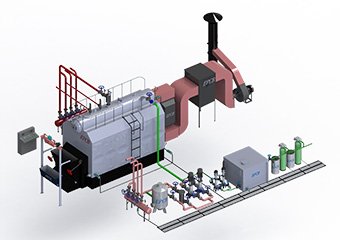
Considering the continuous production and stable steam consumption requirements of ceramic enterprises, EPCB configured an 8-ton gas-fired steam boiler system for the client. This system focuses on a stable steam supply while also addressing combustion regulation, operation control, safety protection, and subsequent maintenance.
During the equipment manufacturing and project preparation phases, the EPCB team maintained continuous technical communication with the client to confirm boiler room layout, foundation conditions, pipe interfaces, electrical connections, gas supply, and the connection requirements between auxiliary equipment. Thorough pre-confirmation minimizes installation deviations upon equipment arrival on-site, creating conditions for subsequent commissioning and smooth operation.
This project execution approach, based on the customer's actual operating conditions, is a key differentiator between EPCB and a simple equipment vendor. EPCB not only provides the boiler itself, but also helps customers solve problems related to installation, combustion, control, and operation from the perspective of the entire steam system.
Professional Boiler Installation Ensures Stable and Reliable Operation
The quality of boiler manufacturing determines the basic performance of the equipment, while the quality of on-site installation directly affects whether these performance characteristics can be fully realized.
After the boiler arrived at the customer's project site in Bangladesh, EPCB provided professional installation guidance and technical support. Engineers inspected and verified the boiler body, combustion system, feedwater system, electrical control system, steam piping, and related instrument valves based on the equipment structure, system design, and site conditions.
Installation is not simply about connecting equipment; it's about ensuring proper coordination between all systems. Any problem with any interface, valve, duct, or control signal can affect the boiler's startup and subsequent operation.
Therefore, EPCB engineers consistently adhered to the boiler's technical requirements during the installation phase, conducting item-by-item checks, communicating promptly with on-site customer personnel, and proposing adjustments based on any issues discovered. Through rigorous installation management, the equipment achieved a solid foundation for commissioning.
Split-Type Burner Design Improves Combustion Stability and System Performance
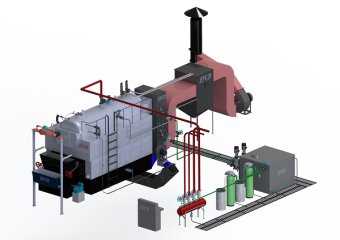
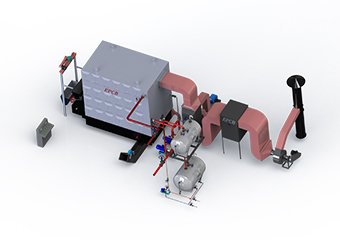
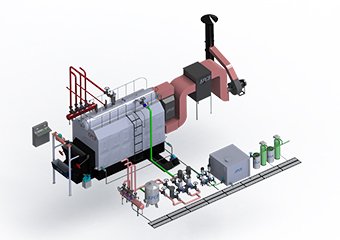
What deserves special mention in this project is that the boiler adopts a split burner configuration, that is, the burner body and the fan are arranged separately.
Compared to structures where the fan and burner are integrated, separate burners have their own characteristics in terms of installation method, airflow organization, and site layout. Because the fan is set up independently, engineers need to more accurately handle the matching relationship between the fan, air duct, burner, gas supply, and furnace during commissioning.
After arriving on site, EPCB engineers conducted systematic adjustments to the fan operation, duct connections, gas pressure, ignition process, flame status, and combustion performance under different loads. The engineers did not focus solely on whether the boiler could ignite successfully; instead, through repeated observations and parameter adjustments, they ensured that the burner and boiler furnace achieved a more optimal operating state.
After professional commissioning, the burner ignited stably, the flame was in good condition, and the combustion process was smooth. The boiler was able to provide stable steam according to the production load requirements. Currently, the split-type burner is operating well at the customer's site, meeting the actual needs of the ceramic production line.
This result fully demonstrates that high-quality equipment requires professional commissioning to achieve its full performance. For EPCB, burner commissioning is not an add-on service in the project, but a crucial step in the smooth commissioning of the boiler system.
Comprehensive Boiler Commissioning from Initial Ignition to Full-Load Operation
Boiler commissioning is not simply about completing an ignition; it is a comprehensive verification of the equipment installation quality, control logic, safety protection, and actual operational capabilities.
In this project, EPCB engineers conducted item-by-item checks and tests on the boiler system according to the on-site commissioning procedures.
First, the engineers inspected the boiler feedwater, water level display, pressure control, gas supply, electrical system, and all instruments and valves to confirm that the equipment met the conditions for safe startup. Subsequently, they tested the burner ignition procedure, fan interlock, gas valve assembly operation, and flame detection signals.
After the boiler was successfully ignited, engineers gradually increased the operating load while continuously monitoring changes in steam pressure, water level, combustion status, fan operation, and control system feedback. By gradually adjusting from low load to normal load, potential problems that might arise under different operating conditions can be identified in a timely manner.
Regarding the boiler output, a key concern for the customer, EPCB engineers focused on checking the steam output capacity and the response to load changes. The commissioning results showed that the 8 t/h gas-fired steam boiler performed well and could meet the steam requirements of the customer's production line.
Meanwhile, engineers meticulously optimized the burner parameters based on actual on-site operating conditions, enabling the combustion system to better adapt to the customer's production load. After commissioning, the boiler operated stably, the burner was in good condition, and the steam supply was continuous, providing a reliable guarantee for the customer's subsequent production.
Responsive After-Sales Support Ensures Reliable Boiler Operation
For overseas industrial boiler projects, customers are not only concerned about whether the equipment can operate upon delivery, but also about whether the supplier can respond promptly when technical problems arise.
Bangladesh is geographically distant from China, and language barriers, time constraints, and on-site conditions may increase the difficulty of technical communication. If the boiler supplier cannot provide ongoing support after equipment delivery, the customer may face significant challenges in actual operation.
EPCB firmly believes that boiler delivery does not signify the end of service; the commissioning of the equipment is just the beginning of long-term service.
In this boiler project for the ceramics industry, EPCB established a continuous after-sales communication mechanism for the client. Whether it's technical confirmation during the installation phase, parameter adjustments during commissioning, or operational consultation after commissioning, the EPCB team is able to promptly understand client feedback and provide targeted suggestions.
For issues involving burners, EPCB technicians will make a comprehensive judgment based on gas pressure, fan status, flame performance, load changes, and control parameters, rather than simply providing a general answer. Because each project has different gas conditions, boiler room layout, and production load, only by analyzing the actual site conditions can problems be truly solved.
It is this timely, professional, and targeted after-sales service that gives customers greater peace of mind when using EPCB boilers.
The client gave positive feedback on the installation, commissioning, and service quality of this project, particularly recognizing EPCB's professional performance in commissioning split-type burners. After the boiler was put into operation, its output was good, the burner operated stably, and it was able to meet the steam requirements of ceramic production.
Good boiler output provides a stable guarantee for ceramic production.
The rated capacity of a boiler is only a design parameter; customers are more concerned about whether the equipment can continuously provide the required steam in the actual production environment.
After professional installation and commissioning by EPCB, this 8-ton gas-fired steam boiler demonstrated excellent steam output capacity. The boiler is able to operate in accordance with the customer's production load, providing stable thermal energy support for the ceramic production line.
A stable steam supply helps customers maintain production rhythm and reduces the impact of steam pressure fluctuations on processes. After proper commissioning, the burner can be adjusted according to boiler load changes, ensuring that combustion conditions are coordinated with steam demand.
From the boiler body to the separate burners, from the independent fans to the control system, all components have achieved stable coordination after commissioning. The equipment is currently operating well and has met the customer's requirements for output, combustion, and production assurance.
For customers, this means not only acquiring a working boiler, but also establishing a reliable energy system that can continuously provide steam for production.
EPCB Delivers Professional Boiler Solutions Throughout the Entire Project Lifecycle
This project in the Bangladesh ceramics industry once again demonstrates EPCB's comprehensive service capabilities in the field of industrial steam boilers.
First, EPCB can match equipment to the specific characteristics of the customer's industry and actual steam demand, rather than simply providing standardized products. Ceramic production has high requirements for steam continuity and stability, so the project was developed from the outset around actual production needs.
Secondly, EPCB prioritizes installation quality. Through on-site inspections, interface verification, and system linkage testing, it ensures that the boiler equipment has a solid foundation for operation.
Third, EPCB possesses professional combustion system commissioning capabilities. Especially in split-type burner projects, engineers need to comprehensively manage the relationships between the fan, air duct, gas, burner, and furnace. Through meticulous commissioning, they ensure the burner operates smoothly and helps the boiler achieve stable output.
Fourth, EPCB provides timely after-sales support. After the project is put into operation, EPCB continues to monitor the equipment's operation, responds promptly to customers' technical questions, and provides professional advice.
Finally, EPCB helps customers improve their independent operation and maintenance capabilities through operational training. A truly reliable boiler project should not leave customers reliant on suppliers to handle every simple problem; instead, it should help customers establish standardized operation and maintenance systems.
From Boiler Supplier to Long-Term Steam System Partner
In the industrial boiler market, equipment price is certainly important, but for companies that need to operate continuously for a long period of time, boiler quality, commissioning level and after-sales service are often more valuable in the long run.
A boiler may need to operate for many years. During this time, stable steam output, a reliable combustion system, timely technical support, and standardized maintenance management will directly affect the company's production efficiency and operating costs.
EPCB aims to provide its customers with more than just a boiler.
From initial technical communication, equipment manufacturing, and project delivery, to installation guidance, burner commissioning, personnel training, and long-term after-sales support, EPCB always starts from the actual production needs of customers to provide them with complete industrial steam solutions.
In the 8-ton gas-fired steam boiler project of this well-known ceramics company in Bangladesh, EPCB helped the customer establish a reliable steam supply system by virtue of its professional installation and commissioning capabilities, good boiler output, stable operation of the split burner, and timely and thoughtful after-sales service.
Currently, both the boiler and burner are operating well, and the equipment performance meets the customer's production needs. The customer's recognition is not only an affirmation of the quality of EPCB products, but also an affirmation of the professional capabilities and service attitude of EPCB engineers.
In the future, EPCB will continue to focus on boiler safety, stable operation, and long-term customer value, providing more professional, efficient, and reliable industrial boiler systems for industries such as ceramics, textiles, food, chemicals, pharmaceuticals, and papermaking in Bangladesh and around the world.
Delivery is not the end of service, but the beginning of long-term cooperation between EPCB boiler and its customers.