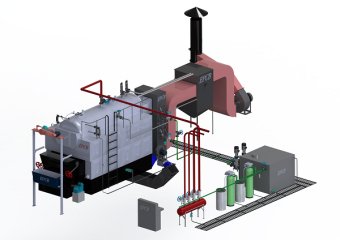
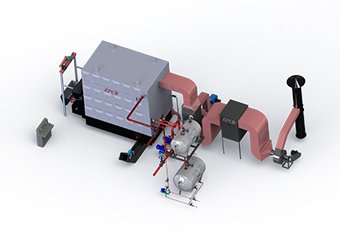
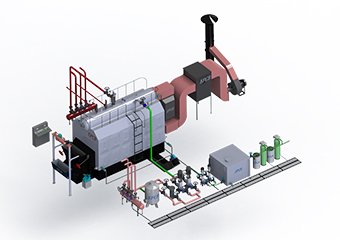
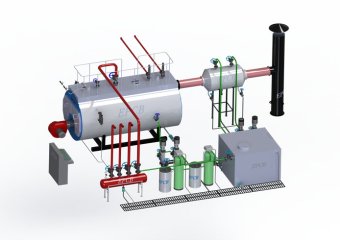
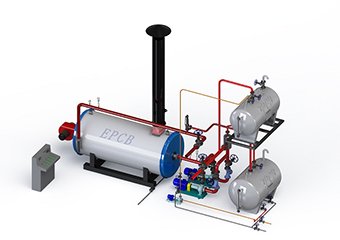
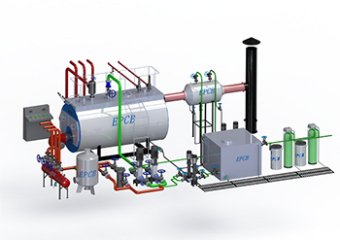
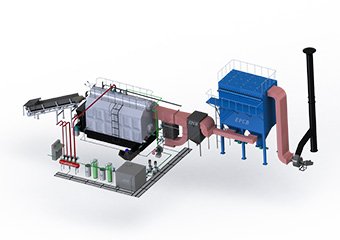
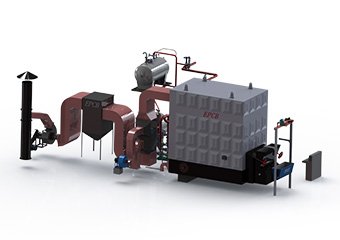
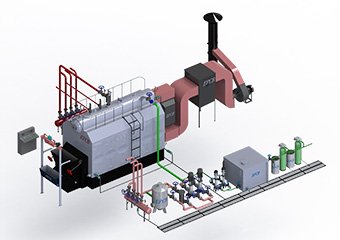
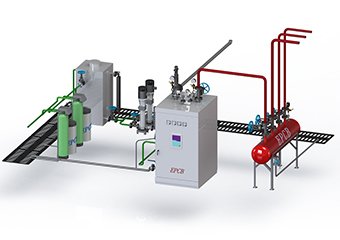
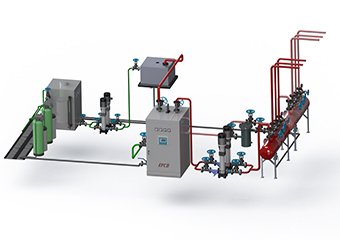
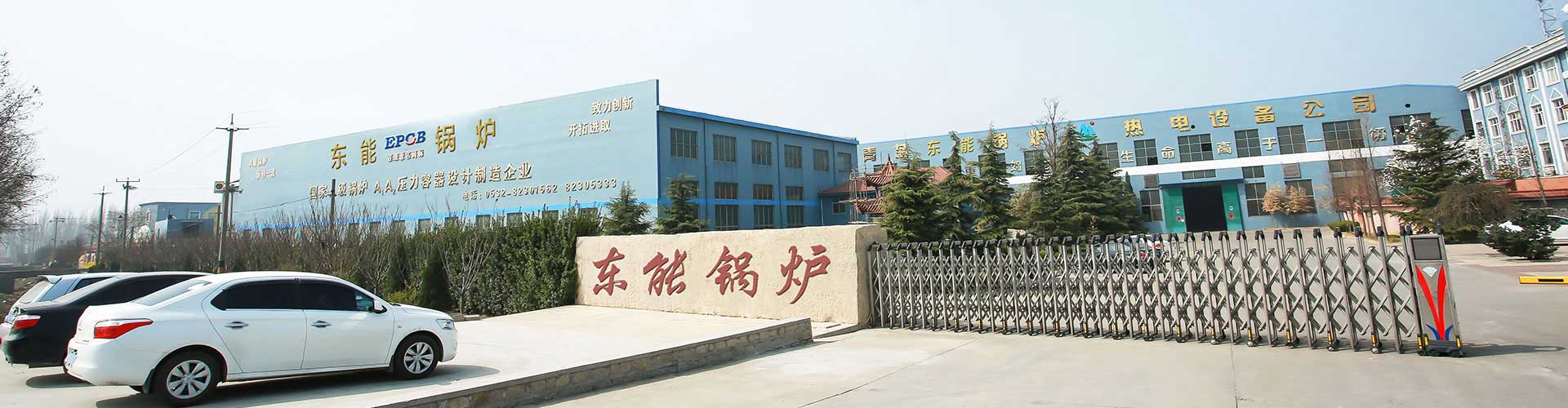


In Bangladesh, a feed production company has established a long-term partnership with EPCB Boiler. As the factory's production needs grew, the factory owner purchased three industrial boilers from EPCB, with capacities of 8 t/h, 10 t/h, and 10 t/h respectively. All three large boilers were installed in the same factory.
From the first 8-ton steam boiler to the subsequent two 10-ton steam boilers, this was not merely a simple equipment procurement process, but also a testament to the customer's continued recognition of EPCB 's products, technological capabilities, and service system. For industrial boiler manufacturers, a customer's repeated choice of the same brand is a significant indicator of establishing a long-term partnership; for EPCB, each collaboration signifies a responsibility, requiring a response to the customer's trust with professional technical solutions, reliable equipment configurations, and meticulous service.
This case study will show you how EPCB serves its customers in the Bangladeshi feed industry and how industrial steam boilers support the production and operation of feed mills.
Reliable Industrial Steam Boiler Solutions for Bangladesh Feed Mill Production
Feed production is a crucial link in the livestock supply chain. With the development of the livestock industry and the feed market, feed production companies not only need to focus on raw material procurement, formula management, and production efficiency, but also need to pay attention to the stability of production equipment and the reliability of energy systems.
In modern feed processing, steam is commonly used for raw material conditioning, temperature and moisture control before pelleting, and other heat-required processes. By properly controlling the steam supply, production enterprises can meet relevant process requirements and provide the necessary thermal energy support for feed pelleting and product quality control.
Meanwhile, feed mill production demands are influenced by factors such as production line configuration, product type, output plans, and equipment operation schedules. Steam systems need to be rationally designed based on actual steam requirements to meet production process requirements while also ensuring operational stability, energy utilization, and ease of maintenance.
For feed production companies, selecting an industrial steam boiler involves more than just determining a rated evaporation capacity. Companies also need to comprehensively consider boiler capacity, fuel availability, operating pressure, auxiliary equipment configuration, on-site installation conditions, and long-term maintenance requirements.
This is also a core issue that EPCB values when working with industrial customers: boiler solutions should revolve around the customer's actual production needs, rather than simply focusing on the equipment itself.
EPCB 8-Ton Steam Boiler Provides Reliable Steam Supply for Bangladesh Feed Mill
The client's collaboration with EPCB began with an 8-ton/hour industrial boiler.
For feed mills, the boiler system is an important component of the production support facilities, and its steam supply capacity needs to be matched with the actual production process. If the boiler capacity is too small, it may not be able to meet the steam demand during peak production periods; if the equipment selection does not match the actual load, it may also affect the economic operation of the system.
Therefore, in industrial boiler projects, the appropriate selection of evaporation capacity is a crucial basis for equipment selection. In addition to rated capacity, a comprehensive evaluation is needed, taking into account operating pressure, feedwater temperature, steam consumption fluctuations, fuel supply, and future production plans.
EPCB is dedicated to providing boiler equipment and system solutions for various industrial sectors. In feed industry projects, boiler selection needs to fully consider the actual steam requirements of the production process, while also taking into account the requirements for equipment operation, safety protection, and daily operation.
The delivery of the first 8-ton/hour boiler laid the foundation for a cooperative relationship between the two parties. For the customer, choosing a boiler supplier is not just about purchasing a piece of equipment, but also about choosing a partner who can support subsequent production and operations.
For EPCB, the significance of the project extends beyond equipment delivery. Professional industrial boiler services involve multiple stages, including technical communication, equipment configuration, installation coordination, operation guidance, and subsequent technical support. Each stage is crucial to the customer's ability to effectively utilize the equipment and integrate the boiler system into the factory's production processes.
EPCB 10-Ton Steam Boiler Supports Feed Mill Production Expansion in Bangladesh
As the cooperation between the two parties progressed, the customer once again chose EPCB and purchased a second boiler with a capacity of 10 t/h.
The change from the initial 8 tons/hour to the subsequent 10 tons/hour reflects the fact that industrial customers may have different actual needs for boiler capacity at different stages of their projects. For feed production companies, factors such as production line configuration, process requirements, equipment utilization rate, and production plans can all influence the selection of boiler system capacity.
It is important to emphasize that changes in boiler capacity do not necessarily mean a proportional increase in factory production capacity. Different boilers may undertake different production tasks or serve different steam loads. Therefore, boiler selection should be based on specific operating conditions and engineering calculations.
For EPCB, in the face of customers' new boiler demands, it is important not only to provide larger capacity equipment, but also to continuously understand customers' application scenarios and provide appropriate product and technical support according to project requirements.
EPCB views boiler equipment and its supporting systems as a whole. During project implementation, equipment selection and system configuration need to be coordinated to meet the customer's comprehensive needs for steam supply, safe operation, and maintenance management.
The purchase of a second 10-ton/hour boiler further extends EPCB's partnership with this Bangladeshi feed mill and demonstrates the customer's recognition of EPCB's continued success in choosing the company.
EPCB's Third Steam Boiler Project Strengthens Long-Term Cooperation with Bangladesh Feed Mill
The customer then purchased a third boiler, also with a capacity of 10 t/h.
EPCB has now supplied the Bangladeshi feed mill with three large industrial boilers, rated for evaporation of 8 tons/hour, 10 tons/hour, and 10 tons/hour respectively, all installed in the same factory.
The combined rated evaporation capacity of the three boilers is 28 tons/hour. This is a simple sum of the rated capacities of the three units and does not mean that the plant can actually obtain an effective steam supply of 28 tons/hour at any given time. Actual operating capacity still depends on equipment conditions, system configuration, fuel conditions, operating pressure, and the steam demand of each production stage.
For feed mills, configuring multiple large boilers within the same factory requires attention not only to the performance of individual boilers, but also to the operation coordination and maintenance management of the entire boiler room.
For example, companies can rationally plan the operation mode of boilers based on production load, equipment operating status, and maintenance schedule. The specific operation strategy for multiple boiler systems should be determined by professionals based on design conditions and actual load, taking into account steam supply reliability, operating efficiency, and equipment maintenance needs.
The successive installation of three boilers at the same factory has extended EPCB's cooperation with its customers from a single equipment project to a continuous industrial boiler partnership.
For equipment manufacturers, repeat purchases from customers are a significant business signal. However, what's even more important is maintaining professional technical communication, appropriate equipment configuration, and a responsible service attitude in every new project. Long-term cooperation doesn't mean ignoring the unique needs of each project; on the contrary, the more familiar customers are with a supplier, the higher their expectations for their professionalism and service quality tend to be.
EPCB Professional After-Sales Service Ensures Reliable Industrial Steam Boiler Operation
For export industrial boiler projects, customers are not only purchasing equipment, but also requiring suppliers to have the ability to communicate and provide technical services across regions.
Especially in overseas markets, boiler suppliers and customers may face differences in language, distance, and on-site construction conditions. Accurately understanding project requirements, communicating technical issues promptly, and providing necessary support for equipment installation and use are crucial components of an industrial boiler supplier's professional capabilities.
EPCB emphasizes the connection between product supply and project services. For industrial boiler projects, professional services can cover the following aspects.
First, technical communication before equipment supply.
At the beginning of a project, clarifying the customer's process requirements, fuel conditions, operating pressure, and other technical requirements helps reduce misunderstandings of the solution and provides a basis for equipment selection and system configuration.
Second, coordination during project implementation.
Boiler equipment typically needs to work in conjunction with feedwater systems, steam pipelines, fuel supply systems, flue gas treatment facilities, and other auxiliary equipment. Clear technical documentation and effective project communication can help clients and relevant construction personnel better understand equipment interfaces, installation requirements, and system layout.
Third, installation and commissioning support.
Boiler installation involves equipment placement, piping connections, electrical wiring, instrument inspection, and commissioning of related systems. Specific installation and commissioning work should be carried out by qualified professionals in accordance with project documents, applicable standards, and manufacturer requirements.
Fourth, operational guidance and maintenance recommendations.
After a boiler is put into operation, proper operation management and regular maintenance help maintain the equipment's operating condition. Depending on the equipment type and specific configuration, related work may include combustion status checks, water quality management, safety accessory inspections, and maintenance of vulnerable parts.
For EPCB, the value of its services lies in helping customers better understand and use the equipment, and in providing the necessary technical support for the long-term operation of boiler systems.
In this case, the client purchased three boilers, establishing a foundation for continued cooperation between the two parties. The value of long-term cooperation is also reflected in the supplier's ability to consistently respond to the client's needs at different project stages and to treat each collaboration with a professional and responsible attitude.
EPCB Industrial Steam Boiler Solutions for Reliable and Efficient Animal Feed Production
Feed production cannot function without a stable and suitable supply of heat energy. Whether it is a single boiler project or an industrial steam supply system consisting of multiple boilers, reasonable capacity matching, reliable equipment configuration, and standardized operation and management are all crucial.
EPCB Boiler provides boiler equipment and related system solutions to industrial customers worldwide, covering food processing, textiles, pharmaceuticals, chemicals, and other industries that require industrial heat energy.
In the case of this feed mill in Bangladesh, the client purchased three boilers with rated evaporation capacities of 8 tons/hour, 10 tons/hour, and 10 tons/hour respectively. This collaboration demonstrates EPCB's continued involvement in overseas industrial boiler projects and reflects the value of repeat purchases from clients.
For companies planning to build new boiler rooms, expand feed production lines, or upgrade existing steam systems, EPCB recommends taking a comprehensive assessment of steam demand, fuel supply, operating pressure, water supply conditions, auxiliary equipment, and on-site installation requirements, based on actual production processes.
Looking for an industrial steam boiler for your feed mill?
EPCB Boiler can help you evaluate your application requirements and identify a suitable boiler solution based on your production process, required steam capacity, operating pressure and available fuel.
Contact EPCB to discuss your industrial boiler project and explore a solution tailored to your factory's needs.
EPCB Boiler — Professional Industrial Boiler Solutions for Global Industries.