

In the long-term operation of industrial boiler system, the equipment performance is important, but it is often a neglected key factor-water quality management that really determines the stability and service life of the system.
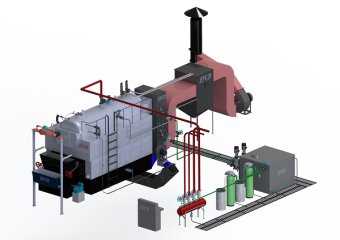
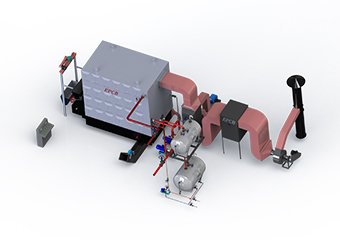
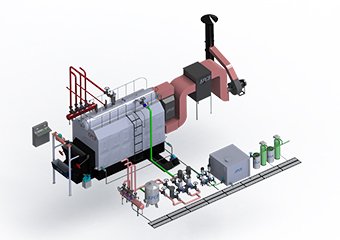
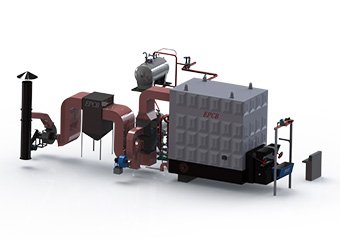
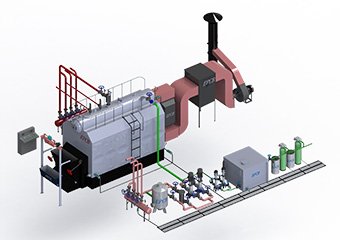
In the previous cooperation, EPCB boiler has successfully provided a biomass steam boiler system for a large coffee processing enterprise in Indonesia, and successfully completed the installation and commissioning. The initial performance of the project was stable and became a local benchmark case. However, about three months after the equipment was put into use, the customer encountered a typical but representative operation problem. This incident not only proves the importance of boiler water treatment again, but also fully embodies EPCB boiler's professional ability in problem solving, technical service and customer training.
Poor Boiler Operation Led to Abnormal System Stagnation
Three months after the project was put into operation, the customer gave feedback through local partners: the boiler was running abnormally, the system could not make up water normally, and the equipment was forced to stop.
The specific performance is as follows:
· The water supply system cannot pump water into the boiler.
· Boiler water level cannot be maintained.
· System operation is interrupted and production is affected.
This problem has a great impact on continuous production enterprises, especially in the coffee processing industry, which is highly dependent on the stable supply of steam. Once it stops, it will not only affect the production capacity, but also cause raw material loss and order delay.
EPCB Boiler Team Conducts Cross-Border On-Site Diagnosis
After receiving the feedback, EPCB boiler attached great importance to it. The company immediately organized a response, and a special technical service team composed of Indonesian market leaders, company leaders and local partners quickly rushed to the customer site.
This is not only a technical support, but also the embodiment of EPCB boiler's "service front, problem closed loop".
On-site inspection revolves around the following key directions:
· Inspection of boiler body and internal structure
· Analysis of operation state of water supply system
· Check the use of water treatment system
· Operation flow and daily maintenance records are duplicated
Operational Deviations Led to Systematic Risks
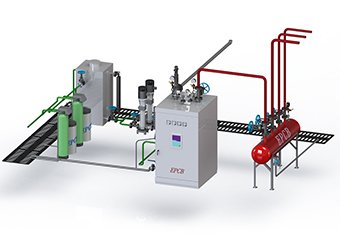
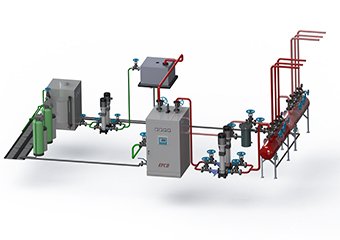
After systematic investigation, the cause of the problem gradually became clear. In the installation stage of the project, the boiler water treatment equipment (softened water system) was adjusted to the second floor for installation due to the limited space of the customer site. This adjustment is technically feasible, but it increases the difficulty of operation in the actual operation process, laying a hidden danger for the follow-up problems.
In daily use, boiler operators need to carry industrial salt for backwashing to the second floor. Because of the labor intensity in this process, the operator gradually reduced the frequency of adding salt, and finally even stopped the operation of adding salt directly, and artificially shut down the water treatment equipment, which led to the failure of the system to operate normally.
When the water treatment system is shut down, untreated tap water directly enters the boiler system. Because the local water source contains high concentration of calcium and magnesium ions, scale quickly forms in the high temperature and high pressure environment of the boiler and adheres to the key parts inside the boiler.
Eventually, the water distribution pipe inside the boiler was seriously fouled, the pipe was blocked, and the water supply system could not replenish water normally, which led to the complete interruption of the boiler operation. This problem is a typical "boiler failure caused by water treatment failure", which has a strong warning significance for the industry.
Why is Water Treatment so Critical to Boilers?
In the operation of industrial boilers, water is not only the medium, but also the "life cycle" of the whole system.
Untreated water entering the boiler will bring multiple risks:
1. Scaling problem
Calcium and magnesium ions in water form carbonate and sulfate deposits at high temperature and attach to the heating surface;
· Reduce heat transfer efficiency
· Increase fuel consumption
· Risk of local overheating or even tube explosion.
2. Corrosion problem
Dissolved oxygen, carbon dioxide, etc. can cause metal corrosion;
· Shorten the service life of equipment
· Increase maintenance cost
3. The system is blocked
Deposits can block water distribution pipes, valves and heat exchange channels;
· Affect the water cycle
· Cause the system to stop
4. Decline of steam quality
Poor water quality will lead to an increase in steam moisture content;
· Affect product quality (especially in the food industry)
· Reduce production efficiency
From Problem-Solving to Building Understanding
After confirming the cause of the problem, EPCB boiler does not stop at the level of equipment maintenance, but fundamentally helps customers to establish a scientific and standardized boiler operation cognitive system. First of all, the rectification work was quickly carried out at the site, and the inside of the boiler was thoroughly cleaned and descaled to restore the smoothness of the water distribution pipe. At the same time, the water treatment system was comprehensively inspected and put into operation again to ensure that the water supply quality returned to the normal standard.
After completing the recovery of equipment level, EPCB boiler further organized a special technical exchange and training meeting covering different levels from the perspective of "people". Participants include the management of the customer company, the equipment management department and the first-line boiler operators to ensure a unified understanding from decision-making to implementation.
This training is divided into two parts: first, on-site practical explanation in the boiler room, combined with the actual equipment operation, targeted guidance; The second is to carry out systematic theoretical training in the conference room, comprehensively explain the boiler operation principle, the importance of water treatment and standardize the operation process, so as to help customers establish a long-term stable operation management system.
Boiler Principles Explained Through the “Body and Heart” Metaphor
In the training process, EPCB boiler leaders used an image metaphor to let customers quickly understand the importance of boiler water treatment:
If the production system of the whole factory is human body, then the boiler is the "heart".
And boiler water is the "blood" in the human body.
· The heart must run continuously and stably to ensure good health.
· Blood must be pure to maintain normal metabolism.
Similarly:
· The boiler must run stably to ensure continuous production.
· The water quality must meet the standard to ensure the long-term safety of the system.
This popular and profound metaphor makes customers form a unified cognition from management to operation.
Creating a Standardized Boiler Operation System
Under the professional guidance of EPCB boiler, the customer has comprehensively optimized the boiler operation management system, which has been improved simultaneously from two levels: system and implementation. First of all, the enterprise strictly regulates the operation and management of water treatment equipment, clarifies the responsibilities and operation procedures of operators, establishes a mechanism for regular inspection and operation records, and at the same time strengthens equipment maintenance and personnel training to ensure that all operations are evidence-based and standardized.
At the specific implementation level, the customer focused on strengthening the daily management of the water treatment system, ensuring that the softened water equipment is always in normal operation, and avoiding the situation of artificial shutdown again. At the same time, the backwashing salt is regularly supplemented in strict accordance with the requirements, and the water quality indicators are monitored and recorded in real time to ensure the quality of boiler feed water from the source.
Through this series of optimization measures, customers have gradually established a standardized and sustainable boiler operation management system, laying a solid foundation for the long-term stable operation of equipment.
Stable Operation with Significantly Improved Efficiency
After the rectification, the boiler system resumed normal operation and remained in good condition.
Customer feedback:
· The boiler runs stably.
· The water supply system is normal.
· The steam supply is continuous and reliable
· The equipment has no scaling problem.
Meanwhile:
· Recovery of fuel utilization efficiency
· The continuity of production is guaranteed.
Customer evaluation: professionalism and service win high recognition.
This incident has significantly improved customers' awareness of EPCB boiler.
The customer said:
· EPCB boiler not only provides equipment, but also provides complete solutions.
· The technical team is professional and responsive.
· Serious and responsible service attitude
In particular, the company leaders went to the scene to solve the problem, which deeply touched the customers:
"It not only solved the problem, but also taught us how to use the equipment correctly."
Cooperation Upgrade: From Trust to Re-selection
In March 2026, with the expansion of production capacity, the customer plans to add a 4-ton steam boiler.
In the stage of equipment selection, the customer did not make multi-party comparison, but directly designated EPCB boiler.
At present, the project has entered:
· Boiler room layout design stage
· System scheme optimization stage
This is not only a repurchase, but also a reflection of customers' high trust in EPCB boiler technology and service capabilities.
Project value: an industry enlightenment on "water"
This case is not only a troubleshooting, but also has a wide range of industry reference significance:
1. Technical level
Emphasize the core position of water treatment in boiler system.
2. Management level
Equipment operation must be combined with standard operation.
3. Service level
Professional service is not only after sales, but also continuous empowerment.
Conclusion
In industrial production, equipment determines the upper limit, while management and cognition determine stability.
EPCB boiler is not only committed to providing efficient and reliable boiler equipment, but also pays attention to the long-term stable operation of customer systems. Through technical support, on-site service and professional training, help customers truly understand, use and manage the equipment.
In the future, EPCB boiler will continue to provide safer, more efficient and sustainable industrial thermal energy solutions for customers all over the world based on specialty and service.