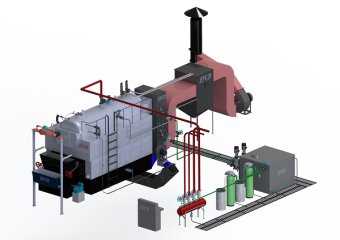
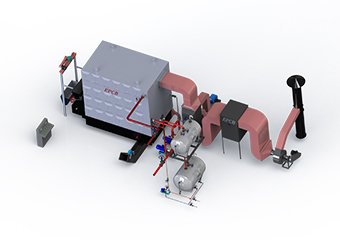
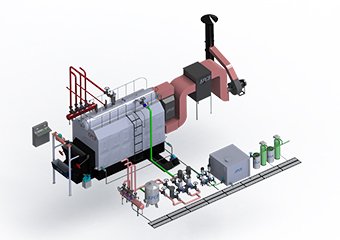
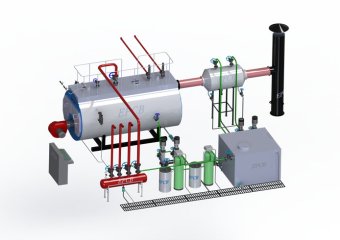
EPCB Boiler is a professional boiler manufacturer in China. Focus on industrial boiler production and sales for 68 years. Our main products are coal-fired boilers, oil gas boilers, biomass boilers, electric boilers, and power plant boilers.

Gas burner selection for industrial boilers fails most often not on fuel type, but on geometry — a burner calibrated for one combustion chamber geometry will produce flame instability, thermal cycling stress, or emissions non-compliance in another, even at the same rated output. This guide covers the burner types, selection parameters, and compliance verification steps relevant to industrial fire-tube and water-tube boiler applications. It does not apply to residential or light commercial installations, which involve different regulatory frameworks and sizing constraints.
![]()
A boiler gas burner system comprises the combustion assembly, fuel control train, and ignition components that convert fuel gas into controlled heat, with performance varying by boiler geometry and operating pressure class. When engineers and procurement teams search for "boiler gas burner system," they are describing what the industry separates into two linked specifications: the gas burner (or combustion system) and the boiler body — fire-tube or water-tube — it must integrate with.
The gas burner manages air-fuel mixing, flame stability, and heat release rate. The boiler body converts that heat into steam or hot water for process use. These two components must be engineered as a matched pair.
Fire-tube boilers route combustion gases through tubes submerged in water. They are typically designed for lower pressure levels — in many applications below 300 psig, depending on manufacturer design and applicable code certification — and suit saturated steam loads in textile dyeing, food processing, and pharmaceutical sterilization. Water-tube boilers circulate water inside tubes exposed to combustion gases. They support higher pressures and larger capacities, common in chemical processing and power generation auxiliaries.
Matching the burner to the correct boiler type is the first engineering decision — not an afterthought. Teams that skip geometry and pressure class verification at the specification stage frequently encounter flame instability, thermal cycling failures, or emissions non-compliance after installation, at a cost that proper upfront review is designed to prevent.
![]()
Industrial gas burner system types are matched to boiler configurations based on fuel capability, combustion control mode, and emissions classification — with each combination suited to specific industrial operating conditions.
Burner Type | Fuel Capability | Control Mode | Primary Boiler Match | Typical Industrial Application |
Single-fuel gas burner | Natural gas only | On/off or modulating | Fire-tube, shell boilers | Food processing, laundry, light chemical |
Dual-fuel burner | Gas + oil (switchable) | Modulating | Fire-tube or water-tube | Facilities requiring fuel supply redundancy |
Low-NOx burner | Natural gas | Proportional modulating | Fire-tube, package boilers | Regulated urban or industrial zones |
Ultra-low-NOx burner | Natural gas | Fully premixed | Water-tube, high-efficiency boilers | Pharmaceutical, food, strict-compliance sites |
Premix radiant burner | Natural gas | Staged or fully premixed | Specialized water-tube | High-flux chemical and petrochemical loads |
Single-fuel burners suit stable-supply natural gas facilities. They are simpler to maintain and calibrate. Dual-fuel burners add fuel redundancy for sites where gas supply interruptions create production risk; the switchover logic and safety shutoff valve sizing must both be specified for the boiler's operating pressure range.
Proportional-modulating burners adjust firing rate continuously across a defined turndown range — commonly 4:1 to 10:1 — reducing thermal cycling in variable-load applications such as batch food processing. Fully premixed burners mix air and fuel before combustion, achieving lower NOx emissions but requiring tighter fuel pressure control.
A standard burner introduces air and fuel simultaneously at the burner head, producing peak flame temperatures that generate elevated nitrogen oxide output. A low-NOx burner reduces that output by staging combustion airflow, recirculating flue gas internally, or both — targeting approximately 30 ppm NOx (at 3% O₂ reference) under specific operating conditions, with ultra-low-NOx designs targeting below 9 ppm. Actual performance varies by fuel composition, firing rate, and jurisdiction. The operational consequence for industrial users is that low-NOx designs typically require tighter air-fuel ratio control and more disciplined maintenance intervals to sustain certified performance. Your site permit conditions govern the required compliance threshold — not manufacturer headline figures alone.
The burner type establishes the emissions and control baseline. The next step is confirming whether the specific operating parameters of your system support the burner type you have identified.
![]()
Capacity matching, excess air ratio, turndown ratio, and fuel inlet pressure are the four parameters that engineering teams must confirm before a boiler gas burner system can be specified for any industrial application.
1.Capacity range matching
Match burner maximum firing rate to boiler maximum continuous rating (MCR), within a tolerance range that OEM specifications typically cite between ±5% and ±10% — though this range varies by manufacturer. Confirm the accepted tolerance directly with both the boiler and burner manufacturer as a required step during the specification stage. Oversized burners cause short-cycling. Undersized burners cannot satisfy peak load demand.
2. Excess air ratio
Excess air ratios in the range of 5% to 15% (λ = 1.05–1.15) are commonly associated with efficient operation for industrial gas burners, though the optimal value for a specific installation depends on burner design, fuel gas composition, and boiler type. Excess air adjustment must be based on the burner manufacturer's control curve, confirmed through on-site flue gas analysis, and performed by a qualified combustion engineer or manufacturer technical representative. Higher excess air reduces combustion temperature and increases stack losses. Lower excess air risks incomplete combustion and CO formation.
Modern industrial burners increasingly incorporate O₂ trim control — a real-time feedback system that measures flue gas oxygen content and automatically adjusts the air-fuel ratio to maintain target excess air without manual intervention. Linkageless (parallel positioning) controls operate air and fuel actuators independently, enabling precise ratio management across the full turndown range. Both technologies improve seasonal efficiency and reduce the need for manual recalibration as fuel gas composition varies. Confirm whether O₂ trim and linkageless control are included in the burner specification or available as retrofit options.
3. Turndown ratio
A turndown ratio of 4:1 suits stable-load processes. Batch operations in food or pharmaceutical plants — where steam demand varies significantly — require 8:1 or higher, depending on load profile analysis.
4. Fuel inlet pressure
Confirm supply pressure against burner design range before specifying. Industrial gas burners typically require supply pressures in the range of approximately 20 mbar to 200 mbar or higher, depending on burner size, rated capacity, and fuel control train design — always verify against the specific manufacturer's stated design range. Pressure regulators and safety shutoff valves must be sized accordingly.
![]()
Emissions compliance requirements vary by installation country, regional air quality zone, facility permit class, and applicable regulatory framework — verify all four against current project site standards before issuing a purchase order. The following applies to all four layers:
1. Current site air permit NOx limit (in mg/Nm³ or ppm at stated O₂ reference)
2. Applicable burner approval standard (e.g., EN 676 for EU markets, UL or CSA listing for North America, or local equivalent — confirm applicability for your jurisdiction)
3. Required stack testing or continuous emissions monitoring system (CEMS) obligations
4. Boiler efficiency certification requirements linked to burner specification (e.g., ASME, CE marking, or regional equivalent)
5. Safety shutoff valve standard compliance (e.g., EN 161 in EU markets — confirm applicable standard for your installation country)
Request third-party test certificates from burner manufacturers. Confirm the test conditions — fuel composition, firing rate, and excess air — match your intended operating conditions.
Having confirmed compliance requirements, the questions below address the specific procurement decisions that follow.
Selecting a boiler gas burner system requires confirming burner-boiler geometry compatibility, validating capacity and turndown against actual load profiles, and verifying emissions compliance before purchase. Teams that complete these three steps at the specification stage tend to avoid the majority of costly post-installation retrofits — a pattern that holds across textile, food processing, chemical, and pharmaceutical plant environments regardless of boiler type or fuel configuration. At EPCB Boiler, we are glad to walk through the specification process with you — from burner-boiler geometry review to emissions compliance verification — against your actual site requirements.
Yes — in most jurisdictions, a burner replacement triggers a review of the full gas train and safety interlock system, not just the combustion head. Requirements vary by country and facility permit class, but retrofit projects commonly require re-verification of safety shutoff valve sizing, updated stack test results under the new burner configuration, and in some cases a revised site air permit amendment. Engage your local environmental compliance authority or a licensed combustion engineer before finalising a retrofit specification, particularly if the replacement burner has a different firing rate range or NOx classification than the unit being replaced.
Capacity matching starts with a confirmed heat load analysis — total connected load, peak demand, diversity factor, and minimum load — not nameplate boiler rating alone. Burner maximum firing rate should align with boiler MCR, while the minimum firing rate at full turndown must cover your lowest sustained process load without short-cycling. For variable-load industries such as batch food processing or pharmaceutical manufacturing, engaging a combustion engineer to model load profiles before specifying turndown ratio requirements helps avoid the undersizing and oversizing errors that are expensive to correct after installation.
Not automatically — NOx performance on gas and on oil will differ, often significantly, and your site permit may require demonstrated compliance on both fuels independently. The fuel control train, safety shutoff valve sizing, and switchover logic must be specified to accommodate both fuel paths at the operating pressures and firing rates required by the boiler. Confirm with the burner manufacturer that their third-party test certification covers both fuel modes under conditions that match your intended operation, and verify that the applicable approval standard for your jurisdiction recognises dual-fuel configurations without additional documentation requirements.
Send You Inquiry
Give You Boiler Solution
Place The Order
Get Your Boiler