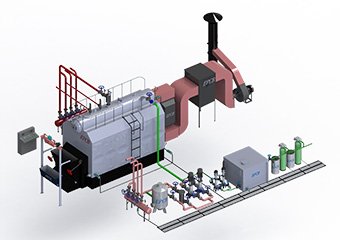
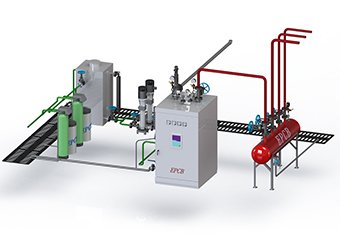
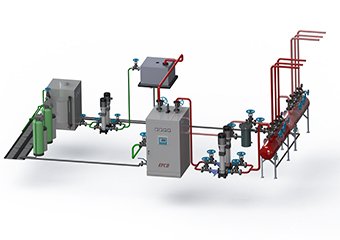
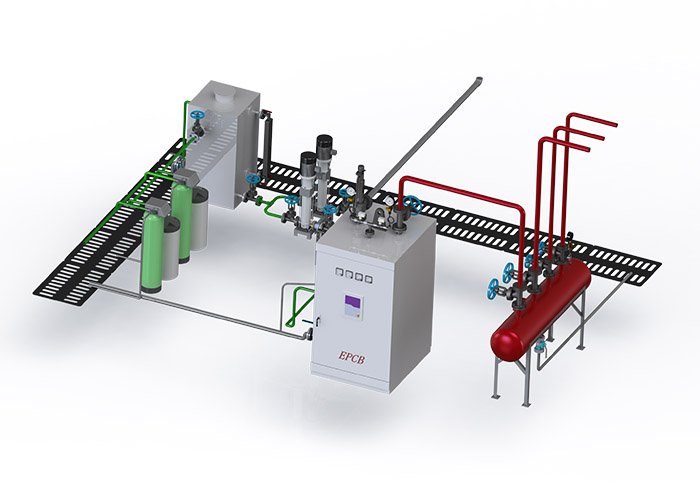
EPCB Boiler is a professional boiler manufacturer in China. Focus on industrial boiler production and sales for 68 years. Our main products are coal-fired boilers, oil gas boilers, biomass boilers, electric boilers, and power plant boilers.

Natural gas fired boilers produce lower emissions, need fewer auxiliary systems, and take up less space than coal or oil fired alternatives. For facilities facing stricter environmental rules or planning new installations, they are often the most practical choice—where gas supply is available.
This article compares natural gas fired boilers against coal and oil systems across emissions, operations, efficiency, and cost. It also identifies where the advantages apply and where they do not.
![]()
Three factors drive most coal-to-gas transitions: emissions compliance cost, system complexity, and site footprint.
Regulations on coal and heavy oil combustion are tightening across most industrial markets. To stay compliant, a coal fired boiler needs flue gas desulfurization, electrostatic precipitators, and ash handling systems. A natural gas fired boiler eliminates most of that infrastructure. Pipeline-quality natural gas contains almost no sulfur or ash-forming compounds. The reduction in auxiliary equipment alone often removes several equipment categories from the boiler room.
![]()
SO₂: Pipeline-quality natural gas produces very low SO₂ emissions. Coal combustion generates 400–2,000 mg/m³ SO₂, depending on coal sulfur content (pre-control, dry basis). This difference usually determines whether a facility needs a scrubber or desulfurization unit. Note: untreated or low-quality gas may contain more sulfur.
These figures apply to pipeline-quality supply only.
Particulate matter: Natural gas produces very low particulate emissions under normal conditions. Coal fired systems generate fly ash, which requires fabric filters or electrostatic precipitators.
NOx: Natural gas produces mainly thermal NOx. Burner design, flue gas recirculation, and air-fuel ratio control can manage it effectively. Coal produces both fuel NOx and thermal NOx, making control more complex and costly.
CO₂: On a combustion basis, natural gas emits roughly 40–50% less CO₂ per unit of heat than coal, and about 25–30% less than residual fuel oil. These are combustion-side figures. Lifecycle climate performance also depends on upstream methane leakage and supply chain conditions.
Fewer emission control components means lower capital cost, less maintenance, and reduced compliance risk.
![]()
No fuel storage or handling infrastructure. Coal systems need yards, conveyors, and dust control. Heavy oil systems need tank farms, heating equipment, and filtration. Natural gas arrives by pipeline. An entire category of site infrastructure—and the staff to run it—is eliminated.
No ash or slag removal. Coal combustion produces bottom ash and fly ash. Both need continuous removal and disposal. Natural gas leaves no solid residues. Heat transfer surfaces stay cleaner, and heat exchanger maintenance is less frequent.
Fewer operating staff. Gas fired systems have fewer auxiliary components and need less manual intervention. When facilities switch from coal to gas, roles tied to fuel delivery, slag removal, and dust control are typically removed.
Smaller footprint. A gas fired boiler room needs no coal yards, ash pits, or slag handling areas. The boiler itself is more compact. Note: a gas pressure regulating station will still be required on site. Include its footprint in layout planning.
Standard fire tube gas boilers—three-pass wet-back configurations are common in industry—typically reach 90–94% thermal efficiency (HHV basis, steam output, rated load, with economizer). Adding an economizer can improve efficiency by a further 3–5%. As a general reference, each 40°F reduction in stack temperature recovers about 1% efficiency.
Condensing gas boilers can reach 96–98% efficiency (HHV basis) when return water temperature stays consistently below 55°C (130°F). At that point, the system captures latent heat from flue gas water vapor. If return water runs hotter, condensing gains will not be realized.
Coal fired boilers typically reach 82–88% thermal efficiency in practice. Unburned carbon, moisture in fuel, and heat absorbed by ash all reduce output.
Retrofit note: Natural gas flame emissivity is lower than coal. This changes how heat is absorbed by furnace walls. Facilities switching fuels on existing boiler infrastructure should confirm heat transfer compatibility with their boiler engineer before conversion.
Efficiency figures vary by boiler type, size, load, and measurement basis (HHV vs. LHV; steam vs. hot water). Confirm performance data against equipment specifications.
![]()
Where gas fired boilers typically reduce cost:
· No ash handling, slag removal, or dust suppression equipment
· Less grate maintenance, cleaner heat transfer surfaces, fewer moving parts
· Fewer boiler room personnel
· Lower auxiliary power consumption
· Minimal or no emissions control equipment in most jurisdictions
Where cost depends on local conditions:
· Fuel cost: Natural gas is cheaper than coal in many markets. But this varies by region, infrastructure, and contract terms. In markets with low coal prices and high gas tariffs, coal may still be cheaper per GJ. Always calculate from local delivered prices.
· Gas supply connection: Connecting to the distribution network and installing a pressure regulating station carries site-specific capital cost. Include this in project planning.
Where emissions compliance is the main driver, the cost of keeping a coal boiler compliant often exceeds any fuel cost advantage. Compare total cost of ownership—compliance, staff, maintenance, auxiliary power, and fuel—not fuel price alone.
Industrial gas fired boiler projects typically fall under several code frameworks:
· NFPA 54 – Covers gas piping systems and minimum safety requirements for gas utilization equipment
· NFPA 85 – Applies to larger boilers and combustion systems; addresses combustion hazard control
· ASME BPVC Section I – Applies to power boilers; Section IV covers low-pressure heating boilers
· Local permitting and environmental authority requirements – Govern emissions limits, installation approvals, and ongoing compliance
Applicable standards vary by jurisdiction, boiler size, and operating pressure. Confirm requirements with local authorities and your engineering team early in the project.
![]()
Gas fired boilers suit applications that need steam or hot water at low to medium pressure, where gas supply is available. Common sectors include food and beverage processing, textile and dyeing, pharmaceutical manufacturing, chemical processing, paper and pulp, laundries, and district heating.
The key requirement is gas supply. For facilities without access to a distribution network, the operational and emissions advantages may not justify the cost of establishing supply. In those cases, other fuel options may be more practical.
At EPCB, we have worked with facility managers across food processing, textile, pharmaceutical, and district heating for decades. The same pattern comes up repeatedly: facilities delay a coal-to-gas transition because they are comparing fuel prices alone. When we work through the full picture—auxiliary system elimination, compliance cost, staffing, and maintenance—the economics look very different.
Gas fired boilers are not the right answer for every site. If your location lacks reliable gas supply, or if local fuel costs strongly favor coal, we will tell you directly. Our goal is to help you make the right call for your conditions.
But where gas supply is available and compliance is a real or coming requirement, the case for switching is strong. Every year a coal or heavy oil system stays in place adds compliance cost, maintenance burden, and operational complexity.
If you are planning a new installation or a replacement, bring us your steam demand, site conditions, fuel supply options, and emissions requirements. We will give you a clear technical assessment and a cost comparison based on your actual numbers—not industry averages.
No. Fuel cost depends on local prices and supply infrastructure. In some regions, coal is still cheaper per GJ. Always compare total cost of ownership—not fuel price alone.
No grate maintenance. No ash removal. No slag handling. Heat transfer surfaces stay cleaner. The primary tasks are annual burner service, heat exchanger inspection, and water chemistry management.
This is burner- and OEM-specific. Some burners can handle biogas blends or hydrogen-enriched gas with modifications. Full hydrogen operation typically requires changes to the gas train, burner head, flame detection, and control systems—plus recommissioning and possible output derating. Do not assume fuel flexibility. Confirm it in the specific equipment documentation.
Send You Inquiry
Give You Boiler Solution
Place The Order
Get Your Boiler