

In the food industry, steam is not only the basic energy, but also an important factor that directly affects the quality and safety of products. Especially in the field of children's food, the cleanliness, dryness and stability of steam are extremely strict, and any slight fluctuation may affect the quality of the final product and even affect the brand's reputation in the international market.
In 2026, EPCB boiler successfully served KINDER FRUITS, a well-known children's food enterprise in Uzbekistan, and tailored a set of high-standard steam boiler system solutions for it. The products of this enterprise are mainly exported to the European market, which must strictly meet the EU food production standards, which also means that its requirements for steam systems are much higher than those for ordinary industrial applications. This project is not only a delivery of equipment, but also a systematic engineering practice around "steam quality control", which fully embodies EPCB's professional strength and global service ability in the food industry.
High standard Challenge of Export-Grade Food Enterprises
KINDER FRUITS focuses on the production of children's food, and its products cover many categories such as fruit puree and nutritional complementary food. As an export-oriented enterprise, its production system needs to meet the strict requirements of European market for food safety, hygiene and quality stability.
In the production process, steam is widely used in key links such as sterilization, cooking, heating and equipment cleaning. Compared with ordinary industrial steam, the enterprise has put forward the following core requirements for steam:
High dryness steam:avoid moisture entrainment affecting product taste and production process.
High cleanliness steam: preventing impurities from polluting food.
Stable pressure and temperature control: ensure continuous and stable production process.
Energy-saving and efficient operation: reducing long-term operating costs
The original boiler system of customers has shortcomings in steam quality and energy consumption, which has been difficult to meet the needs of sustainable development of enterprises. Therefore, it is urgent to find a boiler supplier with both technical strength and complete solutions.
From official website Consulting to Deep Trust Building
The starting point of the project comes from the customer submitting consultation through the official website of EPCB. In the initial communication, the customer clearly expressed his high concern about steam quality, and proposed that he hoped to learn more about the practical application experience of EPCB in similar projects.
Different from simple product recommendation, EPCB team quickly organized technicians to conduct several rounds of online communication with customers to learn more about its production process, steam demand and existing system problems. At the same time, customers also put forward a key appeal-hoping to see local cases in real operation.
Faced with this demand, EPCB shows the advantages of a mature global service network, quickly coordinates local technical agency resources, and lays the foundation for the project.
Field Survey and Systematic Design
In order to ensure the scientificity and feasibility of the scheme, EPCB arranged local technical agents in Uzbekistan to go to the customer's factory for on-site field survey. This survey is not only a simple measurement of the boiler room space, but also a comprehensive system diagnosis, including:
Layout and equipment configuration of existing boiler room
Pipeline direction and steam distribution mode
Distribution and load change of steam equipment
Condensed water recovery
Present situation of water quality treatment
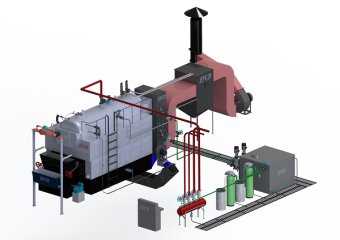
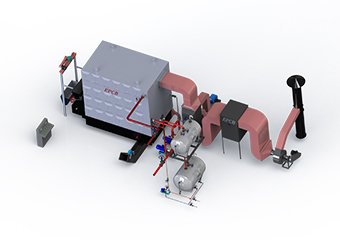
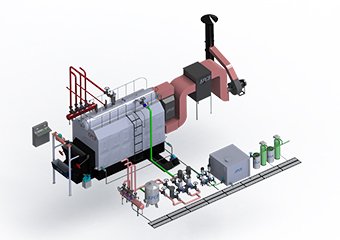
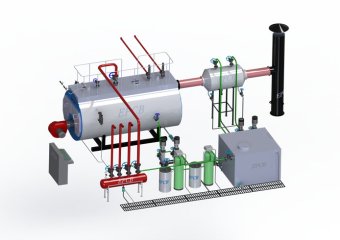
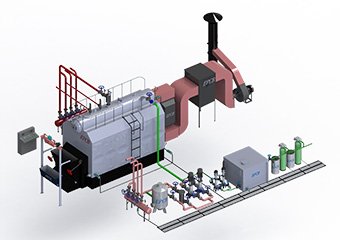
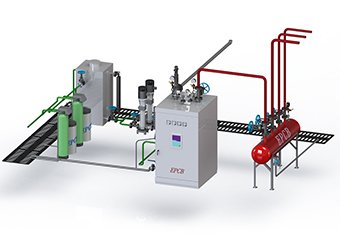
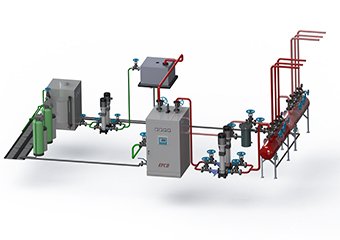
Based on detailed data collection, EPCB technical team then completed the professional PID (process flow chart) design and the overall layout optimization scheme of the boiler room. The work at this stage reflects the transformation of EPCB from "equipment supplier" to "system solution service provider".
Through several rounds of technical discussions, EPCB reached an agreement with customers on key issues such as the core path of steam quality improvement, system structure optimization scheme, energy saving and heat recovery strategy, as well as automatic control and safety guarantee, which laid a solid foundation for the efficient and stable operation of the project.
Core Solution: System Optimization Around "Steam Quality"
In view of the strict requirements for steam in children's food industry, EPCB focuses on the optimization design from two dimensions: "steam purification" and "system efficiency".
1. Steam quality improvement: comprehensive control from source to terminal.
In order to ensure that the steam is dry and clean, EPCB has added several key configurations to the system:
Efficient trap system: drain condensate in time to prevent water accumulation in steam pipeline.
Steam-water separation device: effectively separate liquid droplets in steam and improve steam dryness.
Optimizing pipeline design: reducing secondary condensation during steam transportation.
Through this series of measures, the moisture content of steam is significantly reduced, and the steam quality meets the requirements of food-grade production stably, providing reliable guarantee for product quality.
2. Energy-saving optimization: the application of condensate recovery system
While improving the steam quality, EPCB also pays attention to the energy efficiency of the system.
This project specially designed and configured a condensate recovery system for customers, which can effectively recover high-temperature condensate, reduce heat energy loss, reduce boiler makeup water, save water resources, further reduce fuel consumption, improve overall thermal efficiency, shorten boiler start-up time, and enhance the stability and economy of system operation.
The application of this system enables customers to achieve remarkable energy-saving effect while ensuring steam quality, which is in line with the current development trend of green manufacturing.
Efficient Transaction and Full Guarantee: 3-month Landing Project
After the technical scheme is defined, the project enters the stage of business promotion. Thanks to the solid technical communication and professional solution support in the early stage, customers' trust in EPCB has increased rapidly.
From initial contact to final contract signing and payment completion, the whole cycle only takes three months. Behind this efficient promotion, EPCB benefits from its comprehensive advantages in professional and rapid technical response, clear and executable system solutions, localized service support system and rich international project experience.
After the equipment entered the installation stage, EPCB did not stop at delivery, but continued to provide customers with full-process technical support, including providing detailed installation guidance documents, online assistance in solving on-site technical problems, guiding system debugging and parameter optimization, and assisting in operator training to ensure the smooth landing and stable operation of the project.
Although the project adopts the remote support mode, the standardized process and professional services ensure the smooth progress of the installation process, which fully embodies EPCB's "customer-centric" service concept.
Case Value: Benchmarking Practice of EPCB in Food Industry
This project is not only a successful equipment delivery, but also an important practical case of EPCB application in high-end food industry. Through this project, EPCB has fully demonstrated its core competitiveness in high-quality steam system design, customized solutions under complex working conditions, global localized service network support, and life-cycle services from scheme design to equipment delivery.
In view of the strict requirements of the food industry for steam cleanliness, stability and energy efficiency, EPCB provides a systematic and floor-to-floor overall solution to ensure the safe, stable and efficient operation of customers' production process. This case has important reference value and significance for food enterprises that also face the export market and have high requirements on product quality and production standards.
Conclusion
With the development of global food industry in the direction of high standards and strict supervision, the importance of steam system is becoming more and more prominent. EPCB always adheres to technology as the core and customer demand as the guide, providing efficient, reliable and energy-saving boiler system solutions for different industries.
The successful implementation of «KINDER FRUITS» LLC project in Uzbekistan once again proves the professional strength and brand value of EPCB in the international market. In the future, EPCB will continue to deepen the food industry, provide more customers with reliable steam solutions, help enterprises improve product quality and expand the global market.