

In the field of industrial boilers, the value of a piece of equipment is not only reflected in its performance at the time of delivery, but also in its ability to continuously meet the production needs of enterprises after many years of use.
Recently, EPCB engineers visited a textile company in Bangladesh for a customer follow-up visit and on-site inspection. During the visit, the engineers learned that the company's EPCB 6 T/H biomass boiler had been in continuous operation for approximately 16 years. Despite this long-term use, the boiler remains in good overall condition, and the customer gave positive feedback on the equipment's performance and that of EPCB 's products.
This boiler uses charcoal as fuel to provide the necessary heat for textile production. Given the long-term, continuous production demands of the textile industry, the boiler's ability to maintain stable operation directly impacts a company's production schedule, energy supply, and daily operations.
The 16-year operational history is the most noteworthy aspect of this customer follow-up visit. For industrial enterprises, boilers are crucial production equipment, and their procurement decisions typically consider not only the initial investment but also a comprehensive assessment of equipment reliability, maintenance needs, service life, and the supplier's technical support capabilities.
This follow-up visit gave the EPCB team the opportunity to understand the customer's actual usage again, and it also made us realize more deeply that: high-quality industrial boiler products need to withstand the test of long-term operation; and a trustworthy boiler manufacturer should always pay attention to the real needs of the customer after the equipment is put into use.
Reliable Steam Supply for Bangladesh's Textile Industry: The Role of Industrial Biomass Boilers
The textile and garment manufacturing industry is one of the important industries in Bangladesh. Dyeing, finishing, washing, drying and other related processes in textile production often require a stable supply of heat or steam, the specific needs of which depend on the factory's production process and equipment configuration.
For textile companies that rely on industrial boilers, the boiler is not only an independent thermal energy device, but also an important part of the entire production system.
Unstable boiler operation can disrupt production plans; frequent equipment malfunctions can increase maintenance workload and operating costs. Therefore, when selecting a boiler, companies need to comprehensively consider equipment structure, fuel adaptability, heat load requirements, control system, and subsequent maintenance conditions.
The EPCB 6 T/H biomass boiler in this case study has been in service at the customer's plant for approximately 16 years. This long-term operational experience provides the customer with important data for evaluating the equipment and also reflects the reliability requirements faced by industrial boilers during long-term use.
For boiler manufacturers, truly understanding their customers' production environments is fundamental to providing suitable equipment and services. Different textile companies may have varying production processes, heat demands, fuel supply, and operational management methods; therefore, boiler solutions should be designed and configured based on specific project conditions.
EPCB always prioritizes the practical application needs of industrial boilers and aims to provide textile companies with reliable thermal energy solutions through appropriate product configuration, reasonable system design, and continuous customer service.
EPCB 6 T/H Charcoal-Fired Biomass Steam Boiler for Textile Manufacturing in Bangladesh
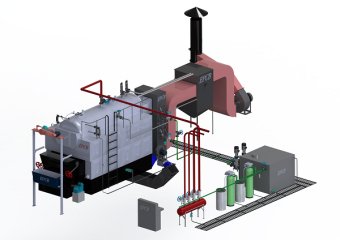
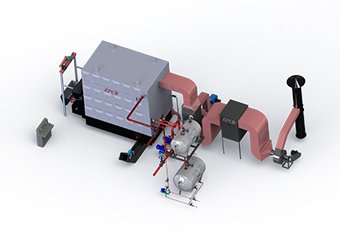
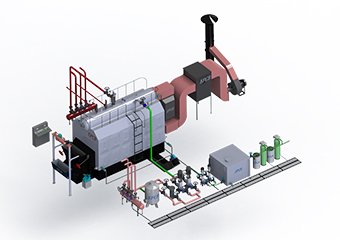
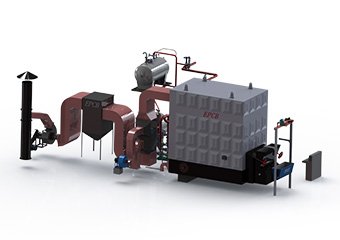
This project uses an EPCB biomass boiler with a rated evaporation capacity of 6 tons/hour, and the customer uses charcoal as fuel.
Charcoal has a certain fixed carbon content and a high calorific value per unit mass, but its actual combustion characteristics are affected by factors such as raw material source, processing method, moisture content, particle size, and ash content. For industrial boilers that use charcoal as fuel, the combustion system and furnace configuration should be matched with the fuel characteristics to better meet the requirements of stable combustion and thermal energy utilization.
Boiler selection cannot be based solely on fuel name. In actual projects, it is also necessary to comprehensively consider the stability of fuel supply, calorific value, combustion characteristics, ash content, combustion equipment type, and local emission requirements.
For boilers that have been in use for many years, their continued operation is closely related to factors such as installation quality, operating procedures, feedwater quality, regular maintenance, and operating load. Therefore, the long-term maintenance of good equipment condition is usually the result of the combined effects of product design, manufacturing quality, on-site use, and maintenance management.
The EPCB 6 T/H biomass boiler in this case has been in operation for approximately 16 years and is still in good overall condition. This real-world experience demonstrates the customer's recognition of the equipment's long-term value.
It is important to emphasize that the performance of a single project cannot directly represent the same service life of all boilers under all fuels and operating conditions. When providing boiler solutions to new customers, EPCB will still conduct a comprehensive evaluation based on actual operating conditions, fuel parameters, design requirements, and maintenance conditions.
16 Years of Reliable Operation: EPCB Biomass Boiler Demonstrates Long-Term Performance and Customer Satisfaction
Industrial boilers typically need to operate within a certain design range and require continuous operation management and maintenance. For textile companies, whether the equipment can meet production needs in the long term is more practically important than simply focusing on the appearance or parameters of the equipment upon delivery.
During this follow-up visit, EPCB engineers inspected the boiler, which has been in operation for approximately 16 years. Reassuringly, the boiler remains in good overall condition, and the customer is satisfied with its performance.
This result greatly encouraged the EPCB team.
First, long-term use provides customers with a time dimension to assess the actual value of the boiler. The long-term performance of a boiler is not only related to the equipment itself, but also closely related to proper operation, daily inspections, water quality management, combustion adjustments, and preventative maintenance.
Secondly, customer satisfaction reflects the practical value of the equipment in the actual production environment. For boiler users, the equipment needs to serve real production tasks, not just meet the technical parameters on paper.
Finally, long-term cooperation and customer feedback provide manufacturers with valuable insights for improvement. Through follow-up visits, companies can gain a deeper understanding of the actual usage environment of the equipment, customers' maintenance habits, and potential future technical needs, thereby continuously improving product design and service processes.
For EPCB, 16 years of operational record is not only a customer story worth sharing, but also a reminder that we should always prioritize the long-term reliability of our products and the actual experience of our customers.
EPCB Boiler's Commitment to Long-Term Customer Support and Reliable After-Sales Service
For overseas industrial boiler projects, customers typically focus on the manufacturer's production capacity, technical experience, product quality, project communication efficiency, and after-sales support capabilities during the procurement process.
Especially for equipment closely related to production operations, such as boilers, customers want to choose not only suppliers who can deliver products as required, but also partners who understand industrial application scenarios, value equipment performance, and maintain effective communication.
EPCB is committed to providing industrial boilers and related thermal energy solutions for customers in various industries. Boiler solutions need to be rationally configured according to project conditions, taking into account different countries, industries, fuel types, and process requirements.
At the same time, we also recognize that customer service cannot stop at the stages of contract signing, production, and equipment delivery. After the equipment is put into operation, customers may still need operation guidance, maintenance advice, technical consultation, and related spare parts support.
This engineer follow-up visit demonstrates EPCB's focus on the long-term user experience of its customers. By understanding the boiler's operation on-site and listening to customer feedback, we can further understand the customer's actual needs and accumulate experience for future service and technical exchanges.
The reunion after 16 years made EPCB cherish the partnership with its clients even more.
Customer recognition is an encouragement for our past work; actual feedback from customers is an important basis for driving our continuous improvement.
We firmly believe that the professionalism of industrial boiler manufacturers is reflected not only in product design and manufacturing, but also in their understanding of practical application needs and their emphasis on the long-term user experience of their customers.
Long-Term Reliability and Value of Industrial Biomass Boilers: A 16-Year Case Study in Bangladesh
For textile companies planning new boiler projects, this case provides a valuable reference: when evaluating boilers, long-term operational value should be taken into account in the procurement decision, rather than just comparing the initial equipment price.
When selecting an industrial biomass boiler, it is recommended to focus on the following factors:
Production requirements: Boiler capacity is determined based on actual steam consumption, operating pressure, production shifts, and future expansion plans.
Fuel conditions: Specify the type, calorific value, moisture content, particle size, and ash content of charcoal, wood chips, biomass pellets, rice husks, or other fuels.
Boiler configuration: Select the appropriate furnace, combustion system, feedwater system and control configuration based on fuel characteristics, load changes and design requirements.
Operating economy: A comprehensive assessment of fuel prices, combustion efficiency, auxiliary equipment energy consumption, labor costs, and maintenance expenses.
Environmental requirements: Flue gas treatment facilities shall be configured reasonably in accordance with local regulations and project emission limits.
Maintenance and management: Establish a system for daily inspections, regular maintenance, water quality management, and operation records, and handle abnormal situations promptly.
Manufacturer support: Understanding the supplier's technical documentation, spare parts supply, remote communication capabilities, and after-sales service arrangements.
It is important to note that the design life of a boiler is not exactly the same as its actual service life. Whether equipment can maintain good condition for a long period depends on many factors, including design and manufacturing, operating conditions, operation management, and maintenance.
This EPCB 6 T/H biomass boiler in Bangladesh remains in good overall condition after approximately 16 years of operation, providing customers with a real-world long-term usage case and illustrating the importance of focusing on product reliability and long-term service during boiler procurement.
For companies looking to improve their existing thermal systems or plan to build new production lines, making professional selections based on actual operating conditions and choosing manufacturers that value long-term customer relationships is an important step in reducing procurement risks.
16 Years of Proven Reliability: EPCB Biomass Boiler Quality and Long-Term After-Sales Support
From the moment the equipment was put into use to a follow-up visit by engineers 16 years later, the story of this Bangladeshi textile company and EPCB demonstrates the long-term application value of industrial boilers in real production environments.
This EPCB 6 T/H biomass boiler, which uses charcoal as fuel, is still in good condition after about 16 years of operation, and the customer is satisfied with the equipment's performance.
For EPCB, this follow-up visit was not only a valuable opportunity for customer communication, but also a true testament to product reliability and service philosophy.
We understand that behind every industrial boiler lies our customers' expectations for stable production, efficient operation, and long-term cooperation. Equipment delivery is just the beginning of our partnership, but continuously focusing on our customers' actual needs is the crucial foundation for building long-term trust.
In the future, EPCB will continue to focus on industrial boiler products and thermal energy solutions, emphasizing the design and manufacturing quality of equipment, paying attention to the actual application needs of different markets, and creating long-term value for global industrial customers through continuous customer communication and service improvement.
EPCB Boiler — Reliable Boiler Solutions, Built Around Your Industrial Needs.
Sixteen years of operation is a valuable period of cooperation; customer satisfaction is an important driving force for our continued progress.