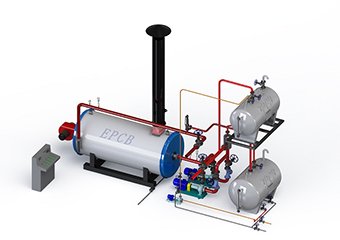
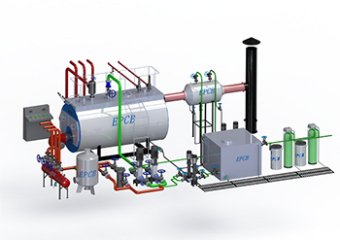
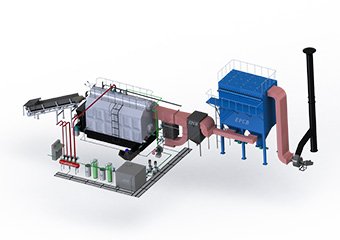
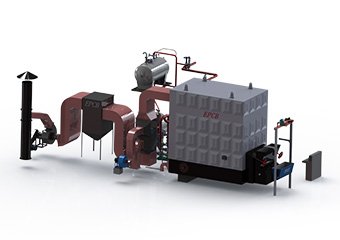


Stable and precise heating is essential for wood drying and processing, where consistent temperature control directly affects production efficiency and product quality.
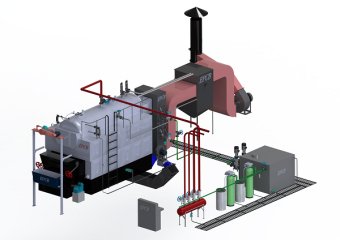
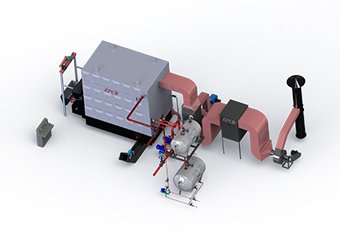
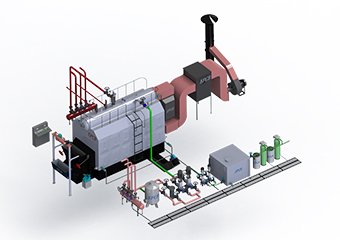
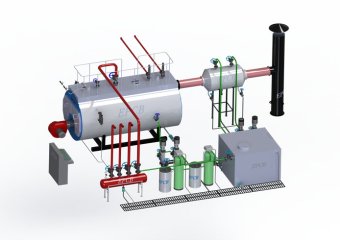
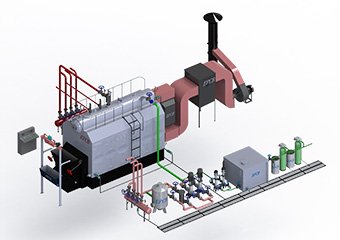
To meet the high-temperature heating requirements of a wood processing factory in Côte d'Ivoire, EPCB designed a customized high-temperature hot water boiler system with a supply water temperature of up to 170°C. The solution integrates the boiler body, hot water circulation system, automatic controls, and safety protection devices to ensure reliable and efficient heat delivery.
Unlike conventional hot water boilers, the 170°C system requires higher standards of pressure resistance, circulation stability, and safety control. EPCB focuses on professional boiler selection, optimized system design, and comprehensive auxiliary equipment configuration.
Although the boiler has not yet been installed or commissioned, EPCB's careful engineering and technical support have laid a solid foundation for future installation, safe operation, and long-term reliability.
High-Temperature Hot Water Boiler Requirements for Wood Drying and Processing in Côte d'Ivoire
Timber processing is one of the important industrial sectors in Côte d'Ivoire, and the quality of timber drying directly affects the stability and processing quality of products. If the moisture content is not properly controlled, timber is prone to cracking, deformation, and warping. Therefore, timber processing enterprises need stable and precise heating systems to meet the drying process requirements of different types of timber.
To meet the high-load, continuous drying needs of customers, ordinary hot water systems cannot provide sufficient heating temperature and heat exchange capacity. Therefore, EPCB provides customers with a high-temperature hot water boiler solution with a designed supply water temperature of up to 170°C. Through high-temperature hot water circulation and an automatic control system, a stable and controllable heat source is provided for the wood drying equipment.
In the design of the solution, EPCB focuses on high-temperature heating capacity, continuous operation stability, precise temperature control, system safety protection and ease of maintenance. It also conducts overall matching of the boiler body, circulation system and auxiliary equipment to ensure that the design solution meets the customer's actual production needs and lays the foundation for subsequent installation, operation and long-term reliable heating.
EPCB 170°C High-Temperature Hot Water Boiler Customized for Wood Drying Applications
Selecting an industrial boiler is not simply a matter of determining the equipment capacity or water supply temperature based on customer requirements. Rather, it requires a comprehensive analysis that takes into account the specific production process, heat load changes, supply and return water parameters, and site conditions.
One of the most noteworthy technical parameters for this timber processing project in Côte d'Ivoire is the design water supply temperature of 170°C.
Conventional building heating or general industrial hot water systems typically use relatively low supply water temperatures, while 170°C is already considered a relatively high temperature for pressurized hot water applications.
This means that boilers and circulating systems must fully consider water-side pressure, thermal expansion, circulation stability, and equipment safety protection under high-temperature conditions.
Why choose a 170°C high-temperature hot water system?
For high-load wood drying processes, higher heat source temperatures can increase the heat exchange temperature difference and improve the system's heating capacity. The EPCB high-temperature hot water boiler is designed to supply water at a temperature of up to 170°C. The heat is transferred to the drying equipment through a circulation system, and then indirectly heated by a heat exchanger, achieving stable and controllable heat transfer.
Compared with direct flue gas heating, indirect heating with high-temperature hot water can effectively isolate combustion flue gas from process air, and reduce temperature fluctuations by adjusting heating parameters according to production load through an automatic control system, thus ensuring improved wood drying efficiency and product quality stability.
EPCB 170°C High-Temperature Hot Water Boiler Design Ensures System Safety and Operational Reliability
Compared with ordinary hot water boilers, high-temperature hot water boilers require greater attention to the relationship between temperature, pressure and circulation conditions during the design process.
Especially at a water supply temperature of 170°C, the system must maintain sufficient pressure to prevent hot water from vaporizing in inappropriate locations, which would affect circulation stability and operational safety.
Therefore, in the design of high-temperature hot water boiler solutions, EPCB not only considers heat output, but also needs to comprehensively evaluate the matching relationship between boiler pressure-bearing components, circulation pipelines, control devices and safety accessories.
Boiler body design: Balancing high-temperature heating and long-term reliability
The boiler body is the core of a high-temperature hot water system, and its structural design directly affects heat transfer efficiency, operational stability, and ease of maintenance. During the design process, EPCB emphasizes optimized heating surfaces, rational water circulation design, material selection, and manufacturing quality control to improve heat transfer efficiency and reduce the risk of localized overheating.
For high-temperature operation at 170°C, EPCB fully considers the material strength, thermal expansion and temperature changes of pressure-bearing components, while optimizing the boiler structure layout to balance operational safety and ease of maintenance, ensuring that the boiler design matches the customer's actual production needs and laying the foundation for long-term stable heating.
High-temperature pressure-bearing design: a crucial technical foundation for 170°C hot water systems
High-temperature hot water systems at 170°C place higher demands on pressure resistance and operational safety. At this temperature, the saturation pressure of water is approximately 0.79 MPa (absolute pressure), and the system must maintain sufficient operating pressure to prevent hot water vaporization from causing abnormal circulation.
In response to this special operating condition, EPCB comprehensively considers design temperature, system pressure, pipeline resistance and circulating pump operating conditions, and rationally optimizes the pressure-bearing design and safety protection configuration to ensure stable circulation of high-temperature hot water and provide customers with safe and reliable industrial heating solutions.
EPCB High-Temperature Hot Water Circulation System Delivers Stable Heating for Wood Drying Applications
For timber processing companies, generating heat from boilers is only the first step in the entire heating process.
How to stably deliver heat to the drying equipment and distribute it reasonably according to process requirements also determines the actual performance of the heating system.
Therefore, EPCB considered the high-temperature hot water circulation system as one of the key aspects in the design of this project.
1. Properly match the circulation flow rate with the supply and return water temperature difference.
The heat transfer capacity of a high-temperature hot water system is closely related to the circulation flow rate, the temperature difference between the supply and return water, and the thermal properties of the medium.
Determining the circulation flow rate reasonably, while meeting process requirements, helps improve the system's heating capacity and reduce unnecessary transmission energy consumption.
Insufficient circulation flow may cause insufficient heating in some heat exchange equipment, or even cause unfavorable temperature conditions on the boiler heating surface.
If the circulation flow rate is too high, it may increase the power consumption of the circulation pump and the pipeline resistance.
Therefore, EPCB needs to combine the heat load of the wood drying equipment, the requirements of the heat exchanger, and the pipeline layout to reasonably match the circulating pump and related pipeline parameters.
2. Reduce heating temperature fluctuations
The wood drying process is quite sensitive to temperature changes.
Frequent fluctuations in heating temperature may affect the drying equipment's control over the process air temperature, thereby affecting the consistency of the drying process.
By properly configuring temperature sensors, regulating valves, circulating pumps, and automatic control systems, more stable heat source conditions can be provided for drying equipment.
When the production load changes, the control system can adjust the boiler heat input and related heating parameters according to the actual configuration.
This systematic design approach helps reduce unnecessary temperature fluctuations and provides support for quality control in wood drying.
3. Emphasize the overall coordination of the hot water circulation system.
A high-temperature hot water system is not simply a matter of connecting a boiler, a circulating pump, and pipes.
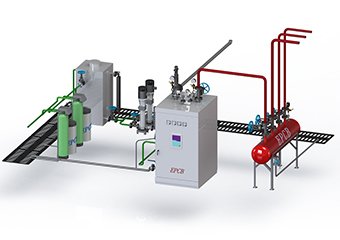
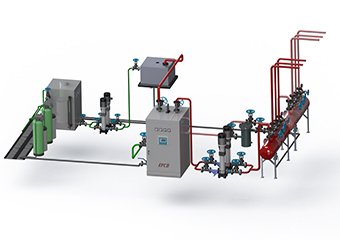
In actual engineering projects, it is also necessary to consider pipeline thermal expansion, system venting, water replenishment, pressure maintenance, equipment isolation, and maintenance conditions.
During the design phase, EPCB emphasizes the overall matching of the boiler and auxiliary systems to avoid affecting the operation of the entire system due to inconsistencies in the parameters of a single device.
For overseas industrial projects, a well-designed system can also help customers understand the on-site installation requirements in advance, preparing for subsequent construction and commissioning.
EPCB 170°C High-Temperature Hot Water Boiler Features Advanced Automatic Control and Safety Protection Systems
For high-temperature hot water boilers designed to supply water temperatures up to 170°C, automatic control and safety protection systems are crucial for ensuring stable equipment operation. EPCB's solution design emphasizes intelligent control, key parameter monitoring, and multiple safety protections, balancing operational efficiency with equipment safety.
1. Automatic control systems improve operational and management efficiency.
The EPCB automatic control system can monitor key parameters such as supply and return water temperature, operating pressure, and circulation status in real time, and adjust operating parameters according to the actual heating load, reducing manual intervention, improving temperature control accuracy, and providing a stable heat source for the wood drying process.
2. Multiple security protection systems ensure reliable operation.
For high-temperature operation at 170°C, EPCB emphasizes over-temperature protection, over-pressure protection, abnormal circulation monitoring, fault alarms, and safety interlock control, and rationally configures safety valves and other protective devices to reduce operational risks caused by abnormal conditions.
By combining automatic control with multiple safety protections, EPCB is committed to providing customers with safe, stable, intelligent and easy-to-maintain high-temperature hot water heating solutions.
EPCB Customized Hot Water Boiler Design and Professional Technical Support
For overseas timber processing companies, boiler procurement requires not only consideration of equipment performance but also system suitability, ease of installation, and long-term maintenance costs. EPCB always prioritizes the actual production needs of its clients, providing professional and reliable industrial heating solutions.
1. Professional technical communication to accurately match customer needs.
To meet the heating demand of 170°C high-temperature hot water, EPCB comprehensively considers the supply and return water temperatures, design pressure, circulation flow rate, and actual heat load to scientifically formulate a boiler selection plan, ensuring that the equipment parameters match the wood drying process.
2. Optimize system design to ensure overall operational reliability.
EPCB emphasizes the coordinated configuration of the boiler body with circulating pumps, automatic controls, instrument valves, and safety protection devices, and improves heating stability, safety, and operational management efficiency through systematic design.
3. Focus on installation and maintenance, and provide comprehensive overseas technical services.
For the Ivory Coast project, EPCB fully considered the convenience of equipment transportation, on-site installation, pipeline connection and maintenance during the design phase, and provided relevant technical information and installation guidance to lay the foundation for subsequent equipment commissioning and long-term stable operation.
From professional selection to system design, and then to installation and after-sales service, EPCB always puts customer needs at the core and is committed to providing high-quality industrial boiler equipment and full-cycle technical support.
EPCB Provides Comprehensive Installation, Commissioning, and After-Sales Support
For industrial boiler projects, the completion of equipment manufacturing does not mean that the entire project is over.
From equipment delivery to on-site installation, and then to system commissioning and formal operation, each stage requires professional technical support.
Currently, the 170°C high-temperature hot water boiler project in Côte d'Ivoire has not yet been installed and put into operation, so it is not possible to draw conclusions about actual fuel consumption, timber drying efficiency, or long-term operating performance at this stage.
However, EPCB has already incorporated subsequent installation and operation requirements into the project service plan.
Before installation: Clarify system connection and construction requirements.
The high-temperature hot water boiler system involves multiple parts, including the boiler body, circulation pipelines, heat exchange equipment, electrical control system, and safety accessories.
EPCB can provide relevant equipment information, system connection requirements, and installation technical support based on project contracts and technical solutions, helping customers clarify key aspects of the construction process.
In particular, the connection of high-temperature hot water pipes, the expansion compensation, pressure maintenance and the installation location of safety protection devices must be carried out in accordance with the confirmed technical documents.
Debugging phase: Emphasize the overall system operation coordination
After the equipment is installed, the boiler system needs to undergo necessary inspections, tests and commissioning in accordance with applicable specifications and project requirements.
For 170°C high-temperature hot water systems, special attention should be paid to aspects such as the operation of the circulating pump, system venting, pressure maintenance, temperature control, and safety interlocks during commissioning.
EPCB can provide customers with debugging guidance and related technical support according to the service scope agreed upon by both parties.
Only after the system has been checked, tested, and its safety protection functions have been confirmed can it gradually enter normal operation according to the prescribed procedures.
Operational phase: Focus on customers' long-term usage needs
EPCB's service philosophy is not only to provide customers with boiler equipment that meets technical requirements, but also to help customers establish long-term, reliable industrial heating systems.
In subsequent operation, standardized operation training, regular inspections, maintenance, and management of operating parameters are all important factors in ensuring the reliable use of the equipment.
For overseas customers, timely technical communication and clear maintenance guidance help improve equipment management efficiency.
EPCB aims to establish long-term and stable partnerships with its clients through continuous professional services.
EPCB Boiler: Professional Industrial Heating Solutions and Comprehensive Technical Support
From ordinary industrial hot water boilers to high-temperature hot water boilers designed to supply water at 170°C, the requirements for heating systems vary significantly across different industrial applications.
For the wood drying industry, selecting a suitable boiler requires not only attention to the rated thermal power, but also a full understanding of the relationship between process temperature, circulation flow rate, system pressure, heat exchange equipment, and operation control.
The timber processing project in Côte d'Ivoire embodies EPCB's professional service philosophy in industrial boiler selection and high-temperature heating system design.
In response to customers' demand for high-temperature heat sources, EPCB starts with the boiler body design and comprehensively considers high-temperature hot water circulation, automatic control, safety protection and auxiliary equipment matching, striving to provide system solutions that meet actual production requirements.
Although the project has not yet been officially installed and put into operation, EPCB has always placed great importance on equipment applicability, operational safety and the long-term needs of customers from the initial design to the subsequent installation and commissioning planning.
For EPCB, true expertise lies not only in manufacturing a boiler, but also in understanding the customer's production processes, selecting the appropriate heating method for the customer, and providing continuous technical support during project construction and subsequent operation.
In the future, EPCB will continue to leverage its experience in industrial boiler design and manufacturing, as well as overseas project services, to provide more professional steam, hot water, and thermal oil heating solutions for the wood processing, food processing, textile, chemical, and other industrial sectors.
EPCB Boiler — Professional Industrial Boiler Solutions, Reliable Heating System Design, and Long-Term Technical Support.