Steam Boiler Dust Collector: Types, Selection Variables, and Maintenance for Solid Fuel Systems

May 22, 2026

Coal-fired and biomass-fired steam boilers produce particulate matter during combustion. This particulate must be captured before flue gas reaches the atmosphere. Certain heavy-oil-fired boilers may also need particulate control, depending on fuel quality, sulfur content, and local emission limits. A dust collector matched to fuel type, flue gas temperature, dust loading, and emission regulations protects the environment, downstream equipment, and boiler efficiency.


This article covers the three dust collector types most commonly paired with small and medium-scale industrial steam boiler systems: multi-cyclone, wet scrubber, and baghouse. It does not cover electrostatic precipitators, which serve larger utility-scale installations at a different cost level. Our focus as an industrial boiler manufacturer is helping operators of solid fuel boilers match the right collector to their flue gas conditions.


Which dust collector fits a solid fuel steam boiler? A multi-cyclone handles coarse ash pre-separation at low cost. A baghouse delivers fine particulate control for strict emission limits. A wet scrubber suits high-moisture or acid-gas flue gas where gas cooling or partial SO₂ removal is also needed. Most coal and biomass installations pair a cyclone pre-collector with a baghouse for coarse removal, spark arrest, and fine PM control. Final selection depends on fuel type, flue gas temperature, moisture, particle size, acid dew point, outlet emission limit, and available space.


Why Dust Collectors Fail When Fuel Type and Flue Gas Are Ignored

Dust collector selection based on price alone is the most common cause of poor performance in solid fuel boiler systems. A collector that works well on dry coal ash may fail on high-moisture biomass flue gas. Uncaptured particulate deposits on heat exchange surfaces and reduces biomass boiler efficiency over time.


When operators pick a baghouse for high-moisture biomass without confirming that flue gas stays above the acid dew point, condensation forms on the filter bags. This degrades the media and causes a pressure drop spike that forces premature replacement. We see this in facilities that switch fuels without re-evaluating whether the existing collector still matches the new flue gas profile.


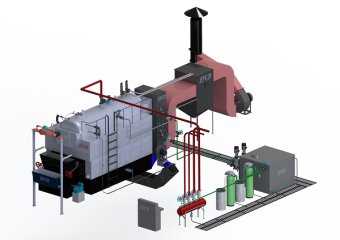
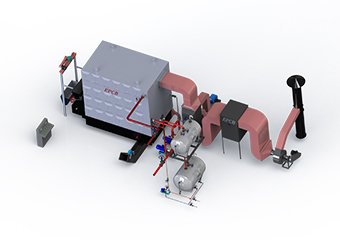
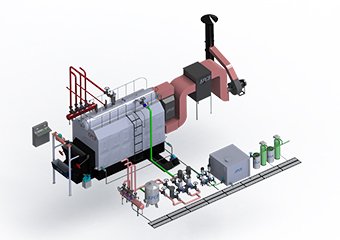
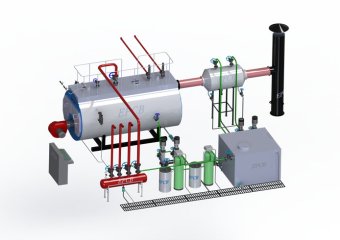
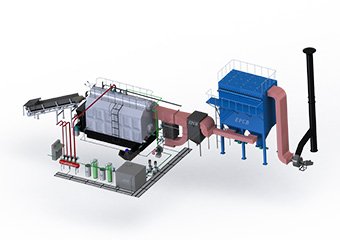
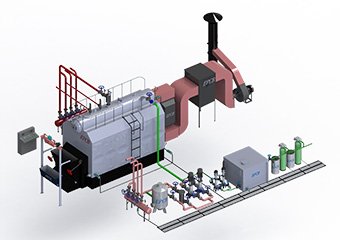
Every specification we prepare starts with fuel type, flue gas temperature, particulate concentration, moisture and chemistry, emission limit, and site constraints. A boiler dust collection system includes a collection hood at the boiler outlet, flue ductwork, the collector unit, an ash hopper with sealed discharge, and an induced draft fan. Mismatched ductwork, fan sizing, or hopper sealing reduces installed performance below catalog ratings.


Collector type comparison at a glance:


Collector Type

Best Use

Strength

Main Limitation

Multi-cyclone

Coarse ash pre-collection

Low cost, high-temp tolerance, simple upkeep

Weak on fine PM below 5–10 µm

Wet scrubber

Moist or acid-gas flue gas

PM + partial acid gas removal, gas cooling

Wastewater, corrosion, freezing risk

Baghouse

Fine PM and strict limits

>99% removal, sub-micron capture

Sensitive to moisture, dew point, sparks, oil


Multi-Cyclone Dust Collector for Steam Boilers

Multi-cyclone dust collectors use centrifugal force to separate particulate from flue gas. Dust-laden gas enters cyclone tubes through guide vanes and spins at high speed. Heavier particles hit the tube walls, fall into the hopper, and discharge through a rotary airlock valve. Cleaned gas exits through the exhaust tube to the stack.


Overall collection efficiency falls in the 80–95% range, depending on particle size distribution, inlet loading, gas flow rate, and system sealing. Multi-cyclone collectors work best on coarse particulate above 10 microns. Efficiency drops sharply below 5 microns.


These collectors cost less than other types, have no moving parts in the separation chamber, resist high temperatures, and need minimal maintenance. With suitable materials and regular upkeep, service life can reach 8–10 years. Abrasive ash, acidic condensation, or poor hopper discharge shortens this.


Multi-cyclone collectors alone cannot meet emission limits below 50 mg/m³ in most cases. We configure them as first-stage pre-collectors upstream of a baghouse or wet scrubber. This reduces dust load on the fine-filtration stage and extends filter bag life.


Wet Scrubber Dust Collector for Steam Boilers

Wet scrubbers remove particulate by forcing flue gas into close contact with water. Gas collides with atomized water droplets at high velocity. Inertial impact forms agglomerates that settle under gravity. Wet scrubbers can also capture some gaseous pollutants, including SO₂.


Scrubber capacity, footprint, and water use vary by design, liquid-to-gas ratio, pressure drop, inlet temperature, and PM loading. These must be specified per application. Wet scrubbers handle high-temperature and high-humidity flue gas with low fire risk. They suit applications where gas cooling or partial acid-gas removal is needed.


The trade-off is wastewater. Scrubbers generate contaminated slurry requiring treatment before discharge. Corrosive compounds in the flue gas transfer to the water circuit. Sticky or hydrophobic particulate should be tested before choosing a wet scrubber—these can foul nozzles and internal surfaces. Cold climates need freeze protection on the water system.


Baghouse (Fabric Filter) Dust Collector for Steam Boilers

Baghouse dust collectors filter particulate by passing flue gas through fabric bags. Fine dust deposits on the bag surface. Pulse-jet air or reverse air removes the accumulated dust cake. Cleaned dust falls to the hopper and exits through a sealed valve.


Baghouse collectors achieve removal efficiency above 99%, including sub-micron particulate. Capacity should be specified by flue gas flow in m³/h and air-to-cloth ratio. Any outlet emission guarantee must state the test method, dry or wet basis, reference oxygen, fuel type, inlet loading, and applicable regulation.


Filter media selection depends on continuous temperature, surge temperature, acid dew point, moisture, SOx/NOx exposure, and abrasion. Standard polyester suits lower-temperature dry gas. PPS, P84, PTFE membrane, or fiberglass media handle higher temperatures or aggressive chemistry.


Baghouse collectors are sensitive to moisture and oil. Condensation causes bag blinding—the dust cake cements to the fabric and normal cleaning cannot remove it. Verify flue gas temperature relative to the dew point before specifying a baghouse for biomass or high-sulfur fuel. We specify baghouse systems where emission limits require fine PM control and flue gas conditions support fabric filtration.


How to Match a Dust Collector to Your Steam Boiler

Dust collector selection follows the boiler's operating variables, not catalog price.


For coal-fired steam boiler systems with dry, abrasive ash, a multi-cyclone plus baghouse is the standard setup. The cyclone handles the coarse fraction and protects the bags.


For biomass-fired boilers, a cyclone, spark arrestor, or pre-separation stage upstream of the baghouse is strongly recommended. Biomass flue gas often carries sparks and runs at variable temperature. The pre-collector arrests sparks, cools the gas, and removes coarse ash.


For high-moisture or acid-gas flue gas, a wet scrubber may be appropriate where gas cooling or SO₂ removal is needed.


For emission limits above 100 mg/m³ with a limited budget, a multi-cyclone alone may suffice. This is less common as regulations tighten.


We align collector specification with fuel analysis, flue gas data, emission standard, and site layout before confirming a configuration.


Conclusion


Dust collector selection for a steam boiler depends on three variables: fuel type and particulate characteristics, flue gas temperature and moisture profile, and the emission limit from local regulations. Match these to the right collector type and the system stays in compliance at reasonable cost.


In our turnkey boiler projects, we verify collector compatibility by analyzing actual fuel, measuring flue gas at the boiler outlet, and confirming the emission standard before specifying equipment. When facilities switch fuels or face tighter regulations without re-evaluating dust collection, the result is component failure, rising costs, and compliance violations that specification-stage verification would have prevented.


Before requesting a specification, consult our boiler operation guide and confirm boiler capacity and fuel type, provide a flue gas analysis, identify the emission standard, and measure available space. Contact our engineering team with these parameters.


FAQ


Do gas-fired or oil-fired boilers need dust collectors?

Gas-fired boilers produce negligible particulate and rarely need dust collectors. Light oil boilers generate minimal soot with a properly adjusted burner. Heavy oil boilers may need control depending on sulfur content and local standards. Dust collectors are primarily for solid fuel boilers.


Can a multi-cyclone meet modern emission limits on its own?

Multi-cyclone collectors remove coarse ash but efficiency drops sharply below 5 microns. For limits below 50 mg/m³, a cyclone alone is not enough. It works best as a pre-collector upstream of a baghouse or scrubber.


Should a biomass boiler baghouse have a pre-collector?

For many biomass installations, a cyclone or spark arrestor upstream of the baghouse is strongly recommended. Biomass flue gas carries sparks and runs at variable temperature. The pre-collector arrests sparks and removes coarse ash. The exact setup depends on fuel analysis and fire-protection design.


What is the cost difference between dust collector types?

Multi-cyclone collectors have the lowest capital and operating cost. Wet scrubbers have moderate capital cost but ongoing water and wastewater expenses. Baghouse collectors cost more upfront but deliver lower cost per unit of particulate removed when maintained. Total cost depends on emission standard, fuel type (boiler fuel cost comparison), and maintenance capability.


What data do I need before selecting a boiler dust collector?

Provide boiler capacity, fuel type and analysis, flue gas flow and temperature range, moisture and acid dew point, inlet dust concentration, required outlet emission limit with test method, available space, and water capacity for scrubbers. Without these parameters, any selection is a guess.

  • Send You Inquiry

  • Give You Boiler Solution

  • Place The Order

  • Get Your Boiler

Ask for Boiler Solution Suited Your Condition!

Tell us your need about boiler capacity in your industry, we will recommend the most suitable boiler model for you!

Consult online customer service
Product:
Boiler fuel: