Abnormal boiler pressure — a gauge that reads too high, too low, or swinging — should be handled by first confirming the reading is real against an independent, separately-connected gauge, then checking water level, before you adjust firing or reset any control. Acting on a false reading is how operators create the very hazard they meant to avoid. From there, the response is governed not by any universal rule but by the boiler's own emergency operating procedure, its automatic trips, and whether water level can be held.
This article is written for trained industrial boiler operators and maintenance personnel. On any specific boiler, the manufacturer's emergency operating procedure (EOP), the plant's safe work procedures, and the authority having jurisdiction take precedence over anything general said here.
Verify the Pressure Reading Before You React
An abnormal pressure gauge on an industrial steam boiler does not always mean the pressure itself is abnormal, and which case you are facing depends on whether the sensing line, the siphon loop, and the gauge are all seeing true steam pressure. A pressure-gauge sensing line that is blocked, frozen, or fouled can isolate the instrument from real pressure while it holds a stale reading. A siphon loop (pigtail) that has lost its water seal exposes the gauge or pressure switch to live-steam temperature, which can damage the sensing element or drift its calibration. The siphon is a thermal barrier and instrument protection, not a pressure-reducing device, and under normal static conditions it still transmits true boiler pressure.
How these faults spread is where operators get caught. The operating pressure control and the panel gauge often tap the same steam space through similar water-sealed siphons, so a single fouling event can blind more than one instrument at once. A plugged sensing line can leave the gauge reading low while the same blockage keeps the operating control from seeing a genuine pressure rise. The burner then keeps firing while the operator writes the gauge off as broken. A second look at the same panel confirms nothing. The check that matters is an independent instrument reading the same steam space through its own separate connection.
Verification should use an installed redundant transmitter, an approved test connection, or a calibrated gauge under the plant's safe work procedure. Do not open or connect to a live steam tapping during an emergency unless the procedure specifically permits it. Treat an abnormal reading as a real pressure change without that cross-check, and the usual result is an unnecessary intervention: a blowdown or a burner reset that either masks the real fault or adds fresh thermal stress. The fault then has to be chased a second time.
What Causes Abnormal Boiler Pressure, and How to Tell Which One You Have

Abnormal boiler pressure in industrial steam systems traces to a short list of causes — overpressure, tube or superheater rupture, water hammer, and low steam pressure — and telling them apart depends on reading the secondary signs, not the gauge alone. Each carries a distinct signature in flow, temperature, sound, and furnace draft. The patterns below are indicators only. Confirm the actual condition using redundant instruments, alarms, furnace draft, flow trends, and the boiler-specific diagnostic procedure before acting.
Symptom pattern | Possible cause (confirm before acting) | First priority |
Pressure past the red line, still climbing after the safety valve lifts; overpressure alarm active; steam flow falling | Overpressure (failed control or blocked sensing line) | Follow the approved emergency shutdown / master fuel trip procedure |
Spray or explosion noise; furnace draft goes positive; feedwater far exceeds steam flow; level hard to hold | Water-wall or evaporator tube rupture | Treat as a boiler-specific emergency; act on flame, furnace pressure, and level per EOP |
Jet or roar near the superheater; steam flow drops below feedwater; flue-gas temperature after the superheater falls abnormally | Superheater tube rupture | Protect the superheater; follow the EOP for load reduction or shutdown |
Rhythmic banging with pipe vibration; gauge pointer swings in time with the knocking | Water hammer (check-valve failure, carryover, or trapped condensate) | Reduce or isolate steam and drain before it cracks a joint |
Pressure below set point while the burner sits at low fire, or a demand spike the boiler cannot meet | Low steam pressure | Confirm the reading, then the burner's firing response |
Low steam pressure is the branch operators most often mishandle. It usually comes from a sudden demand spike, a burner stuck at low fire after a modulation signal or actuator fails, a fuel-supply limit that only shows up at high fire, or simply a false low reading. The reflex to "add more fuel" rarely helps and can push combustion out of balance. Ask first whether the burner is even being commanded to ramp up.
Emergency Response: Follow the Boiler's Procedure, Not a Universal Rule
No single rule decides whether to keep an industrial boiler running or trip it during a pressure event, because the correct action depends on the boiler's design and its approved emergency operating procedure. Confirming that the pressure is genuinely abnormal and establishing water level are two critical early checks, but they do not override an automatic trip, a safety-valve operation, flame failure, unsafe furnace pressure, or the boiler-specific EOP. Design shapes the response too. Water-wall versus superheater damage, drum versus once-through or forced-circulation designs, and single- versus multiple-burner arrangements all change the right move. Which relay or switch failed can be identified once the boiler is safe; it rarely changes the immediate action.

Overpressure
When confirmed steam pressure reaches the high-limit or a safety valve operates, follow the boiler's approved emergency shutdown or master fuel trip procedure. Do not manually throttle, gag, or otherwise use the safety valve as an operating pressure control, and do not use blowdown valves or drains to reduce pressure unless the manufacturer's emergency procedure specifically requires it. A safety valve that lifts while pressure is still climbing means the normal control chain has already failed or relief capacity is inadequate. That is a shutdown condition, not something to manage by hand.
The procedure emphasizes bringing pressure down in a controlled way rather than fast for a physical reason. Pressure and temperature in saturated steam are locked together, so an overpressured drum is also an overheated one, with the extra energy stored in the water and the thick drum metal. If saturation pressure is allowed to fall faster than that metal can shed heat, the metal ends up momentarily hotter than the new boiling point, flashing steam at the water surface and loading the drum with severe thermal and mechanical stress. Controlling the rate of pressure reduction lets the metal follow.
This guide covers recognizing and responding to abnormal pressure and the control layers meant to prevent it. It does not cover the selection, sizing, or setting of the safety relief valve, which must comply with the applicable code, the boiler's MAWP, and the manufacturer's documentation, and must be set and sealed by a qualified valve technician.
Tube or Superheater Rupture
Treat a suspected tube rupture as a boiler-specific emergency. Shut off fuel immediately if flame stability is lost, furnace pressure becomes unsafe, or water level cannot be maintained. Fan operation, feedwater operation, and damper position must follow the boiler-specific EOP rather than any single generic instruction. On some boilers a fan is held to aid cooling; on a normal cooldown the fan may instead be shut off and the dampers opened once the furnace loses its red heat. The correct move depends on the design and the failure.
A short period at reduced load to bring a standby boiler online can be defensible. It is defensible only where three conditions all hold: the manufacturer's procedure allows it, water level can be reliably maintained, and the responsible operator authorizes it purely to transfer load and shut down in an orderly way.
One case reverses the usual instinct about water. If water has disappeared from the gauge glass, do not add water unless the manufacturer's emergency procedure and the responsible operator specifically authorize it. Overheated tube metal sits well above the water's boiling point, so feedwater onto it can flash to steam instantly and drive a thermal shock across an already-weakened wall. The accepted practice there is to stop firing and let the boiler cool toward feedwater temperature before water is reintroduced, exactly as the low-water emergency procedure directs.
Water Hammer
Reduce or isolate the steam supply, drain the affected line, and restore a steady mid-range water level before returning to service. Water hammer usually signals a failed check valve, trapped condensate, or water carrying over from the drum, so the underlying cause has to be found, not just the noise silenced. Left running, the impacts crack flanges, welds, and valve bodies.
How Boiler Pressure Controls Are Supposed to Prevent This

Boiler pressure controls form a layered chain — an operating control, a manual-reset high-limit, and the mechanical safety relief valve — arranged so their set points descend in a fixed order rather than sitting at any universal number. The control schedule enforces this relationship: operating pressure control < manual-reset high-limit < safety-valve set pressure ≤ applicable MAWP. The operating control is the working device. It senses steam pressure, cuts the burner at the operating set point, and resets automatically each cycle. The high-limit sits above it as a backstop, trips only if the operating control fails to hold, and requires a manual reset so the boiler cannot re-fire until someone confirms the condition. The safety relief valve is the last-resort mechanical layer, meant to open only when everything upstream has failed.
Redundant, independent pressure controls exist so that no single failure runs the burner unchecked. For boilers within its adopted scope, ASME CSD-1 requires separate operating and manual-reset high-limit protection of this kind. That scope is limited to boilers directly fired by gas, oil, gas-oil, or electricity with fuel input under 12,500,000 Btu/hr, and adoption varies by jurisdiction. Larger or differently configured boilers, including many big water-tube units, may instead fall under NFPA 85, other combustion-control standards, manufacturer requirements, and local rules. The set points are not universal numbers either. They must be coordinated below the safety-valve pressure according to the approved control schedule for that specific boiler, its design and rated pressure, and the applicable code and jurisdictional requirements.
If the high-limit ever trips, that is not routine operation. It means the operating control already failed to hold, so the right response is to find and fix that cause before resetting, not to clear the lockout and carry on. On startup, a low-fire hold applies the same protective logic in reverse, holding the burner at minimum fire until the boiler builds enough pressure to avoid thermal shock.
Preventing Abnormal Boiler Pressure: Set Points, Testing, and Daily Checks
Preventing abnormal boiler pressure depends less on the controls existing than on their set points staying accurate, and calibration drift is what quietly defeats an otherwise correct control chain. Springs weaken, linkages loosen, and a dial setting slowly stops matching the pressure at which the control actually trips.
A short, disciplined routine keeps the chain honest. Glance at the set points daily and confirm the high-limit reset has not been left tripped. Calibrate against a traceable test gauge on a defined schedule, since a control that trips late is no protection at all. Keep every siphon loop water-sealed and clear, because a blinded control cannot act on pressure it never sees. Log the set points so drift shows up over time rather than only after an event. Inspect and test pressure-relief devices at the frequency and by the method required by the applicable jurisdiction, manufacturer, and authorized inspection program. The correct method varies by boiler, valve type, and jurisdiction, and some conditions prohibit lifting the try lever at all.
Reading drift deserves care rather than dismissal. Any unexplained drift in a pressure gauge or a safety-related pressure control should be recorded and evaluated under the plant's instrumentation maintenance procedure. Whether the outcome is recalibration, replacement, or return to service is a decision for qualified personnel, because a false reading can equally point to a faulty gauge, pressure switch, sensing line, or control input even when the boiler's actual pressure is normal. Caught this way, the small sensing faults that otherwise escalate into overpressure trips get handled early.

Where to Start When Boiler Pressure Looks Wrong
Start every abnormal-pressure event at the same place: prove the reading before you touch a valve, then establish water level, and let the boiler's automatic trips, safety-valve operation, and approved emergency procedure govern what happens next. That sequence separates a controlled response from an intervention that creates a new problem. The safe move ultimately depends on the state and design of your own boiler at that moment, which no datasheet can decide for you. EPCB supplies the boiler-specific documentation and emergency operating procedures these decisions should rest on; where a pressure fault is unclear, we help operators trace it back to verified readings and control-schedule set points rather than guesswork.
Before acting on an abnormal reading, confirm:
· True pressure on a separate, independently-connected instrument, not a second look at the same panel
· Current water level from the gauge glass, not the transmitter alone
· Whether any automatic trip or the safety valve has already operated
· Whether the operating control cut out where the log says it should have
· Whether the high-limit has tripped or been reset
· That the siphon loop still holds its water seal
Work down that list against your boiler's EOP, and the question of which part to repair usually answers itself.
FAQ
Is high boiler pressure dangerous if the safety valve is working?
The safety relief valve is a last-resort mechanical device, not the operating limit, so leaning on it means the controls upstream have already failed. A boiler that regularly lifts its safety valve is not operating safely. It is signalling that pressure control has broken down and needs investigation.
Why does emergency procedure bring overpressure down slowly instead of fast?
Pressure and temperature in saturated steam are coupled, so a fast pressure drop leaves the drum metal hotter than the new boiling point and drives flashing and thermal stress across it. Controlling the rate lets the metal cool in step with the pressure.
My pressure gauge reads high but the boiler seems normal. What should I check first?
Check the siphon loop and sensing line, then confirm true pressure on a separate, independently-connected instrument under your safe work procedure. A dry or blocked siphon is a common reason a reading disagrees with how the boiler is actually behaving.
Should I keep feeding water if a boiler tube bursts?
Only if the EOP and the responsible operator authorize it and water level can be maintained. If water has left the gauge glass, adding it can flash on overheated metal and spread the failure.
Can low steam pressure damage the boiler?
Low pressure is more often a symptom than a direct cause of damage, but chasing it the wrong way can do harm. Forcing more fuel to recover pressure that is falling because of a steam leak, a stuck-open trap, cold feedwater, or fouled heat-transfer surfaces wastes fuel and can unbalance combustion. Find why pressure is low first.
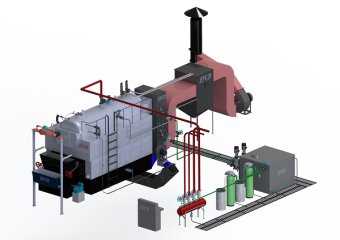
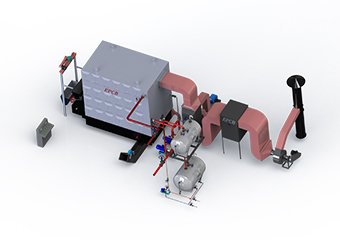
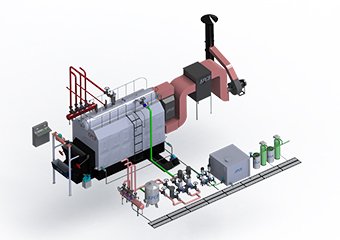
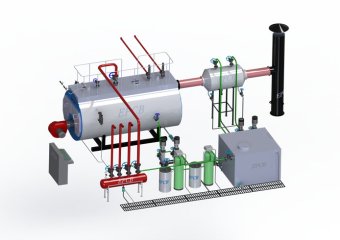
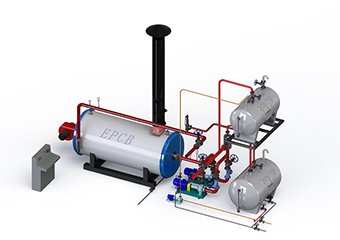
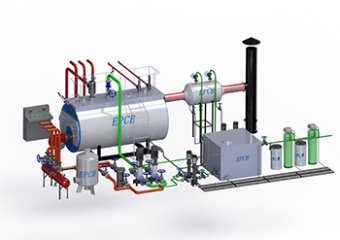
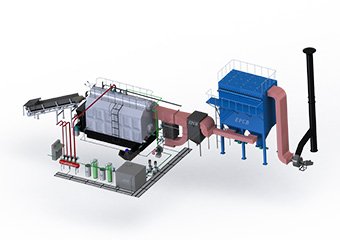
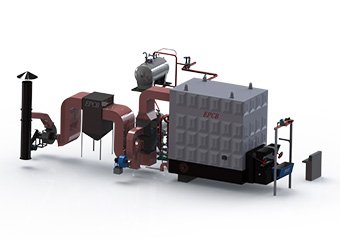





 Steam Boiler
 Thermal Oil Boiler
 Hot Water Boiler
 Steam Boiler
 Thermal Oil Boiler
 Hot Water Boiler
 Steam Boiler
 Thermal Oil Boiler
 Hot Water Boiler
 Steam Boiler
 Hot Water Boiler