

A stable steam supply is crucial for many food processing operations. From heating and cooking to sterilization, cleaning, and other heat treatment processes, industrial steam boilers play a vital role in maintaining production continuity and product quality.
Recently, EPCB successfully supplied and commissioned a 4-ton/hour coal-fired steam boiler for a food processing plant in Mongolia. The boiler system has been installed and is operational, providing a reliable steam source for the client's daily production.
This project demonstrates EPCB’s capabilities in industrial coal-fired boiler selection, combustion system design, auxiliary equipment configuration, and complete boiler system integration.
EPCB doesn't just focus on boiler capacity; it fully considers the customer's application needs and the overall operating characteristics of the steam system. Through carefully configured boiler solutions and comprehensive equipment support, EPCB helps customers establish a practical and reliable steam supply system.
Steam Requirements for Food Processing Applications in Mongolia
Steam is widely used in the food processing industry for processes such as heating raw materials, cooking, sterilization, equipment cleaning, and hot water preparation. A stable steam supply is crucial for ensuring food processing temperatures, production efficiency, and product quality.
Therefore, the selection of industrial steam boilers should not only match the amount of steam required for production, but also take into account fuel supply, operating conditions, energy efficiency and auxiliary equipment configuration.
In response to the food processing needs of its Mongolian customers, EPCB, after comprehensive evaluation, provided them with a 4 T/H Coal-fired steam boilers prioritize combustion stability, continuous fuel supply, waste heat recovery, water supply management, and ease of daily operation, providing reliable steam supply for customer production.
Why Choose an EPCB 4 T/H Coal-Fired Steam Boiler for Food Processing?
Matching boiler capacity with production demand
Boiler capacity directly affects steam supply capacity and operating efficiency. If the capacity is too small, it will be difficult to meet peak production demand, while if the capacity is too large, it may increase energy consumption during low-load operation.
For the food processing needs of Mongolian customers, EPCB recommends using a 4 T/H coal-fired steam boiler with a rated evaporation capacity of 4 tons per hour.
During the selection process, EPCB comprehensively considers the customer's steam consumption, peak production demand, daily operating time, working pressure, and future capacity changes to ensure that the boiler capacity matches the actual production needs.
Why choose a coal-fired steam boiler?
Fuel selection directly affects boiler operating costs and long-term economic benefits.
In regions with ample coal supply and advantageous fuel costs, coal-fired steam boilers are a practical option for continuous industrial production.
Taking into account local fuel conditions in Mongolia and customer needs, EPCB configured the project with a DZL series coal-fired steam boiler.
Meanwhile, the calorific value, moisture content, ash content, and particle size of coal are also important factors in boiler design and combustion system configuration. Proper fuel matching helps improve combustion efficiency, ensures stable boiler operation, and reduces maintenance burden.
Boiler Design: Mature Industrial Steam Generation Structure
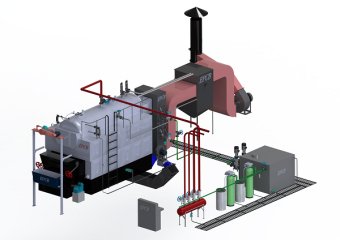
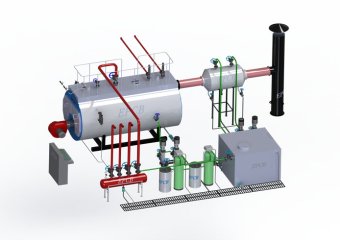
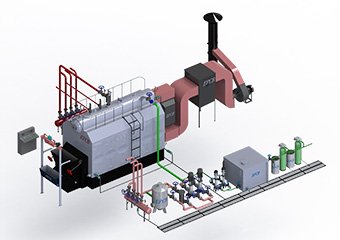
The boiler body is the core of the steam generation system. In this project, EPCB provided the customer with a horizontal single-drum water-tube coal-fired steam boiler , which adopts a mature structural design that balances heat transfer efficiency, equipment layout, and operational reliability.
Horizontal single-drum water and fire tube structure
The boiler adopts a horizontal single-drum water-fire tube structure, and through the reasonable arrangement of heating surfaces, it achieves effective heat exchange between high-temperature flue gas and boiler water.
This structure features a compact layout, efficient use of heat transfer area, high integration of the combustion system, and convenient maintenance, which can meet the needs of food processing enterprises for a stable steam supply.
External insulation design reduces heat loss.
The boiler adopts an external insulation structure, which helps to reduce heat loss during operation, maintain equipment thermal efficiency, and at the same time reduce boiler surface temperature, improving the operating environment.
From the main boiler structure to the insulation details, EPCB pays attention to every aspect of the design to support the long-term stable operation of the equipment.
Mechanical Coal Feeding and Chain Grate Combustion System
The combustion system directly affects the steam output and operational stability of a coal-fired boiler.
The EPCB boiler adopts a design that combines mechanical fuel delivery with chain grate to achieve continuous coal supply and stable combustion.
The EPCB boiler employs a combustion system combining mechanical fuel supply and a chain grate, continuously delivering coal to the furnace. The moving grate facilitates fuel drying, ignition, combustion, and complete burnout. Combined with a well-designed air supply and distribution system, this helps maintain stable combustion and reduces manual operation. Furthermore, the boiler is equipped with observation ports, allowing operators to monitor the combustion status in the furnace in real time and adjust the fuel supply and air ratio as needed, ensuring continuous and stable boiler operation.
Complete Auxiliary Equipment Configuration for Reliable Boiler Operation
The performance of a boiler depends not only on its main design, but also on the coordination and cooperation between its various auxiliary devices.
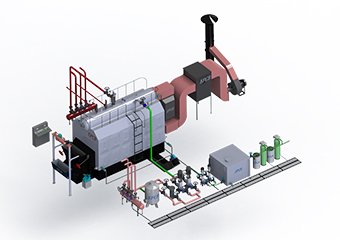
For projects targeting Mongolian clients, EPCB has equipped them with comprehensive water supply, waste heat recovery, flue gas dust removal, ventilation, and electrical control systems.
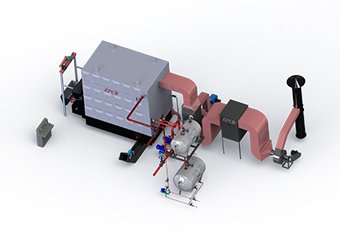
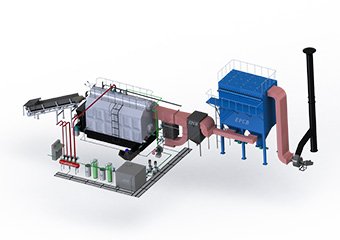
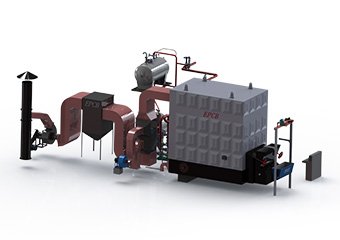
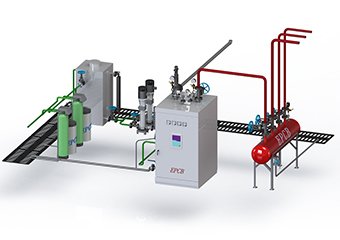
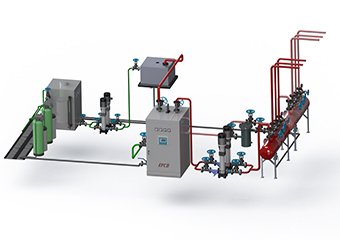
EPCB equipped the boiler with a complete range of auxiliary equipment, including a deaerator, feedwater pump, economizer, multi-cyclone dust collector, forced draft fan, and induced draft fan.
Each component plays an important role in system performance. The deaerator reduces dissolved oxygen in the feedwater, helping prevent corrosion in the boiler and piping, while the feedwater pump ensures a reliable supply of water at the required pressure.
To improve energy efficiency, the economizer recovers heat from flue gas to preheat the feedwater, reducing exhaust heat losses. Meanwhile, the multi-cyclone dust collector removes a portion of the particulate matter from flue gas. The forced draft and induced draft fans work together to maintain proper airflow, furnace pressure, and flue gas circulation.
Through the coordinated operation of these auxiliary systems, EPCB provides a well-integrated boiler solution designed for reliable performance and efficient operation.
Automatic Slag Removal and Centralized Control for Improved Boiler Operation
The EPCB boiler is equipped with a mechanized automatic ash removal device, which can promptly remove ash and slag generated during combustion, reducing manual cleaning workload and improving the convenience of daily maintenance. Simultaneously, the boiler employs a centralized electrical control system to coordinate and manage the boiler body and auxiliary equipment. Operators can monitor key operating statuses such as boiler water level, steam pressure, feedwater pumps, and fans in real time, promptly detecting any abnormalities. The combination of automatic ash removal and centralized control further simplifies the boiler operation process, ensuring the safe and stable operation of the equipment.
EPCB's Professional Boiler Engineering and Installation Services
Providing industrial boilers involves more than just manufacturing and delivering equipment; it requires support throughout the entire process, including technical communication, solution design, equipment manufacturing, installation and commissioning, and after-sales service.
For projects with Mongolian customers, EPCB always bases its decisions on actual production needs, focusing on boiler selection, system configuration, and overall operational performance.
Professional technical communication and boiler selection
EPCB combines the customer's production process, steam demand, fuel type, working pressure and installation conditions to develop a suitable boiler selection and configuration plan to ensure that the equipment matches the actual application requirements.
System design and equipment manufacturing
After determining the technical solution, EPCB coordinates the configuration and manufacturing of the boiler body, combustion system, water supply equipment, waste heat recovery, dust removal and electrical control systems to ensure that each piece of equipment is properly matched, thus providing a guarantee for subsequent installation and operation.
Installation, commissioning, and technical support
Before a boiler is put into use, a comprehensive inspection and debugging of the equipment installation, pipeline connection, water supply system, combustion system, fan, dust removal equipment and electrical control is required to ensure that all systems operate in a coordinated manner.
For overseas projects, EPCB emphasizes technical guidance during the installation and commissioning process, helping customers become familiar with equipment operation and maintenance requirements, and providing professional support for the smooth commissioning of boilers.
EPCB: Delivering Reliable Industrial Boiler Solutions Worldwide
Each industrial boiler project has its own specific requirements.
Different industries, fuels, production processes, and installation conditions all affect the selection of boilers and system configuration.
For food processing companies, a reliable steam supply is directly related to the continuity of production and the requirements of heat processing.
The Mongolia 4-t/h coal-fired steam boiler project embodies EPCB's commitment to providing practical industrial boiler solutions tailored to customer applications.
From selecting the appropriate boiler capacity to designing the combustion system, configuring auxiliary equipment, and supporting installation and commissioning, EPCB focuses on the details that affect the overall performance of the system.
We believe that professional boiler manufacturing should not be limited to producing individual units.
It should also include understanding customer needs, providing appropriate engineering solutions, and providing support to customers throughout the equipment's lifespan.
EPCB – Professional industrial steam boiler solutions for global industries.