

Bangladesh has a well-developed textile and garment manufacturing industry, in which dyeing and finishing processes play a crucial role in fabric production. These processes require a continuous and reliable supply of industrial steam to support all stages of production, including fabric pretreatment, dyeing, washing, drying, and finishing.
For textile printing and dyeing plants, a stable steam supply directly impacts production planning, process consistency, and overall operational efficiency. Meanwhile, rising energy costs and increasing emphasis on environmental management are prompting manufacturers to explore alternative fuel options and more comprehensive industrial heating solutions.
In this project, a textile printing and dyeing factory in Bangladesh needed a reliable steam generation system that could utilize biomass fuel while meeting environmental requirements related to industrial combustion.
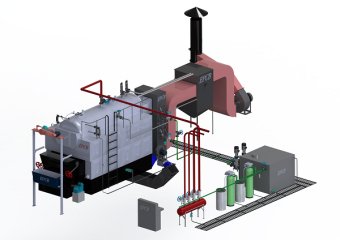
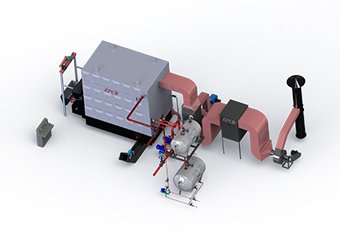
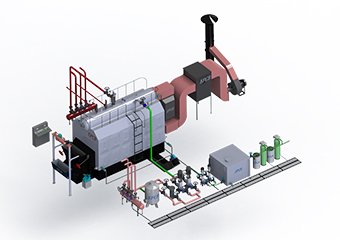
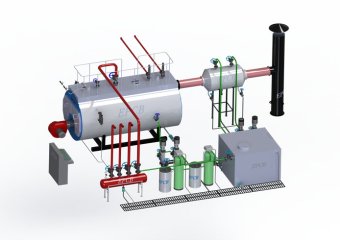
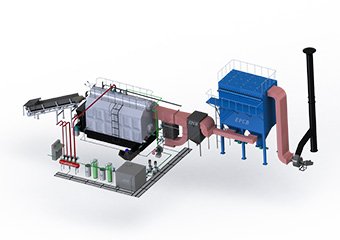
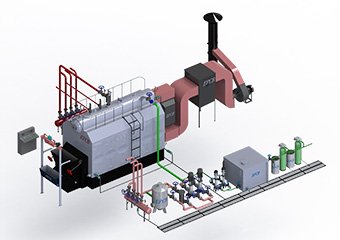
After assessing the project's application requirements and fuel characteristics, EPCB provided two biomass steam boilers , along with a matching baghouse dust collector system and other auxiliary equipment.
This project showcases EPCB's capabilities in biomass boiler manufacturing, industrial steam system configuration, and integrated environmental equipment solutions for the textile industry.
EPCB Biomass Steam Boilers for Reliable Steam Supply in Textile Printing and Dyeing
The core equipment provided by the project includes two biomass steam boilers designed to provide steam for the factory's dyeing and finishing operations.
Biomass boilers are widely used in the industrial sector, especially in areas with suitable agricultural, forestry, and wood processing waste. Compared to traditional fossil fuels, biomass can provide an alternative energy source while helping industrial manufacturers make efficient use of local biomass resources.
For this Bangladeshi textile project, the dual-boiler configuration offers greater flexibility in steam production and equipment scheduling.
The plant does not need to rely entirely on a single boiler; instead, it can schedule equipment operation based on actual steam demand and production plans. Depending on the operating conditions, the operation of each boiler can be coordinated to meet different load demands, maintenance schedules, and production plans.
This configuration has the following practical advantages:
Flexible steam supply: Two independent boiler units provide greater flexibility when production needs change.
Operation scheduling: Boiler operation can be coordinated according to the factory's steam consumption.
Maintenance arrangements: Maintenance plans for individual boilers can be arranged more flexibly.
Production support: This system provides a dedicated steam source for the factory's industrial processes.
For textile manufacturers using continuous or multi-stage production lines, configuring a suitable boiler system is an important part of maintaining stable factory operations.
Biomass Fuel Utilization: Turning Wood Waste into Industrial Steam
The two EPCB biomass steam boilers in this project use sawdust briquettes as the main fuel, converting wood processing residues into the heat energy required for industrial production. Compared with bulk sawdust, briquettes generally have advantages such as uniform shape, ease of storage and transportation, and are beneficial for fuel delivery and combustion management.
EPCB optimizes combustion systems based on fuel moisture, calorific value, ash content, and combustion characteristics to improve fuel utilization efficiency. For waste fabrics and other biomass waste generated by the textile industry, EPCB can also assess their utilization feasibility based on fuel characteristics, emission requirements, and applicable regulations, helping customers explore more flexible energy solutions.
Optimized Biomass Boiler Design for Efficient Combustion and Heat Transfer
The boiler body is the core of the steam system. The EPCB biomass steam boiler adopts a reasonable furnace structure and heating surface layout, creating favorable conditions for the complete combustion and efficient heat transfer of biomass fuel.
During the design process, EPCB comprehensively considered factors such as fuel supply, combustion air, flue gas flow, and ash removal and maintenance, optimized the matching between the boiler body and auxiliary equipment, reduced unreasonable heat loss, and provided a stable and reliable industrial steam solution for dyeing and printing factories in Bangladesh.
Biomass Boiler Air Supply System for Stable and Efficient Combustion
A well-designed combustion air supply and ventilation system is crucial for the stable operation of biomass boilers.
EPCB rationally configures the air supply and exhaust equipment according to fuel characteristics, combustion requirements and system resistance to ensure coordinated combustion air supply and flue gas flow.
By optimizing the overall matching of boilers, fans, and flue gas treatment equipment, support is provided for stable fuel combustion, effective heat utilization, and continuous boiler operation.
Baghouse Dust Collection System for Effective Flue Gas Particulate Control
In response to the environmental protection needs of Bangladesh's dyeing and printing industry, both EPCB biomass steam boilers are equipped with baghouse dust collectors to capture fly ash and particulate matter in the flue gas from biomass combustion.
Baghouse dust collectors effectively separate flue gas from particulate matter by trapping dust in the filter material. EPCB rationally configures dust collection equipment based on parameters such as flue gas temperature, dust characteristics, processing air volume, and system resistance.
This system helps reduce particulate matter emissions and provides technical support for the factory's environmentally friendly operation. The final emission results need to be confirmed through actual commissioning and testing to ensure compliance with applicable local environmental requirements.
Integrated Flue Gas Treatment System for Efficient Exhaust Management
EPCB focuses on the design of complete flue gas treatment systems, rationally matching flue gas ducts, bag filters, induced draft fans and chimneys to ensure that flue gas can be transported, filtered and discharged according to the designed path.
In the system design, EPCB comprehensively considers flue gas temperature, flow rate, pipeline resistance and dust collector pressure drop, and rationally selects induced draft equipment to improve flue gas flow conditions.
By integrating the boiler body, combustion system, and flue gas treatment equipment, EPCB provides customers with more comprehensive and reliable industrial steam system solutions.
Automatic Boiler Control System for Efficient Dual-Boiler Operation
The EPCB biomass steam boiler is equipped with an automatic control system to monitor boiler water level, pressure, temperature, and the operating status of related equipment, helping operators to keep abreast of boiler conditions and improve the convenience of daily operation and management.
For the configuration of the two biomass steam boilers in this project, EPCB fully considered the changes in plant steam load and equipment operation and management requirements, and provided support for the stable operation of the dual boiler system through reasonable electrical control, instrumentation configuration and safety protection design.
EPCB Complete Biomass Boiler Solutions: From Equipment Selection to System Integration
At EPCB, we believe that successful industrial boiler projects begin with understanding the actual production needs of our customers.
Heating needs, fuel conditions, and environmental factors vary across different industries. Even factories within the same industry may require different boiler configurations.
For this textile printing and dyeing project in Bangladesh, EPCB provided two biomass steam boilers, as well as supporting combustion equipment, bag filter dust collection equipment and related auxiliary systems.
This project reflects EPCB's focus on several key aspects of industrial boiler solutions:
Application-oriented equipment selection: taking into full account the customer's production needs and biomass fuel conditions.
Professional boiler manufacturing: specializing in boiler structure, combustion layout and heat transfer design.
Integrated system configuration: coordinating the boiler body with combustion, ventilation, dust removal and electrical control systems.
Integration of environmental protection equipment: Incorporating baghouse dust collectors into the overall flue gas treatment solution.
Project-oriented technical support: focusing on equipment configuration, matching of auxiliary equipment, and the customer's actual installation needs.
For overseas industrial customers, professional service is not only reflected in the boiler itself, but also in the attention to detail.
Equipment configuration, technical communication, coordination of auxiliary equipment, documentation, and delivery arrangements all contributed to the success of the project.
EPCB is committed to providing customers with clear and consistent solutions throughout the entire equipment supply process, helping them gain a deep understanding of system configuration and prepare fully for subsequent installation and operation.
EPCB Biomass Steam Boiler Solutions for Bangladesh’s Textile Industry
Bangladesh's textile and garment industry continues to generate demand for reliable industrial steam systems.
For dyeing and printing factories, selecting a suitable biomass boiler requires comprehensive consideration of various factors such as steam consumption, fuel availability, combustion requirements, dust removal needs, and overall operating conditions.
The installation of two biomass steam boilers at the Bangladeshi textile factory demonstrates EPCB's extensive experience in providing biomass industrial steam solutions for the textile sector.
This boiler system uses wood chip briquettes as its main fuel, achieving effective utilization of wood processing residues. Its baghouse dust collector is an important component of the flue gas treatment system; and the "dual boiler" configuration provides greater flexibility in production scheduling.
More importantly, this project highlights EPCB's core philosophy—we offer more than just a single boiler product.
From boiler manufacturing and fuel application considerations to auxiliary equipment matching and environmental protection system integration, EPCB always focuses on providing practical industrial heating solutions based on customers' actual needs.
EPCB Boilers – Providing professional biomass boiler solutions for the global textile printing and dyeing industry.
Whether your factory needs biomass steam boilers, comprehensive dust removal systems, or customized industrial steam solutions, EPCB can provide you with strong project support through professional technical consultation and equipment solutions.